When a great mind aims at truth, he sometimes strikes a bull’s-eye. When a great mind is off the mark, it is often far off the mark. Consider Pythagoras and his celebrated theorem about the dimensions of a triangle—on the mark—and his belief, as well, that it is a sin to eat beans.
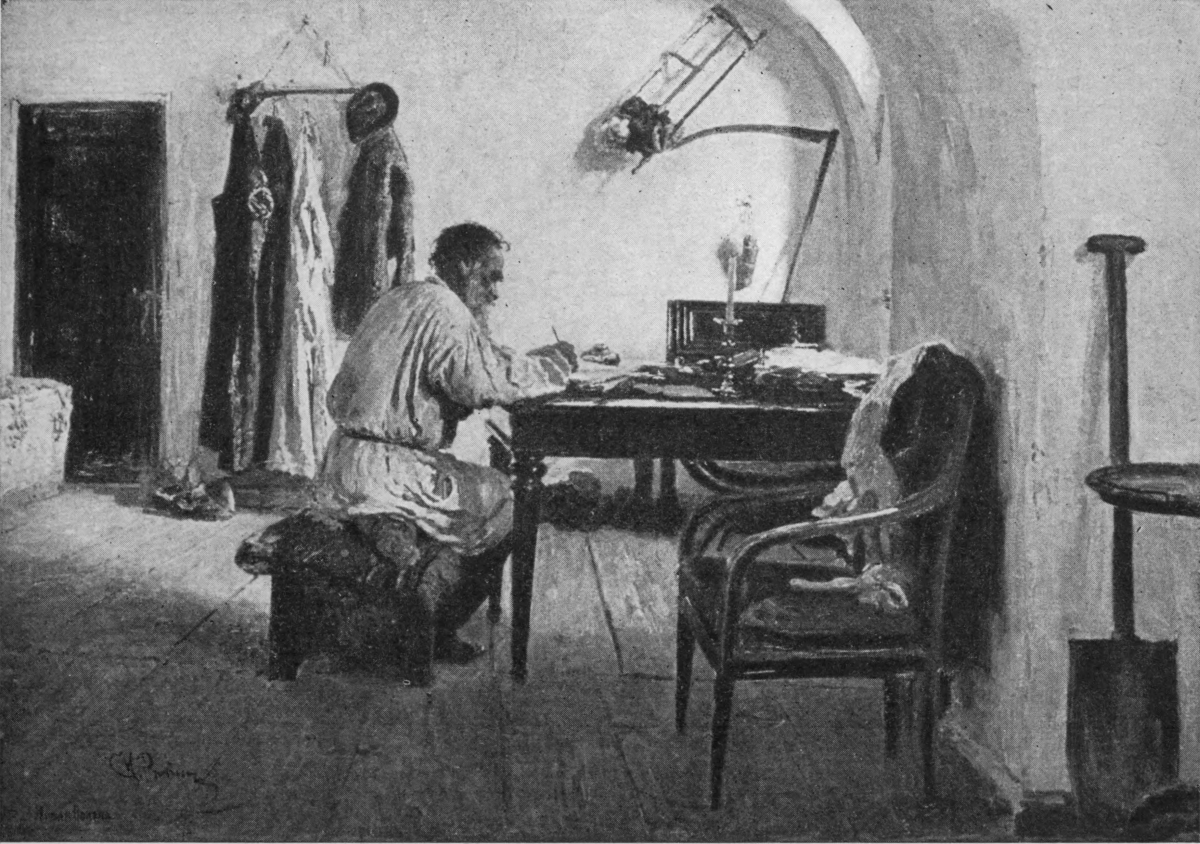
Leo Tolstoy had an equally wide range of ideas, some arguably closer to the truth than others. “What is Art,” his exhaustive study of the meaning and purpose of art, written over a period of 15 years, captures the magnitude and diversity—as well as the incongruity—of his views. I have read it many times over 60 years and marveled at how it occasionally strikes the center of the target, and occasionally misses it altogether.
Tolstoy on Beauty
Tolstoy’s essay begins with a rogue’s gallery of 78 prominent intellectuals from the 17th century to the author’s own time. He cites their various aesthetic theories. Among them, he stated:
“Wincklemann says that the law and aim of all art is beauty; Lessing, Herder and Goethe follow suite. Later, Kant, Schiller and Humbolt say that beauty is the source of pleasure without practical advantage. Burke says that the sublime and beautiful have their origin in the promptings of self-preservation; Sulzer says that beauty is that which evokes a feeling of moral goodness; Pagano says that beauty is goodness made visible; Lévêque says that beauty is something invisible behind nature revealing itself in ordered energy.”
Tolstoy dismissed these distinguished intellects with a flourish of the pen. “All attempts to define absolute beauty define nothing at all.” It is no more than a matter of taste, he wrote, and “there is and can be no explanation of why one thing pleases one man and displeases another.”
It might have been wiser to call this essay “What Isn’t Art”:
“Art is not the manifestation of some mysterious idea of beauty or God; it is not a game in which man lets off his excess stored-up energy; it is not the expression of man’s emotions by external signs, it is not the production of pleasing objects.”
Almost the entire canon of Western art was annihilated by another flourish of the pen:
“The rude and savage works of the Greeks: Sophocles, Euripides, Aeschylus, and especially Aristophanes; Dante, Tasso, Milton, Shakespeare; in painting, all of Raphael, all of Michelangelo, including his absurd ‘Last Judgement’; in music, the whole of Bach, and the whole of Beethoven, the Wagners, Liszts, Berliozes, Brahmses and Richard Strausses, and all that immense mass of good-for-nothing imitators of imitators.”
An even more devastating rebuke follows:
“Art of our time and of our circle has become a prostitute. Like her, it is always available, like her, it is always adorned, like her, it is always for sale, and like her it is always alluring and ruinous.”
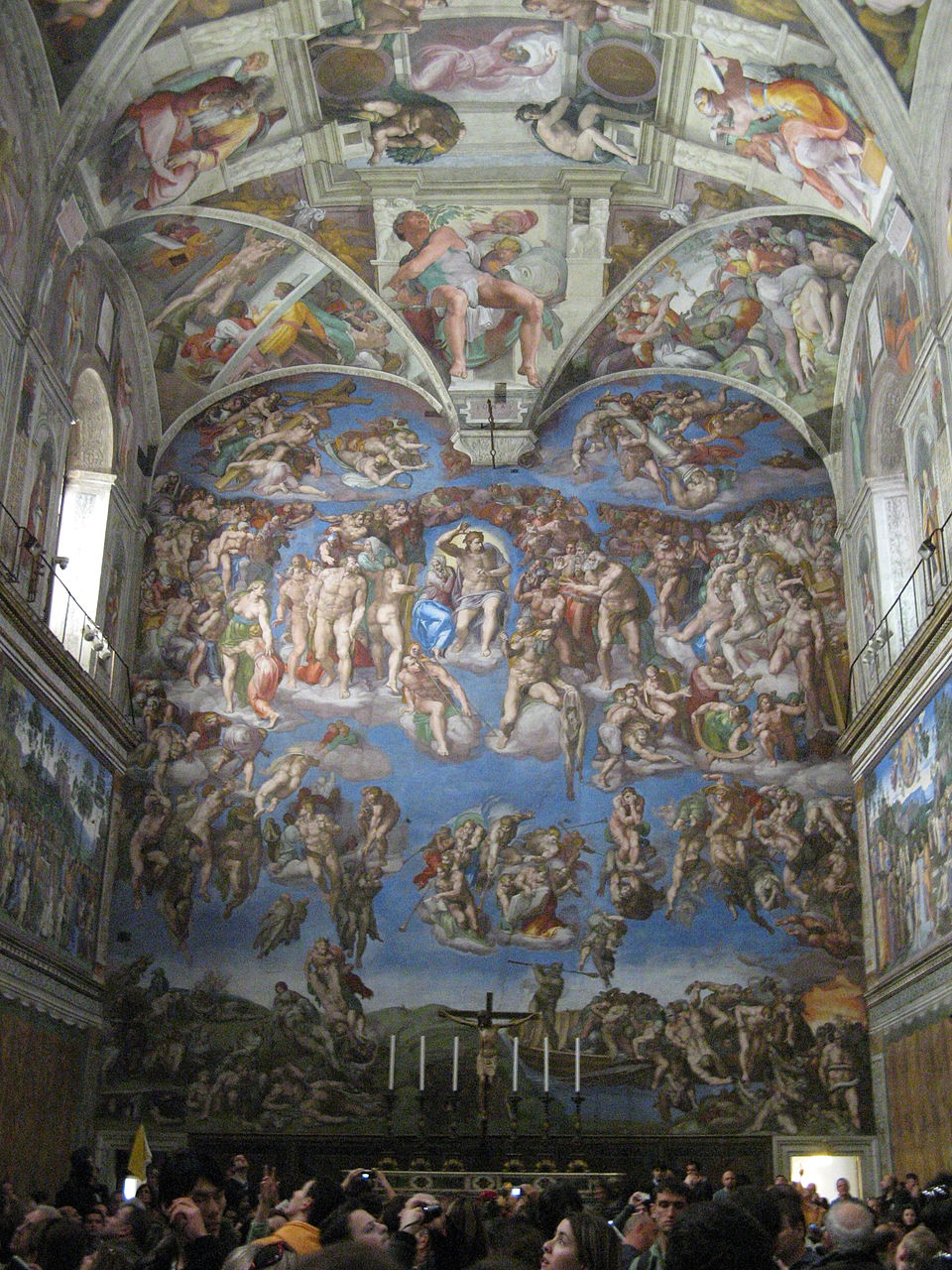 “The Last Judgment,” 1536–1541, Michelangelo. Fresco. Sistine Chapel, Rome. Tolstoy wrote a tirade that condemned this and many other works of art. (Sujay25/CC BY-SA 2.0)
Tolstoy’s Pronouncement
What then, is this mysterious three-letter word, and what is its purpose? We are told emphatically that it is not merely entertainment; “Its purpose is of a higher calling. Art is a spiritual organ of human life transmitting truth from the realm of thought to the realm of feeling.”
This premise leads to some astonishing conclusions: that the range of feelings experienced by the rich and powerful is more limited than the range of feelings natural to working people; that art should be understandable to everyone and that a work of art has failed in its purpose if it has to be explained; most importantly, that art has great power to influence thought, feeling, and behavior and has an indisputable obligation—religious perception: “Because of man’s capacity to be infected with the feelings of others by means of art, he is drawn into a closer unity and sympathy with his brothers,” he wrote.
Peace, justice, love of one’s neighbor, cannot be enforced outwardly by police or armies, but “Art should cause violence to be set aside; and it is only art that can accomplish this.” A tall order indeed!
Tolstoy and Music
More than the plastic arts, even more than his chosen field of literature, music was for Leo Tolstoy an emotionally charged issue, a persistent, discomforting enigma in his life and thought. He was profoundly affected by this mysterious phenomenon, which exists only in the infinitely small of fraction of time between the past and the future that we call the present, cannot be seen and cannot be touched.
Once, when the Russian opera singer Feodor Chaliapin visited Tolstoy’s home to sing for him, Tolstoy’s wife, Sofia Andreyevna, drew the great basso aside and said “my husband is very effected by music. He will probably weep, but please pretend not to notice, as he would be very ashamed.”
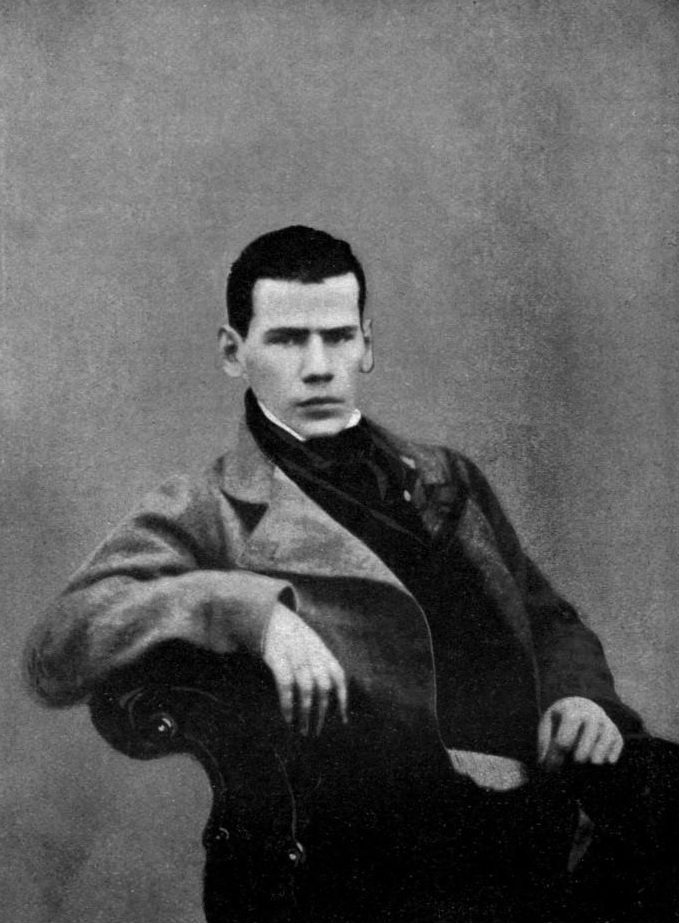 Lev Nikolayevich Tolstoy in 1848, aged 20. (Pavel Biryukov)
Tchaikovsky wrote about sitting next to Tolstoy during a performance of the composer’s first string quartet. During the second movement, he saw the great writer weeping, and remarked in his diary “I was never so flattered and proud of my music.”
Such observations might explain, in part, Tolstoy’s ambivalence toward the great company of musical saints. For he also put on trial where moral issues, philosophical issues, private motives are called to the witness stand, and a verdict of guilty sent even the most venerable composer to Siberia or Hell with no chance of appeal.
With his feelings at full sail, Tolstoy attacks Richard Wagner, a limited self-opinionated German of bad taste and bad style.” Beethoven fares no better. One of his late piano sonata was dismissed as “only an unsuccessful attempt at art containing no definite feeling and therefore no emotional infection.” The celebrated Ninth Symphony was also dressed down as “a long, chaotic and artificial production.”
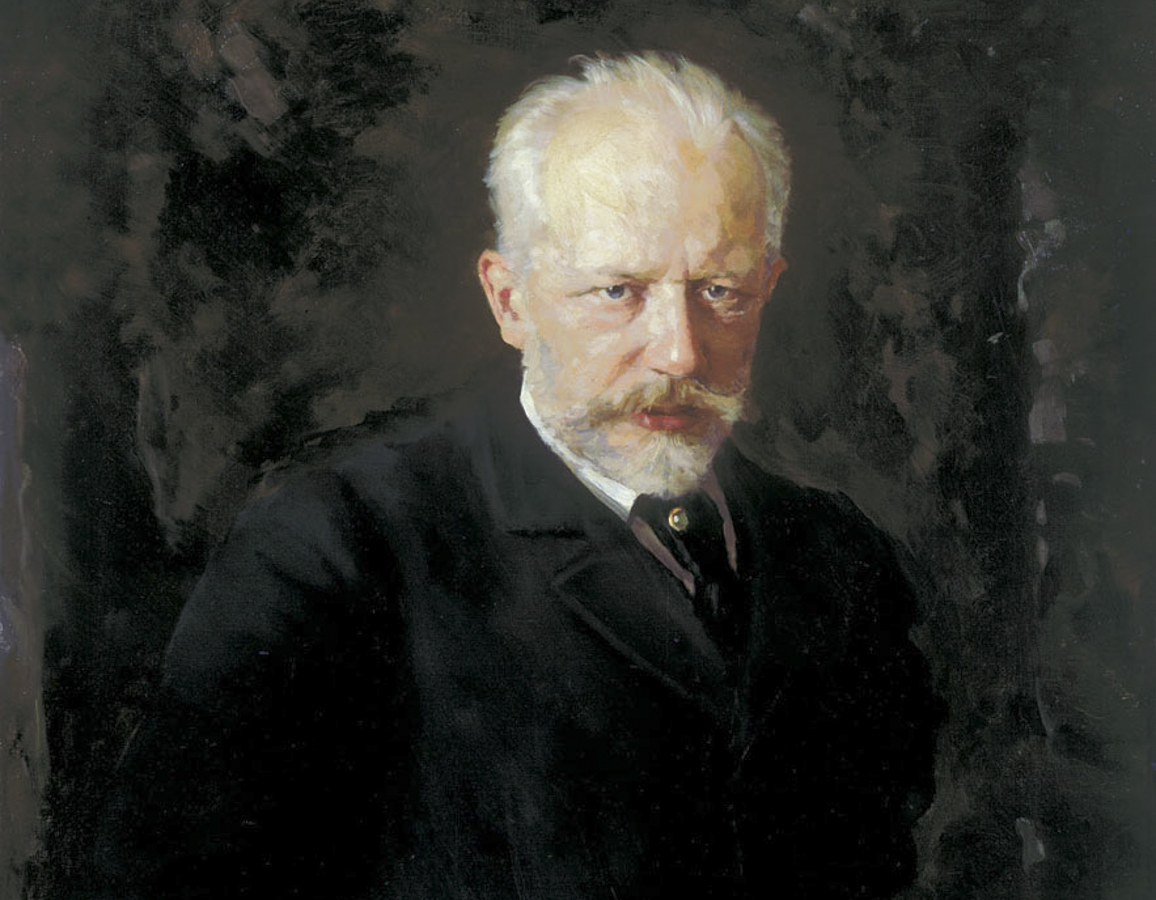 A detail from a portrait of Pyotr Ilyich Tchaikovsky, 1893, by Nikolai Dmitriyevich Kuznetsov. Tretyakov Gallery. (PD-US)
A vast ocean, however, lies between what Tolstoy thinks and what he feels. Although “the whole of Bach” was condemned, for example, he remarked at other times that he especially loved the cantata arias and the famous Air from the third orchestral suite.
One is led to the conclusion that in art what is good or bad, sincere or false, is not always easily discerned.
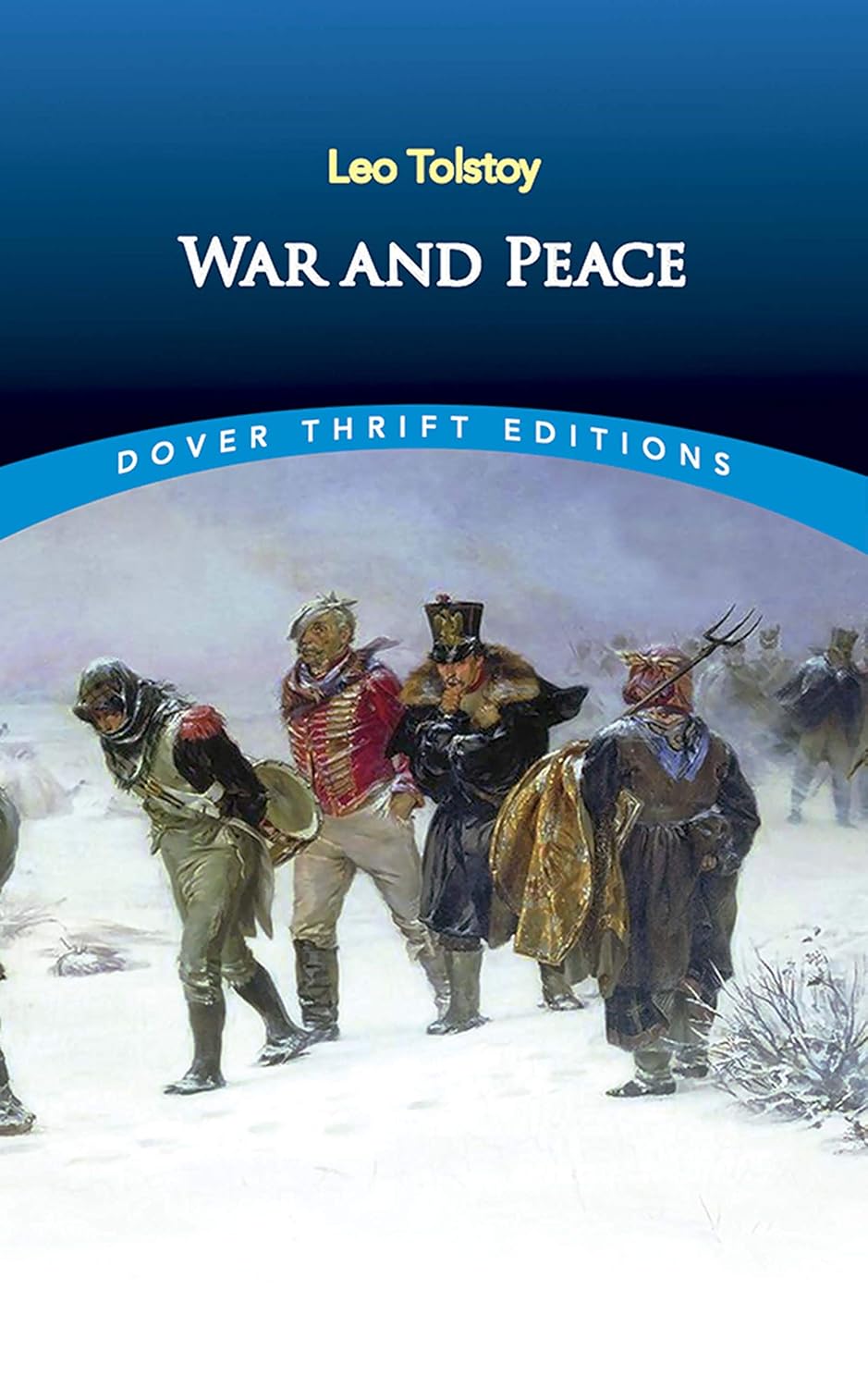
How I would like to invite him to my home! I would read what his acknowledged self-portrait, Pierre Bezukhov, thought in “War and Peace,” written years earlier: “The one thing I know is that I can know nothing, and that is the height of wisdom,” and remind him that in his later writing this belief appears again and again. I would also remind him of his words “there is and can be no explanation of why one thing pleases one man and displeases another,” and add that no one has ever heard the same piece of music in the same way.
Certainly, art is not simply an entertainment but “a great matter”; most probably it can indeed “cause violence to be set aside”; but regardless of our great thinkers, the brilliance and subtlety of their thoughts, regardless of reason, or inspiration, or legislation, the ideal remains a mystery, the search continues. The journey, not the destination matters.
What arts and culture topics would you like us to cover? Please email ideas or feedback to features@epochtimes.nyc