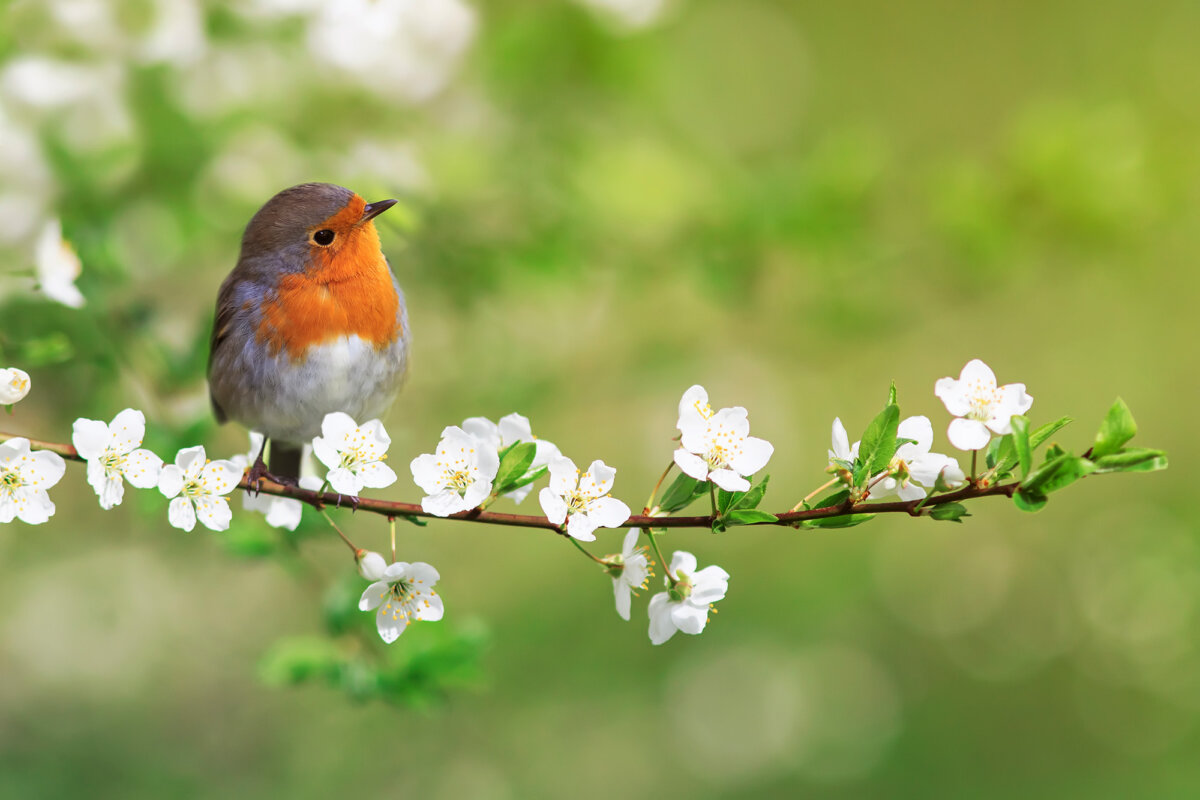
The sound of a robin’s call always sends me back to childhood. It resurrects images of robins skipping across the lawn, pausing, then skipping again a few more feet, out by the apple trees on the slope beside my parents’ house. In April and May, I’d watch them hopping around the yard. After the long, slate-gray winter months of a Minnesota winter, I was eager to get outside, and I’d walk barefoot through the yard, feeling the cold, fresh dampness of the muddy grass spurting up between my toes and listening to the birds calling.
I guess it makes sense that I associate spring with childhood. In the Northern Hemisphere, at least, spring is the season of childhood—biological, emotional, and spiritual.
Scientifically speaking, spring is the time of renewal. The world becomes young again after the old age of winter. Color bleeds back into her gray hair. Gushing rivulets of water sparkle like diamonds in the grass as snow thaws. Sunlight and warmth coax the buds to slowly open to the spring breeze. The dry, wrinkled face of winter flushes with youth and laughs again.
‘Sunlight Is Like an Elixir’
We owe this incredible transformation to Earth’s 66.5-degree axial tilt in relation to the sun. Practically, it means that different areas of the Earth receive more sunlight at different times of year. During the six months of each orbit when the North Pole leans toward the sun, areas in the Northern Hemisphere receive sunlight at an angle closer to 90 degrees compared with the Southern Hemisphere. That means more absorption of the sun’s energy, more warmth, and more hours of daylight. Then, for the next six months, the conditions reverse, and the Southern Hemisphere receives more warmth.
Sunlight is like an elixir. It changes the very biology of our bodies and renews our minds. The increase of sunlight in spring prompts our bodies to produce more serotonin, a “feel-good” hormone. It also reduces the production of melatonin—the hormone triggered by darkness—that signals to your body to get ready for sleep. Also, the symptoms of seasonal affective disorder, or SAD, recede at this time of year. Spring’s splendid, moderate temperatures also draw us outdoors more, to physical activities and get-togethers with friends. Spring is a concoction perfectly mixed to reinvigorate us. Spring breathes joy back into life.
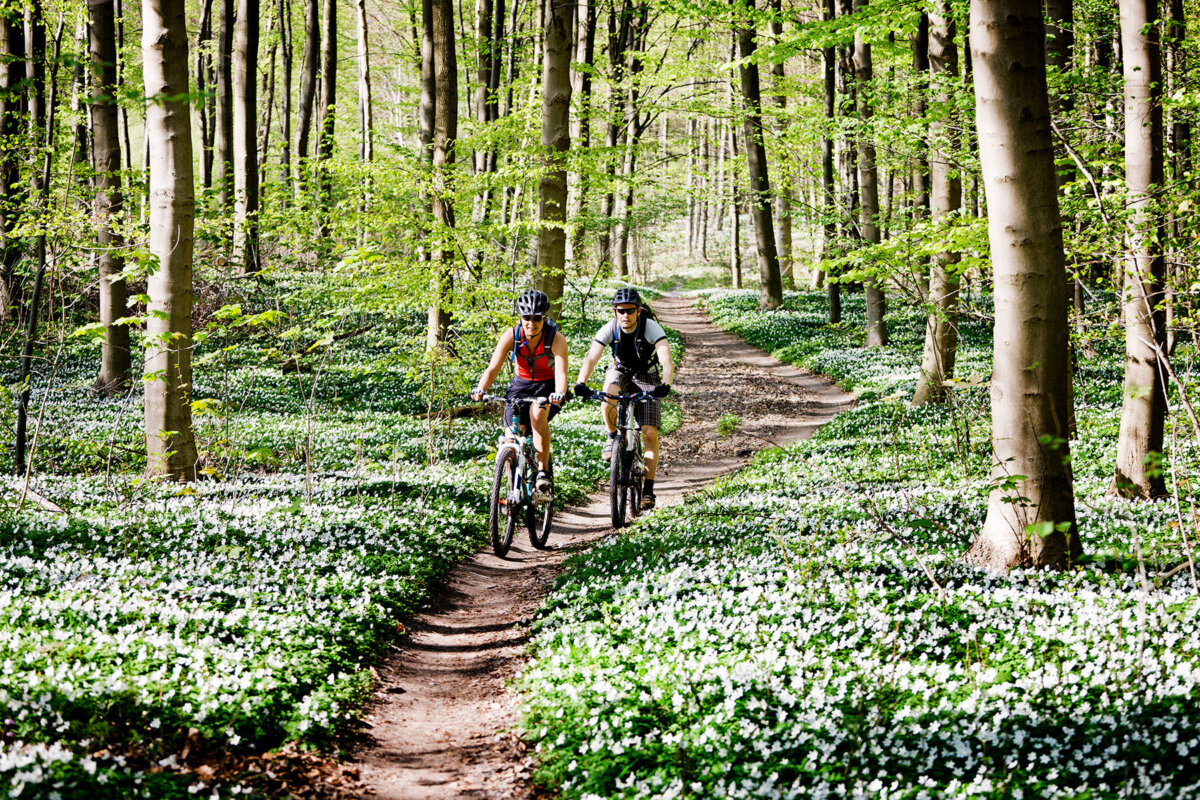
The rhythmic nature of the seasons and spring’s yearly recurrence seems to mirror life itself. Our interior life goes through a similar cycle, from warmth and light to dark and cold and back again. Rhythm is written into the very fiber of the world. Seasons of sorrow and seasons of joy. Seasons of death and seasons of birth.
The surge of life and color that appears like a sudden and unexpected revelation seems to reflect humanity’s spiritual experience. The idea of resurrection figures centrally throughout the body of world literature and legend. We’re haunted by the possibility of the reversal of death, and spring seems to whisper the hope of that reversal.
Year after year, against all appearances, when “The ancient pulse of germ and birth/ Was shrunken hard and dry,” spring came, like the unaccountable joyful song of the thrush who inspired Thomas Hardy’s poem:
At once a voice arose among
The bleak twigs overhead
In a full-hearted evensong
Of joy illimited;
… there trembled through
His happy good-night air
Some blessed Hope, whereof he knew
And I was unaware.
A Time of Possibility
Hope. Spring is the season of hope, the most potent and paradoxical of attitudes. Maybe that’s what lends spring its special power, this connection to wild and improbable aspirations that might come true. We tend to think of winter as the end of the year, but maybe that isn’t right. Spring comes to remind us that winter didn’t get the last word.
Behind my parents’ house when I was growing up, a gully cleft a crooked line of rock through the woods. In spring, the gully transformed into a stream, water glinting under tree-filtered sunlight as it gushed against the mossy rocks. My sister and I built a small bridge across it and imagined it was a passage into another world, a world that was partly Middle-earth, partly Narnia, and partly all the worlds from our storybooks. In spring, the possibility of their existence—these fantastical lands of eternal youth—didn’t feel so far-fetched. We almost believed in them. In spring, we felt the force of Alfred Tennyson’s words, “‘Tis not too late to seek a newer world.”
Every winter is a kind of death—of the natural world and of ourselves. Another year of our life ends. Another chapter is over. A few more beloved faces have left us over the course of that previous year. The holidays pass, and we enter into the dark days of cold and lonely wind that may feel like our last.
But unexpectedly, one brisk March day, we hear a sound we’ve almost forgotten—a robin’s call. There he is, singing “in full-throated ease” amid bare branches still encased in snow. The snow doesn’t bother him. He knows that it will melt, thaw, and seep into the ground to bring about new life.