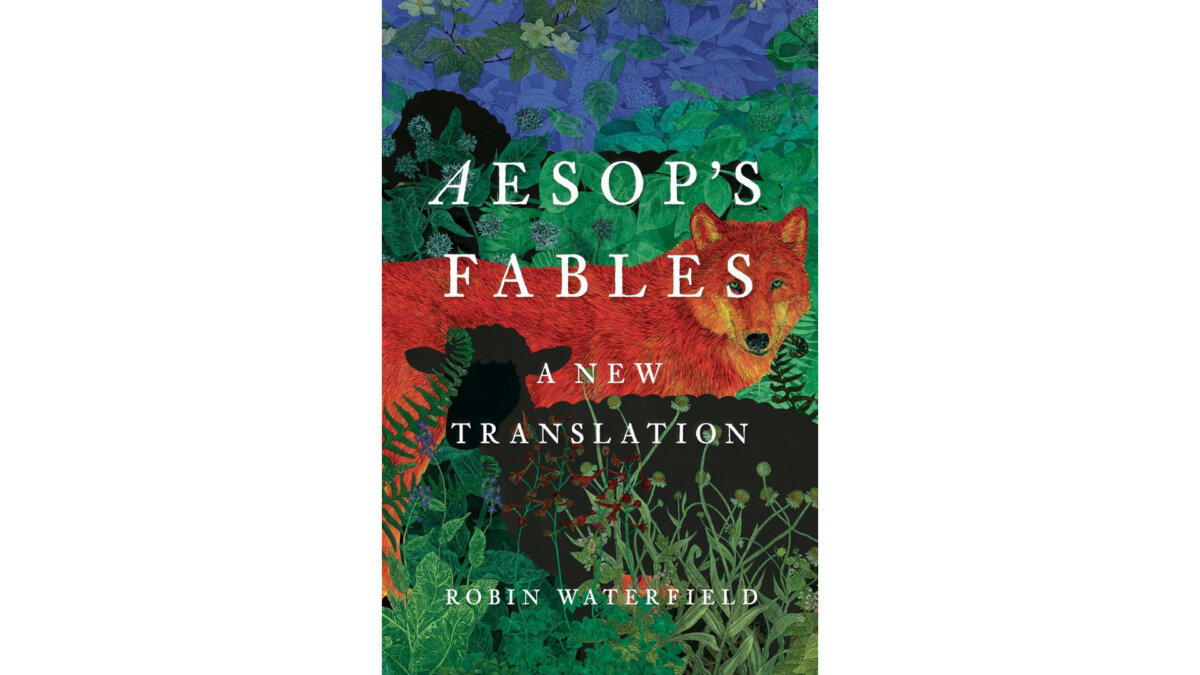
Like many Americans, I first discovered Aesop’s fables in a children’s edition. Mine had 20 fables with colorful illustration. These brief stories, with their talking animals and surprise endings, naturally appeal to kids. The tales often close with “morals”—statements of the life lessons they’re meant to impart.
Whether you did or didn’t encounter Aesop as a child, Robin Waterfield’s delightful 2024 translation makes a happy addition to any school or family library. It gives grown-ups as well as children a chance to enjoy these ancient gems of wit and wisdom. Waterfield, a British scholar who has translated Plato and Marcus Aurelius, offers 400 fables in clear, compulsively readable English, helpful and entertaining footnotes, a generous introduction covering historical and literary aspects, and an explanation of how the fables came down to us.
A Storied History
Aesop’s fables were probably told long before they were written down, passed orally from generation to generation. Waterfield’s comprehensive selection includes some spicy stories usually omitted from children’s editions, but they are easily avoided when reading to little ones.
Some of the fables are so familiar, they have entered our language. “The Boy Who Cried Wolf,” “The Tortoise and the Hare,” “Who Will Bell the Cat?” and “Sour Grapes” are just a few. When people call a politician “a wolf in sheep’s clothing” or dismiss an insult as “sour grapes,” we know exactly what they mean, thanks to Aesop.
Waterfield pleasingly groups the tales in categories: “Fox Fables,” “Trees and Plants,” “Monkeying About,” and so on. While people appear in some stories, along with an occasional Greek god, the dramatis personae of most are animals, plants, and even objects.
Aesop gives readers a window into life in ancient Greece, where farming, herding, and hunting kept his original hearers and readers more in touch with the natural world than city folk are today. They were familiar with livestock, crops, seasons, and the traditional personalities of various creatures: the clever fox, the dumb ox, the vain peacock, and the industrious ant. Aesop draws on this familiarity to spin his tales and make his points.
A Closer Look
Let’s look at one of the better-known fables, “The Hen That Laid Golden Eggs.”
A man owned a hen that laid a golden egg for him every day. But making this much profit every day wasn’t enough for him, and in his foolishness he wanted more. So he slaughtered the hen, thinking that he’d find riches inside her. When he found absolutely nothing of value, he told himself off: “ ‘I hoped to find riches,’ he said, ‘and spurred on by that hope I lost the sure thing I already had.’”
Moral: The point of this fable is that it’s very common for people to lose the little that they had as a result of wanting more.
I don’t know when the hen became a goose; it depends on the translation, for people say: “Don’t kill the goose that lays the golden eggs!” The fable is so well-known, sometimes the warning is shortened to: “Don’t kill the goose!”
Not all of the fables have a closing comment or “moral,” but this one does. It hardly needs it, since the point of the tale is pretty obvious.
Aristotle wrote, “Fables are best suited to speeches addressed to popular assemblies.” Even today, they’re useful for speakers to clarify an analogy or get a laugh.
In ancient Greece, fables were utilized in other ways as well. Pedagogues found them handy when teaching reading and writing to children. “Politically,” according to historian John Horgan:
“The fables emerged in a time period of Greek history when authoritarian rule often made free and open speech dangerous for the speaker. [They were] a means by which criticisms against the government could be expressed without fear of punishment. In effect, the stories served as a code by which the weak and powerless could speak out against the strong and powerful.”
His Real Identity
But who was Aesop? Herodotus wrote in the 5th century B.C. that he was was a slave who had lived 100 years earlier. Plutarch, in the 1st century A.D. named Aesop as an advisor to the famously rich King Croesus of Lydia. Other ancient sources identify him variously as Thracian, Ethiopian, and Samian.
It‘s possible that Aesop is a legendary figure, as many scholars believe Homer to be—not an actual person, but a traditional name the fables were simply attributed to. The British scholar Martin Litchfield West wrote:
“The name of Aesop is as widely known as any that has come down from Greco-Roman antiquity, (yet) it is far from certain whether a historical Aesop ever existed. … In the latter part of the fifth century [B.C.] something like a coherent Aesop legend appears, and Samos seems to be its home.”
If Aesop was a real man, Aristotle believed he was born around 620 B.C. He was said to have been deformed and ugly, born a slave but freed by his master on account of his learning and wit. In about 564 B.C., in Delphi, he was supposedly convicted on a trumped-up charge and thrown off a cliff by a raging mob to his death.
Fables Today
Today fewer multi-generational families with grandparents or other relations present help raise children and impart wisdom to them. The introduction of television reduced the time parents spend talking with their own children. Today just getting teenagers to pay attention to anything besides their phones can be a challenge. These social developments have made it harder for each generation to pass down its knowledge, ethics, and hard-learned lessons to the next.
Aesop’s Fables can help parents and teachers bridge that gap. They are a treasure trove of ancestral wisdom, presented painlessly in stories as entertaining as they are instructive.
Here’s one more fable for good measure, a less familiar one, “The Cat and the Hens”:
“A cat heard there were some hens lying sick in a farmyard, so he disguised himself as a doctor and went there, taking with him the tools of the medical trade. When he reached the farmyard, he asked, ‘And how are we today?’ ‘We’ll be fine,’ they replied, ‘once you’ve left.’”
Moral: Sensible people see through the tricks of the wicked however much they feign goodness.
That’s a lesson as pertinent today as it was 2,500 years ago.
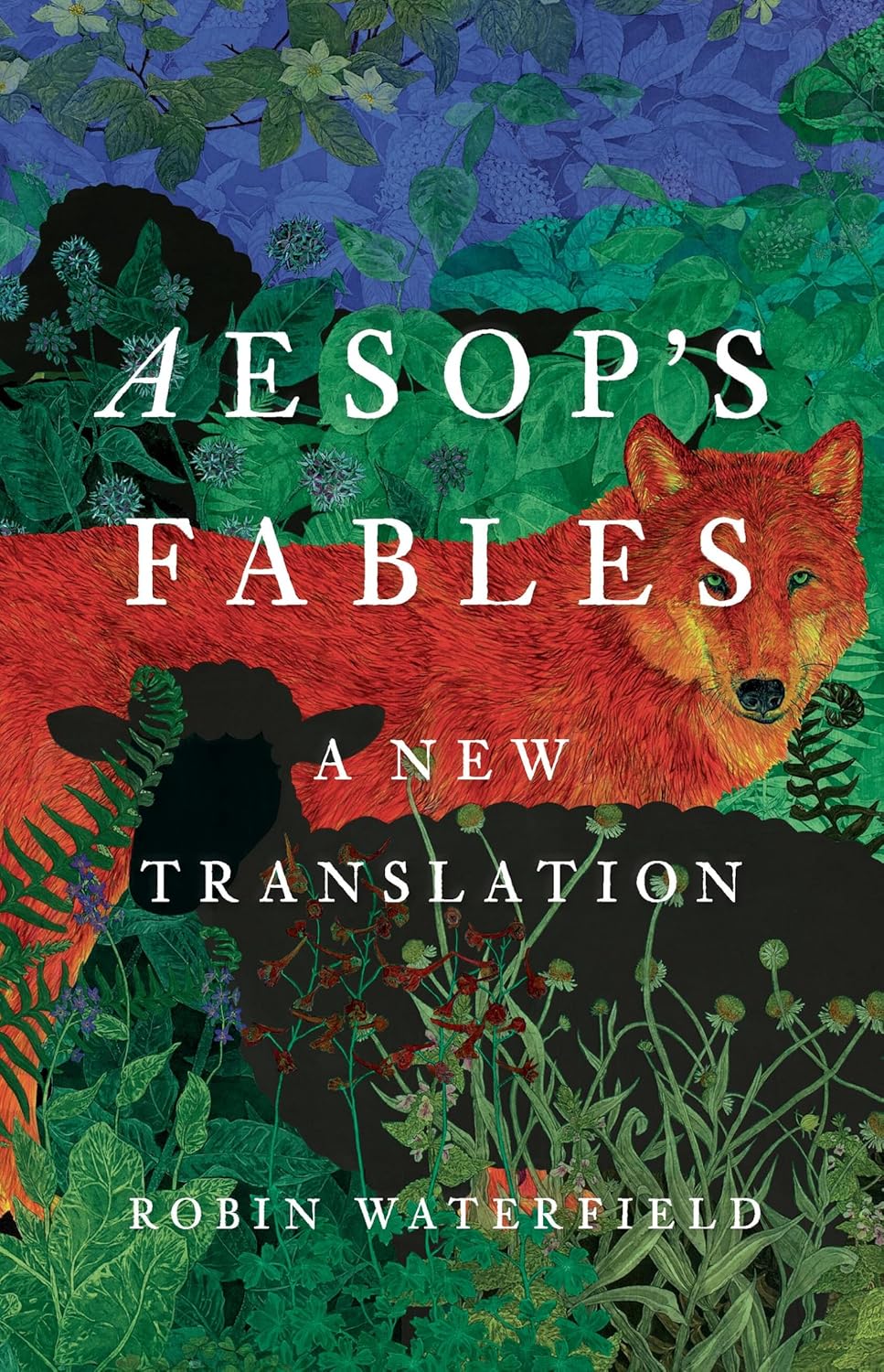
‘Aesop’s Fables: A New Translation‘
By Robin Waterfield
Basic Books, Oct. 1, 2024
Hardcover: 336 pages
What arts and culture topics would you like us to cover? Please email ideas or feedback to features@epochtimes.nyc