
The clink of cups, the earthy aroma of coffee, the murmur of conversation, and the muffled music over the radio as the barista greets you by name.
“The usual?” she asks with a smile. You nod in agreement, settle at your favorite table with a view of the farmers market outside in the street, and open your book. But before you begin reading, you notice another regular sitting in an overstuffed chair by the fireplace.
“How are the kids, Jack?” you ask. He looks up, smiling, and regales you with tales of his sons’ latest escapades.
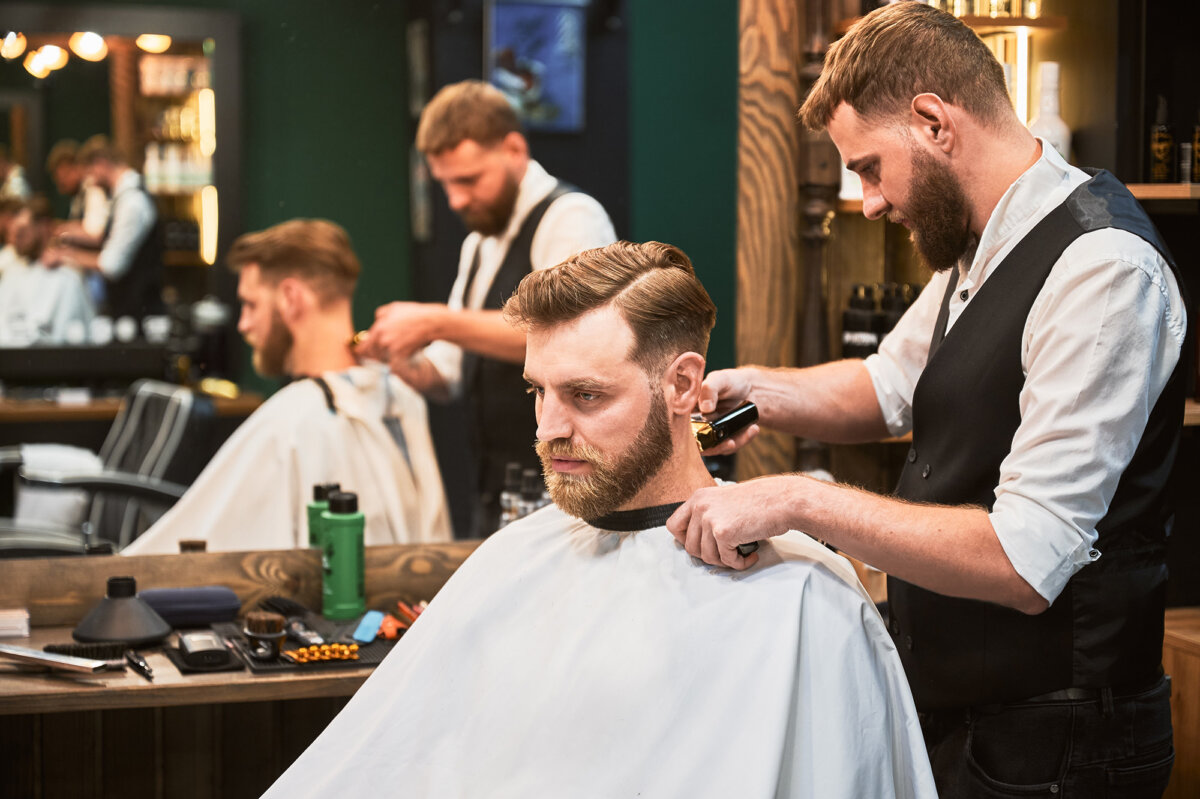
These are the types of delights reserved for someone who has established “weak ties” within his or her community—connections with local people that are warm, familiar, and predictable, even if they’re not particularly deep. The barber you visit every month, the bartender who knows your favorite drink, the gym rat who’ll spot you when you lift, and the neighbor across the street who waters your plants when you’re on vacation—these are all examples of people with whom you might establish weak ties.
They’re not your bosom buddies, but the familiar relationship with them still brings something valuable—perhaps essential—to your life and to theirs.
The Value of Everyday Connections
Arkadiy Volkov, a psychotherapist and clinical director of Feel Your Way Therapy, told The Epoch Times that research has shown that those with more social ties have greater life satisfaction and less loneliness than those with fewer connections, even if they have the same number of close friends.
“When we think of mental health, we think of relationships with partners, family, and friends,” Volkov told The Epoch Times. “We tend to overlook the importance of weak ties.
“However, relationships that are not too intimate but concise and familiar (barber, priest, neighbor) are important, too. The relationships are not too emotionally deep, but they create something stabilizing and give a sense of belonging in everyday life.”
Volkov explained that our brains are wired for these types of connections. Even things as simple as eye contact, brief conversations, and hearing someone call our name can boost our sense of identity and well-being.
Weak ties help us develop a sense of our place within a wider community.
“Weak ties send us consistent signals that we exist in a community, belong, and matter,” Volkov said. The steady accumulation of weak ties within a community, like sediment in a river, makes for a much firmer grounding for the community as a whole. Resiliency deepens.
As Rabbi Shlomo Slatkin, a licensed clinical counselor and cofounder of The Marriage Restoration Project, put it: “The more connected people are, the more [likely] they are to support each other in good times and hard times. It is important to have people to celebrate with. It is a chain reaction. You connect with one person who is connected to another, and so on. This spreads to an entire community who are interconnected and can be a support system for each other.”
Volkov said much the same thing, observing that communities layered thick with these ties will respond better to crises.
“Neighbors who have stronger ties respond better to stressors or a crisis,” he said. “You will know there is a baseline of trust and recognition.”
Simple, everyday interactions build up over time, forming a web of interconnected community members who can both celebrate and mourn together when the dramatic moments come. We’re able to then meet these moments against a backdrop of familiarity and solidarity.
“Our brain likes consistency because it feels safe,” Volkov said. “When we see the same people around the neighborhood or at the gym and they greet us, our nervous system relaxes because we are in a protected environment.”
That “protected environment” becomes especially important for resiliency in hard times, but it can flood life with greater connectivity, tranquility, and meaning at all times.
1st Steps
How do we develop these weak ties? The first step is consistency. Showing up at the same time and place repeatedly exposes you to a certain set of neighborhood faces, with whom you can begin to develop rapport. But consistency alone isn’t enough.
“Consistency is important, but [so is] … the interaction,” Slatkin said. “You can’t just show up and not engage. The more you engage, the better you will feel.”
Similarly, Volkov advised active engagement with familiar faces, such as learning people’s names and asking them about their week or their plans for the weekend. These interactions don’t have to be complex. A little effort goes far.
Arguably, we need these weak ties more today than ever. When so much of our social activity has been absorbed into the digital realm, we lose touch with the tangible, real-world connections—the eye contact, the sound of voices, the unexpected encounters on the street corner—that cement our embodied existence in a particular local community. Being integrally part of a community means knowing and being known.
“Many transactions online are anonymous,” Volkov told The Epoch Times. “But weak ties require an intention and closeness. This matters especially now (in a digital world).”
“We need people who know our names, our favorite drink, etc.,” he said. “People need an ecosystem from which we can thrive. Weak ties are a great way to do that.”