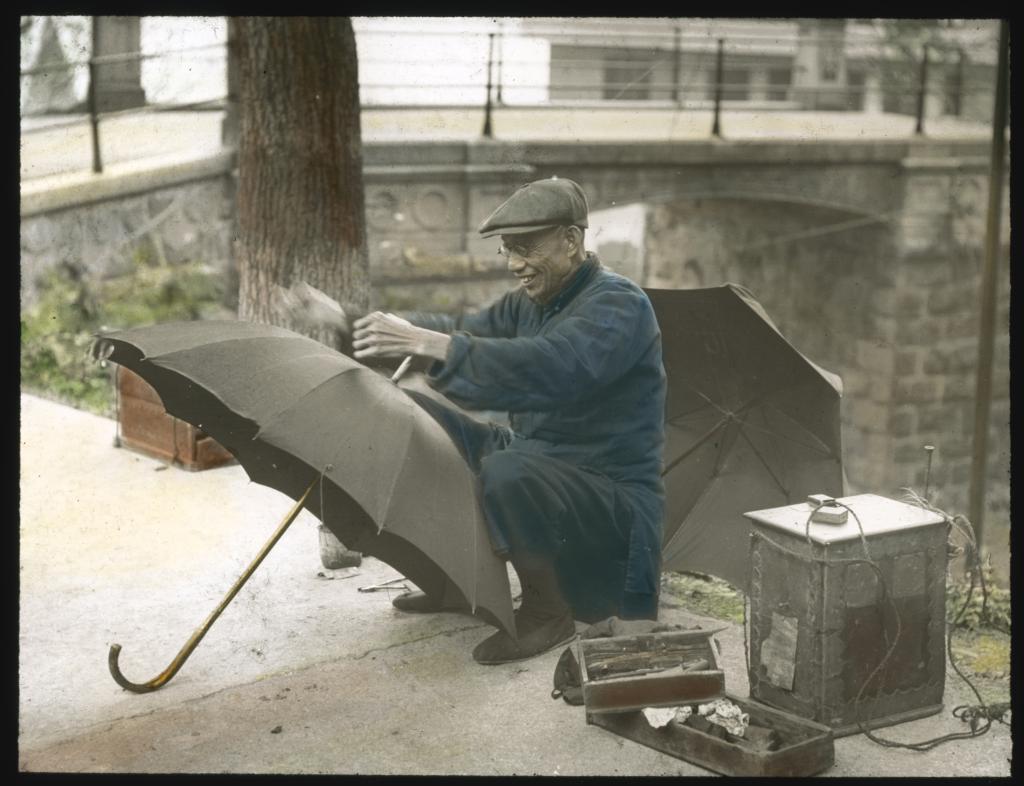
In his short story “The Umbrella,” Guy de Maupassant presents a miserly wife who gets so caught up in saving money that she becomes obsessed over the smallest items. Eventually, her worry carries her into the realm of the ridiculous.
A New Umbrella
The extremely miserly Madame Oreille frets every time she parts with a single coin. She even dislikes buying necessities and, when she does, subsequently spends a restless night worrying. She subjects her husband, Oreille, to her worries and parcels out money to him with great reluctance.
Oreille works as one of the head clerks at the War Office and earns a very good income. However, though they have money and no children, Madame Oreille refuses to spend money, since one never knows what could happen.
Due to her economy, Oreille goes to work with an old patched umbrella, making him the brunt of several jokes. Finally, having long endured the ribbing, Oreille tells his wife that she must buy him a new umbrella. She relents, but buys him a cheap one, “one of those cheap articles which large houses sell as an advertisement.”
This new umbrella leads to more jokes at work for Oreille. Angry at his wife’s stinginess, Oreille tells her that she must buy him a 20-franc umbrella and produce the receipt.
Madame Oreille grudgingly produces an 18-franc umbrella and tells her husband: “This will last you for five years at least.” Satisfied, Oreille pridefully presents his umbrella at work to a miniature ovation from his coworkers.
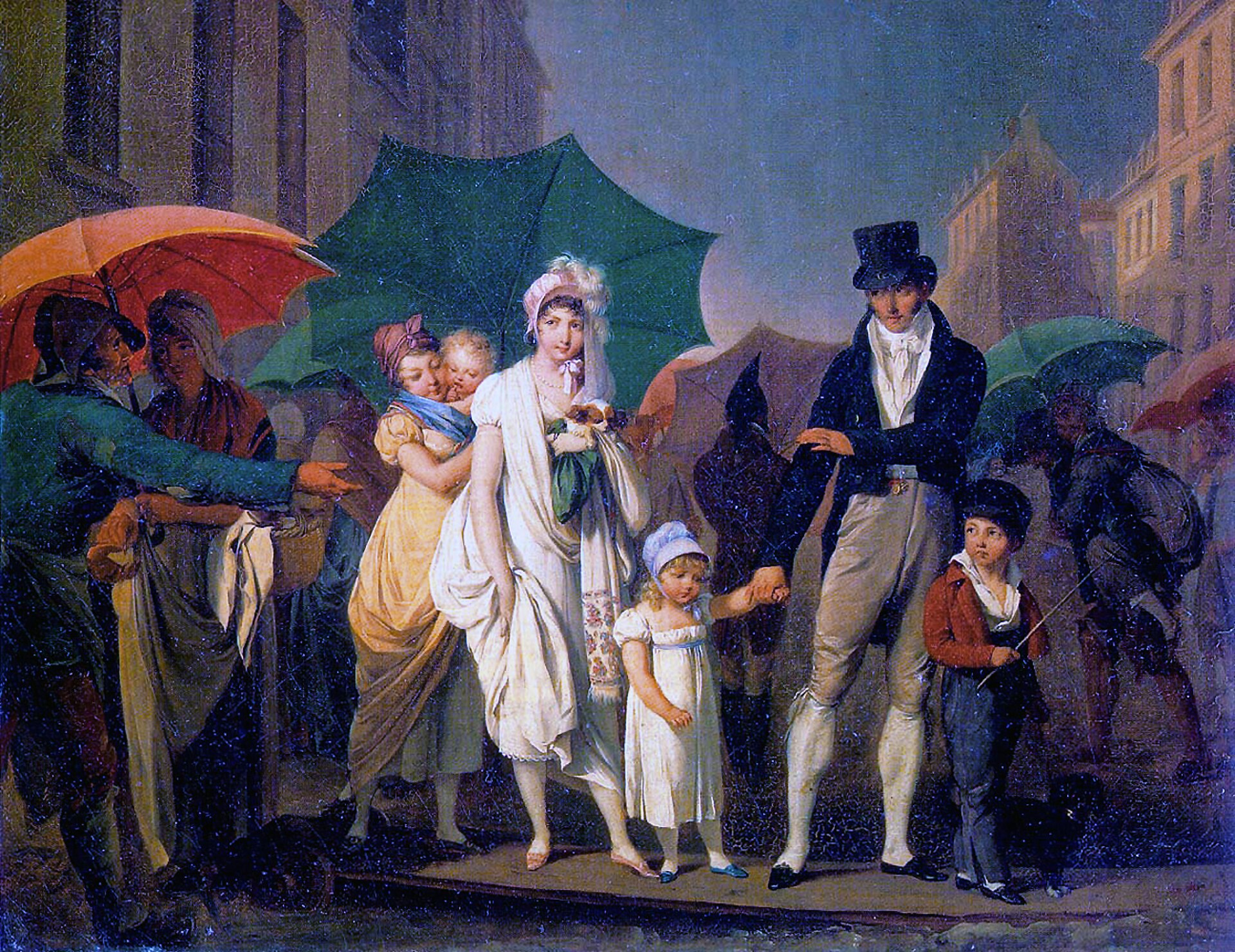 “Passer payez,” 1803, by Louis-Leopold Boilly. The Louvre Museum, Paris. (Public Domain)
Worries Made
Unfortunately, when Oreille returns home, Madame Oreille opens the umbrella to find a hole burnt into it. She cokes with rage and accuses her husband of playing needlessly with the umbrella. She struggles to say: “You—you—have—burned—your umbrella! Why—you must be—mad! Do you wish to ruin us outright?”
Poor Oreille confesses that he doesn’t know how it happened. But Madame Oreille refuses to buy another and sends him to work the next day with a patched umbrella.
When he returns from work, Madame Oreille once again inspects the umbrella and, to her utter dismay, she finds several holes burnt into the umbrella. Her fury overflows and she berates her husband, saying that he purposefully burnt the umbrella. She now insists that he shall not have another.
Oreille is saved by the arrival of a friend, who, when he hears about the difficulty, suggests that they have the fire assurance pay for the umbrella. Appeased by this suggestion, Madame Oreille heads out the next day in order to get insurance money for the ruined umbrella.
However, when she presents her case to the insurance agent, he looks at her incredulously. He assures her that they cannot accept such small, insignificant repairs. But Madame Oreille is determined.
Through Madame Oreille’s miserly obsessions, Maupassant demonstrates how worries can create illusions about realities and lead to ridiculousness. He shows that we are often to blame for our worries, since we often cause them ourselves.
Roy T. Bennett provided the perfect solution in “The Light in the Heart” when he said: “Instead of worrying about what could go wrong, change your thoughts to what could go right. When you change the negative thought into a positive one, it eliminates the negative one.”
So, rather than drowning ourselves in negativity and worries, we should seek the positive. Positivity frees us from the echo chamber of our minds and opens us to gratitude that magnifies life’s beauty.
What arts and culture topics would you like us to cover? Please email ideas or feedback to features@epochtimes.nyc.