NR | 1h 50m | Action, Drama, Thriller | 1961
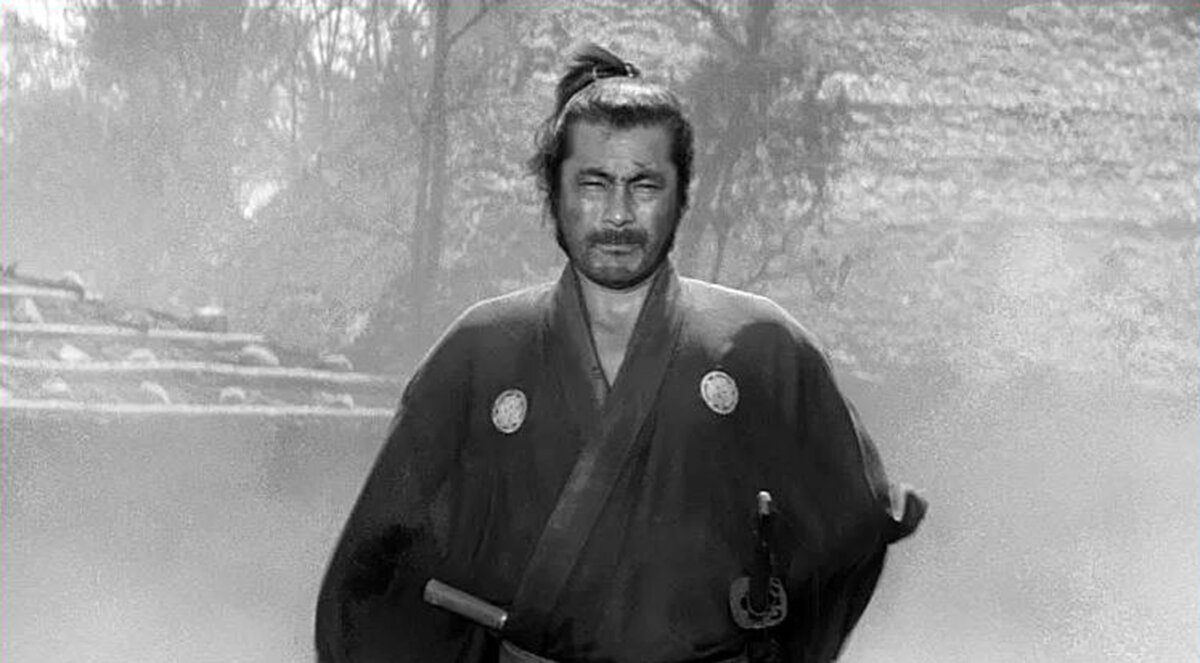
Akira Kurosawa’s “Yojimbo” stands as a striking piece of black-and-white cinema depicting the samurai era. At first glance, the film unfolds like a straightforward tale, yet it subtly weaves in complexity through sharp wit and strategic mind games.
The protagonist, Sanjuro (played with charismatic cunning by Toshiro Mifune), effortlessly manipulates rival factions with a blend of daring and humor until he meets his match in an equally clever adversary (Tatsuya Nakadai). The film’s appeal lies in the captivating dance of power and deception, providing rich entertainment while exploring the friction between tradition and change.
Kurosawa’s approach to the film reflects his unique ability to meld artistic storytelling with gripping action, a hallmark that helped his work resonate globally. Unlike some of his contemporaries, Kurosawa embraced Hollywood’s influence to craft narratives that felt both accessible and adventurous. This film emerged near the end of his most prolific decade. Kurosawa had already cemented his reputation through classics like “Rashomon” (1950) and “Seven Samurai” (1954).
Cunning Outsmarts Steel
Sanjuro, a scruffy, no-nonsense ronin (a samurai with no master), is rough around the edges; he’s flea-bitten and definitely hungry. He wanders the land aimlessly until fate nudges him into a dusty little village with a serious gang problem. Two feuding families run the show. One has a lock on the local silk business, the other squeezes power from the sake trade.
With his trademark mix of sharp wit and sharper swordsmanship, Sanjuro decides this mess needs a clean-up. He dives right into the middle, playing both sides like a poker shark, letting the rival clans bleed each other out while pocketing the benefits.
The story is set in 1860, during the waning years of the Edo Period (and the Tokugawa shogunate). It’s a time when old Japan was wrestling with new influences impacting its venerable traditions.
This isn’t just a simple mercenary gig. Beneath Sanjuro’s cocky swagger lies a man who’s not above showing a flicker of conscience. When he helps a captive woman escape the clutches of one gang, things get personal, and suddenly our ronin isn’t just the wild card, but instead becomes the hunted.
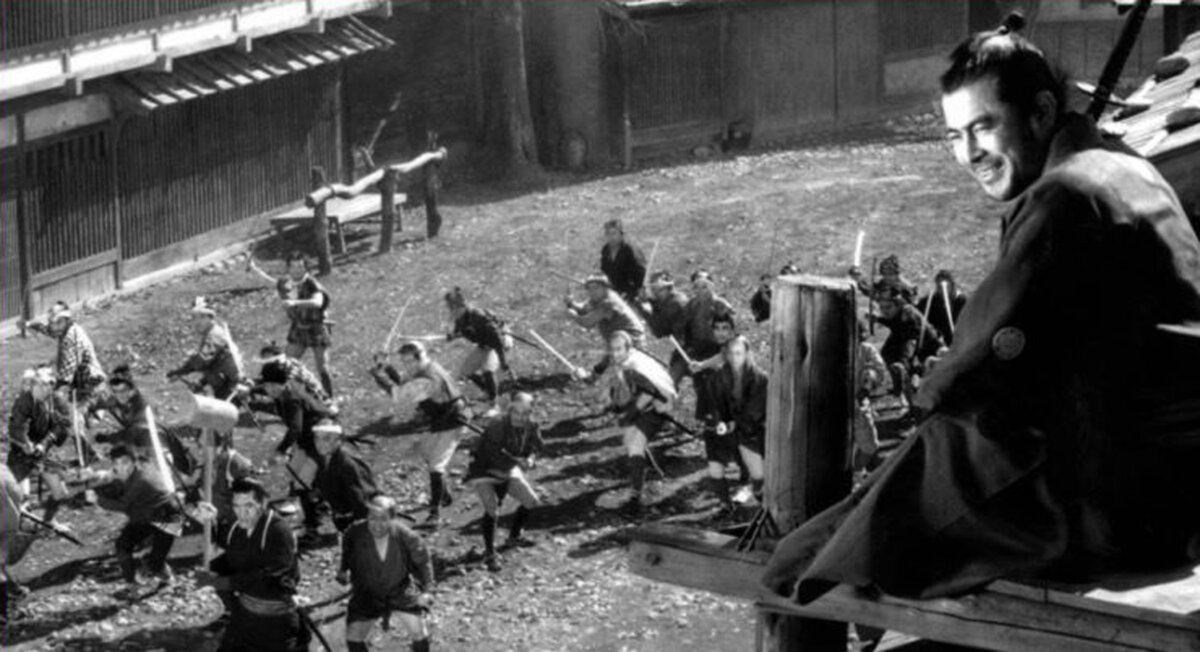
Sanjuro struts through the chaos like a force of nature. Even when stripped of his sword, the guy’s brain and brawn make him a nightmare to deal with because it’s never just about the blade. The battles are brutal, and the alliances are shaky.
Sanjuro’s deadpan cool and unpredictable moves keep everyone guessing until the final showdown. He outsmarts the fools, survives the fallout, and reminds the town that sometimes the loner with nothing to lose can shake up everything.
Crossroads of Old and New
This is one of those rare films that hits almost every mark with confidence and style. The film is equal parts clever and cool with Toshiro Mifune absolutely owning his role.
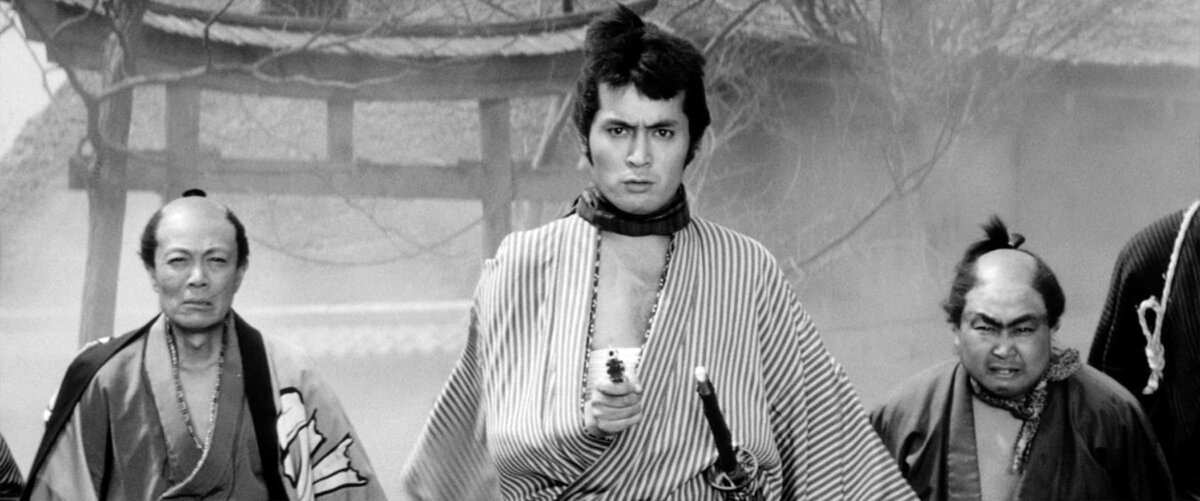
One of the more intriguing moments is the arrival of a wild card (Nakadai’s Unosuke) wielding an American revolver; this is an unmistakable symbol of how foreign influence was stirring the pot in Japan’s fading Edo era. This sudden disruption is both a nod to historical change and a reminder that not all progress is welcomed with open arms.
The cast of characters is a parade of unpleasant types, making Sanjuro’s role as the calm, calculating ronin all the more satisfying. The two warring gangs provide plenty of comic relief, particularly Inokichi (Daisuke Kato), the bumbling dim-witted brute, and Unosuke, who’s as deadly as he is cocky.
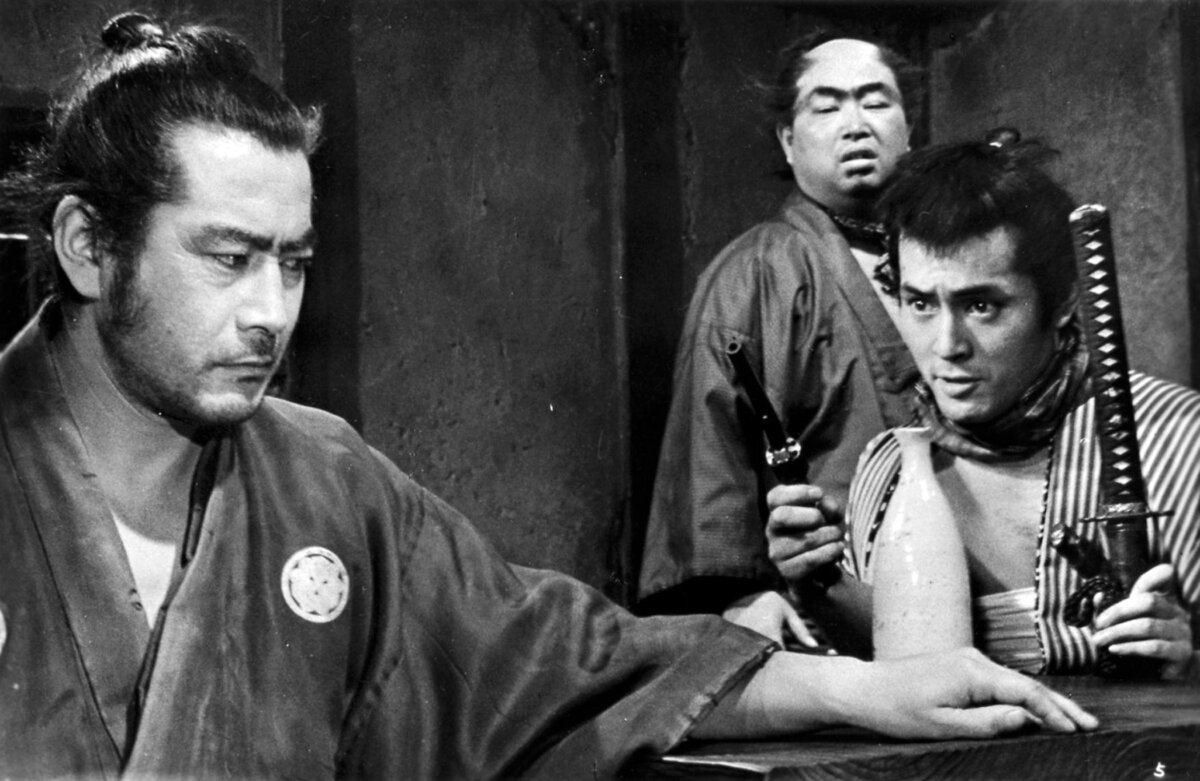
Watching Sanjuro manipulate these fools is like seeing a chess master dismantle amateurs, all while chewing on a toothpick and cracking a sly smile. The humorous tone gradually changes to a grimmer tale of revenge and survival, but Sanjuro’s unflappable coolness remains the constant.
While “Yojimbo” may not provoke deep philosophical debates like “Rashomon” or boast the epic scope of “Seven Samurai,” it still stands tall as a stylish, influential classic. Mifune’s portrayal of Sanjuro is iconic. His gritty, no-nonsense hero quietly changed the face of cinema and paved the way for the Western “wandering stranger” archetype.
“Yojimbo” channels the spirit of the American Western, complete with empty town streets and a lone stranger arriving with an air of quiet menace. This homage later inspired Sergio Leone’s “A Fistful of Dollars” (1964), bringing Kurosawa’s vision full circle with a reinterpretation that launched Clint Eastwood’s iconic persona.
Without this forerunner of the lone samurai, Clint Eastwood might have never become the stoic legend we know today.
“Yojimbo” is available on Amazon, Apple TV, and HBO Max.
‘Yojimbo’
Director: Akira Kurosawa
Starring: Toshiro Mifune, Eijiro Tono, Tatsuya Nakadai
Running Time: 1 hour, 50 minutes
Not Rated
Release Date: Sept. 13, 1961
Rated: 4 1/2 stars out of 5
What arts and culture topics would you like us to cover? Please email ideas or feedback to features@epochtimes.nyc