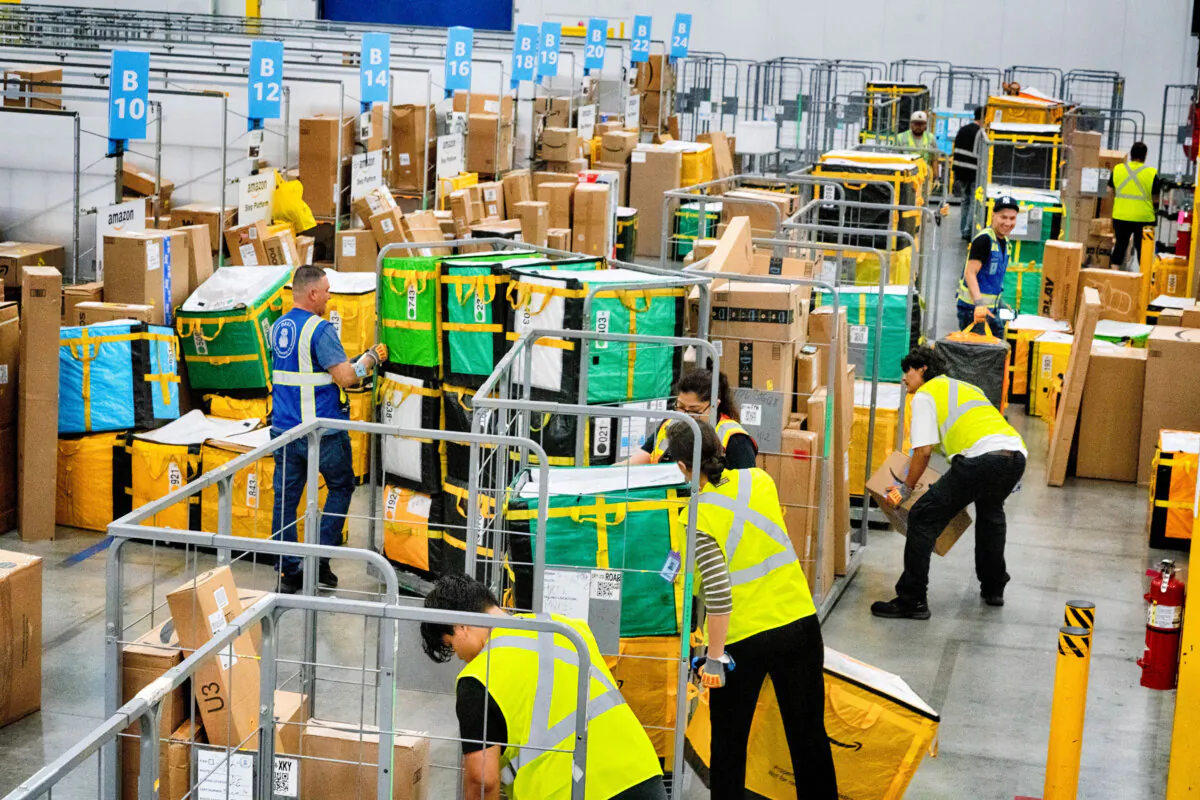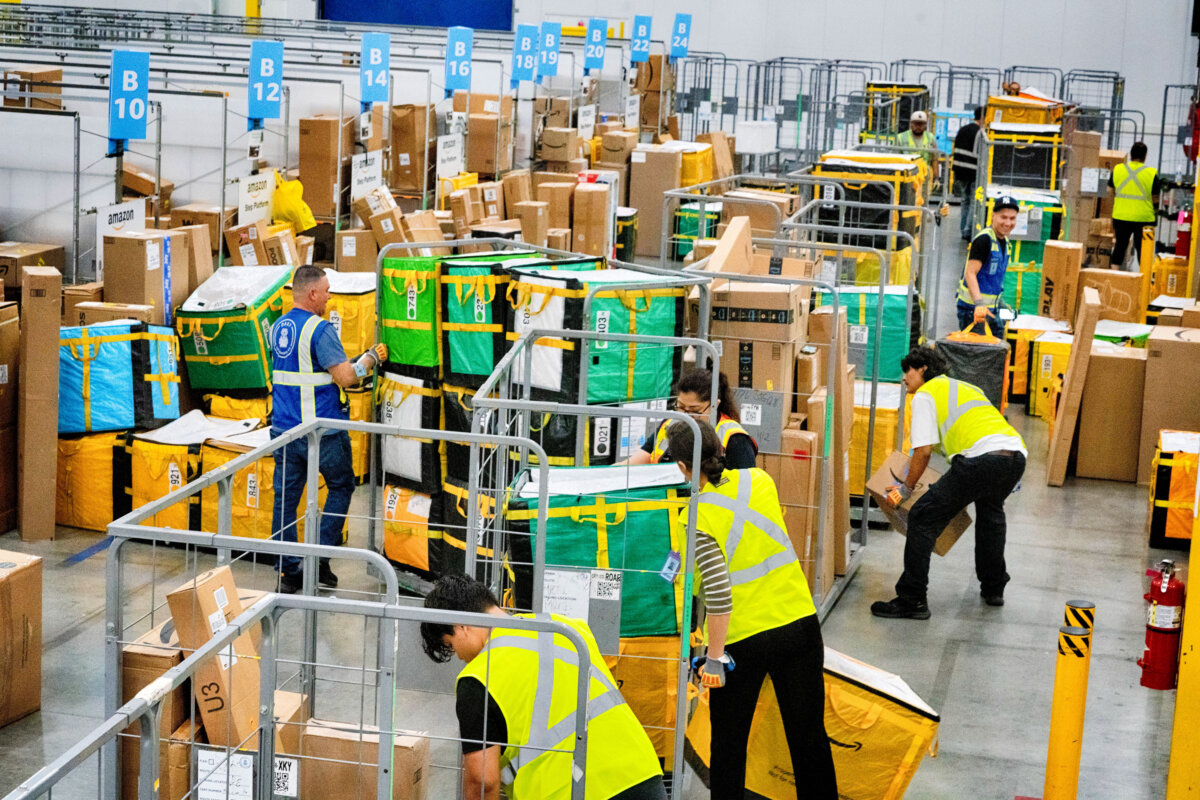

Four former Amazon female warehouse employees have sued the e-commerce giant, alleging “systematic, company-wide failure” to accommodate the needs of pregnant workers, according to the class action lawsuit.
The complaint, filed by attorneys from nonprofit group A Better Balance, alleges violations of the Pregnant Workers Fairness Act (PWFA). Businesses are required to make “reasonable accommodations” for pregnancy, childbirth, and related medical conditions of their employees, according to the Equal Employment Opportunity Commission (EEOC).
A “reasonable accommodation” includes offering frequent breaks, allowing part-time work or telework, altering rules regarding sitting or standing while working, and making facilities accessible for pregnant employees.
When the four women became pregnant, they asked for pregnancy-related accommodations. However, “Amazon denied them basic modifications the law recognizes pregnant workers regularly need, even in uncomplicated pregnancies: Bathroom breaks. An extra 15-minute break. Sitting instead of standing,” said the Sept. 8 lawsuit, filed in the U.S. District Court for the Eastern District of New York.
The lawsuit also alleges that Amazon took part in “deliberate policies of retaliation against workers who seek pregnancy accommodation.”
If an employer seeks documentation from employees who seek accommodation under PWFA, the business can only request a minimum amount of documentation sufficient to confirm that the applicant’s physical or mental condition arises from pregnancy, childbirth, or related medical conditions, the EEOC said.
The lawsuit alleges that when the plaintiffs sought accommodation, Amazon demanded paperwork for “every pregnancy-related accommodation request, no matter how basic.”
Moreover, when plaintiffs took medically necessary breaks or absences, such as to visit a doctor, Amazon allegedly deducted the time from their unpaid time-off allowance. This depleted the plaintiffs’ limited unpaid time-off allowance, and the company then allegedly threatened termination.
In one instance, Amazon is accused of punishing a plaintiff for breast pumping in the company’s lactation room, designating the time spent as “inactive,” according to the complaint.
Amazon eventually fired the four plaintiffs. Three of the women worked for the company in Rochester, New York. One worked until about June 22, 2025; another was employed until about May 7, 2026; and the third woman worked until about July 13, 2026. The fourth plaintiff was employed in Lancaster, New York, until about March 21, 2025.
“Plaintiffs and other Amazon employees who are currently pregnant or may become pregnant—all of whom work tirelessly to make Amazon’s operations possible—should not have to choose between their health and their livelihood,” the complaint said.
The lawsuit asked the court to order Amazon to modify its policies and practices to ensure the company is not discriminating against pregnant employees.
The Epoch Times reached out to Amazon for comment but did not receive a response by publication time.
Kelly Nantel, an Amazon spokesperson, told Reuters that the company provides pregnancy-related accommodations to tens of thousands of employees annually, and approved more than 99.9 percent of requests in the past year.
“Ensuring the health and well-being of our employees is one of our greatest responsibilities,” Nantel said.
Amazon Pregnancy Policy
According to Amazon, the company provides various pregnancy-related benefits to employees in the United States, including paid pregnancy leave.
“Amazon will pay 100 percent of your salary for up to 14 weeks while you’re on doctor-ordered short-term disability,” the company said.
Life insurance, healthcare, vacation, and 401(k) continue during this period.
In addition, birth parents and primary caregivers are allowed to gradually return to their jobs at a reduced work schedule over a period of eight weeks following a pregnancy.
One of the plaintiffs in the New York case, Jennifer Hatch, had previously filed a complaint with the EEOC alleging Amazon did not accommodate her requests during pregnancy. On Feb. 3, the EEOC’s Washington Field Office issued a determination stating that there was evidence showing that Amazon did not accommodate such requests.
Moreover, there is “reasonable cause” to believe that since late June 2023, Amazon has “discriminated against a nationwide class of female warehouse associates, based on their pregnancy, by failing to accommodate their limitations related to pregnancy, childbirth, and/or related medical conditions, and in some instances forcing them to take leave, in violation of the PWFA,” the determination said.
Reuters contributed to this report.
 Friends Read Free
Copy
Facebook
Tweet
Friends Read Free
Copy
Facebook
Tweet