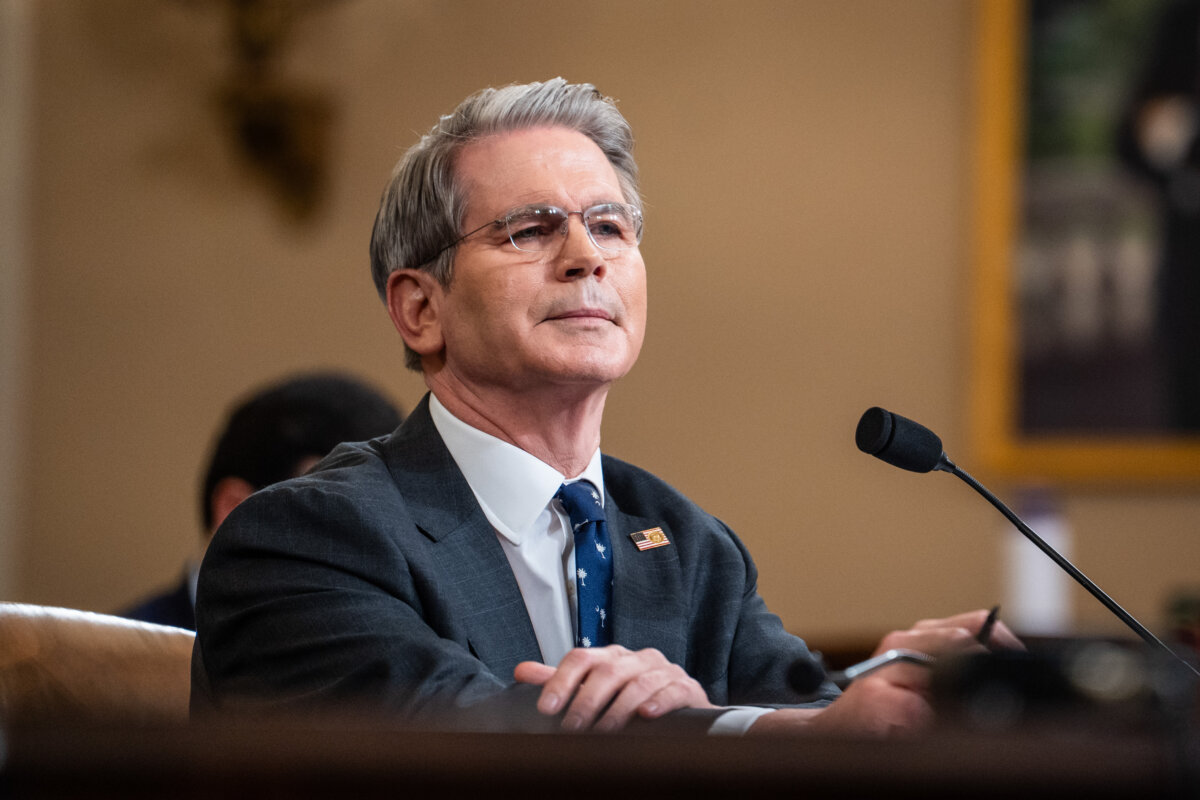

The United States and India are “very close” to a trade agreement, Treasury Secretary Scott Bessent said on July 1.
In a July 1 interview with Fox News, he said the pending deal is aimed at lowering tariffs and preventing a sharp increase in reciprocal tariffs scheduled for July 9.
“We are very close with India,” Bessent said.
He told the media outlet that career trade negotiators from the Treasury Department, the Commerce Department, and the Office of the U.S. Trade Representative have been impressed with the offers made during talks.
“They can’t believe what we’re getting,” he said. “These are deals like they’ve never seen before.”
India is among more than a dozen countries negotiating with the Trump administration to avoid an increase in tariffs that would take effect after a 90-day tariff pause announced by President Donald Trump in April expires on July 9.
Under the current tariff schedule, India could face so-called reciprocal tariffs as high as 27 percent if no deal is made before the deadline next week.
Indian officials recently extended their visit to Washington to continue negotiations and address outstanding concerns.
On June 30, Indian Foreign Minister Subrahmanyam Jaishankar acknowledged the complexity of the talks during an event in New York City, and he did not guarantee that a deal would come to fruition.
In the interview, Bessent said the Trump administration’s broader trade strategy involves rebalancing trade relationships and ensuring that deals are fair to U.S. workers and businesses.
“Every country has a different agenda, a different set of wants,” he said.
However, Bessent said he is following directions from Trump to not accept deals that are “not fair” to the American people.
Trade talks with other countries are ongoing. The UK has reached a limited trade deal with the United States that includes tariff relief and special access to sectors such as aerospace and beef.
Bessent also indicated that the administration plans to focus on passing a tax and spending bill by July 4 before again putting its full attention on trade deals.
The Trump administration imposed the initial 10 percent tariffs earlier this year as part of efforts to address trade imbalances and protect U.S. industries.
Along with the UK deal, the United States has reached an agreement with China that sets U.S. tariffs on Chinese goods at 55 percent and guarantees that China will supply rare earth elements.
In response to a question about the flow of rare earth elements to the United States, Bessent said: “We are hoping that they will flow at a faster rate.
“They are not flowing as they did before April 4, but we are confident that the Chinese will live up to their side of the deal.”
 Friends Read Free
Copy
Facebook
Tweet
Friends Read Free
Copy
Facebook
Tweet