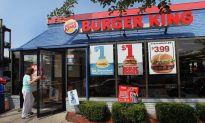

Restaurant Brands International (RBI), the parent company of Burger King, on Feb. 12 reported fourth-quarter growth, helped by strong international growth and progress in its U.S. turnaround plan.
The company said its consolidated system-wide sales rose 5.8 percent in the fourth quarter, ending Dec. 31, compared with 5.6 percent in the same period of 2024.
Consolidated comparable sales increased 3.1 percent, led by 6.1 percent growth in its international segment, 2.8 percent at Tim Hortons Canada, and 2.6 percent at Burger King U.S.
“Our performance in 2025 reflects the progress we’ve made strengthening our brands and our system, driven by consistent execution from our teams and franchisees,” CEO Josh Kobza said in a statement.
“By staying focused on the fundamentals, we delivered our third consecutive year of roughly 8% organic Adjusted Operating Income growth. As we enter 2026, I’m encouraged by the stronger, more focused foundation we’ve built for the long term.”
However, for the full year 2025, system-wide sales stood at 5.3 percent, down from 5.4 percent in 2024.
RBI, which also owns Tim Hortons, Popeyes, and Firehouse Subs, said it met its 2025 targets for organic adjusted operating income growth and net leverage. The company returned about $1.1 billion to shareholders in 2025 while continuing to invest in its brands.
Burger King Turnaround
At Burger King U.S., the company continued its multi-year “Reclaim the Flame” plan, which aims to boost sales and improve franchisee profits.
The plan includes up to $700 million in investments through 2028, covering advertising and digital upgrades, as well as restaurant remodels, relocations, and new equipment and technology.
Burger King reported total revenues of $383 million, up from $375 million in the same period in 2024. For the full year 2025, it reported total revenues of $1.514 billion, up from $1.451 billion in 2024.
The company said the rise in Burger King’s fourth-quarter and full-year revenue was mainly due to higher advertising and other service revenues, as franchisees paid a higher advertising contribution rate.
Those gains were partly offset by lower sales at company-owned restaurants due to refranchising.
International Growth
International markets remained a key source of strength, with comparable sales up 6.1 percent in the fourth quarter. Tim Hortons Canada and Burger King U.S. posted more moderate gains.
Overall, international growth and acquisition benefits helped balance softer quarterly system-wide sales.
Company-wide, total revenue fell in the fourth quarter due to lower system-wide sales, RBI said.
For the full year, however, total revenue increased, helped by a full year of results from Popeyes restaurants acquired in a 2024 Carrols Restaurant Group deal, compared with only a partial contribution that year.
Adjusted operating income for the fourth quarter was roughly in line with the previous year. For the full year, it increased primarily due to lower general and administrative expenses, again driven by lower compensation costs.
Future Outlook
Looking ahead, RBI expects 2026 general and administrative expenses, excluding Restaurant Holdings—part of the business that owns and operates restaurants directly rather than franchising them—to range between $600 million and $620 million.
The company expects to spend about $400 million in 2026 on building upgrades, new equipment, and payments or incentives to landlords and franchisees.
In the longer term, RBI reaffirmed its 2024-2028 targets.
The company expects same-store sales to grow by more than 3 percent on average annually and profits to rise by more than 8 percent. It also plans to increase its total number of restaurants by more than 5 percent by the end of the period.
 Friends Read Free
Copy
Facebook
Tweet
Friends Read Free
Copy
Facebook
Tweet