


A middle-aged psychology professor carried decades-long resentment toward his mother.
He believed his feelings were justified, so he let them remain—but over time he realized that his resentment had seeped into him, to the point that it was affecting every aspect of his life.
Psychologically, he experienced chronic anxiety, depression, and insomnia. Physically, he developed intense gastric pain and ulcers. His condition became so severe that he often could not eat normally and survived mostly on porridge. He grew extremely thin, weak, and visibly ill.
I gave him a prescription: Silently recite the word “forgive” each time resentment surfaced.
Three days later, he told me that he felt the resentment inside him was dissolving. He then experienced a profound emotional release.
Sun Simiao, the renowned Tang Dynasty physician, also known as the “Medicine King,” established a treatment method rooted in virtue. He believed that without virtue, even the most potent drugs would fail to heal, whereas a virtuous lifestyle could heal naturally.
I often inform my patients that traditional Chinese medicine (TCM) does not separate who you are from how healthy you are. Through the lens of TCM, your habits, emotions, and moral character are seen as continuously shaping your overall health.
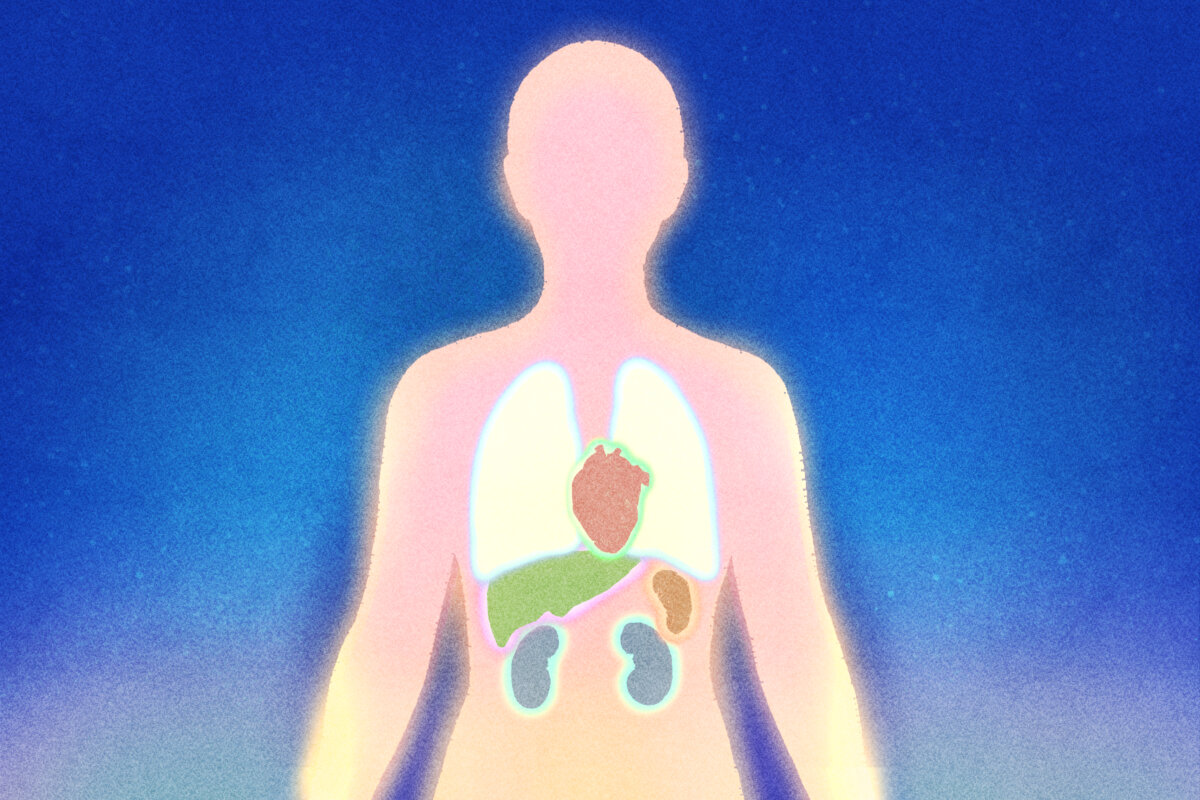
More interestingly, in TCM, each major organ represents a specific virtue.
The Organ-Virtue Connection
The cause of the professor’s ailments was the resentment he carried, which stagnated his liver energy flow.
The Liver
In TCM, the liver is linked to compassion (仁), meaning to be loving, kind, and considerate to people.
“Compassionate people love and cherish life,” it is said in the Chinese historical official text “Comprehensive Discussions in the White Tiger Hall.”
The liver represents vitality, the generative force of life. According to the five-element theory, “the liver corresponds to wood, appearing green with branches and leaves.”
In TCM, the liver’s primary role is to ensure the smooth flow of the vital energy, called qi, throughout the body. Practicing compassion in daily life naturally aligns with the liver’s function in promoting a sense of ease.
When liver qi is obstructed, one will feel easily anxious and angry, and it can also lead to digestive issues.
As the professor learned to respond to his mother with kindness and forgiveness, his liver qi began to flow freely again. For the first time in many years, he was able to genuinely face his elderly mother. Instead of avoiding her, he began to care for her; their relationship softened completely—and the transformation did not stop there. His health improved, his pain subsided, his appetite returned.
The Heart
The virtue of the heart is propriety (禮)—the foundation of appropriate conduct, respect, and harmonious social interactions. In TCM, the heart does more than circulate blood; it is the home of Shen, the Chinese concept of mind-spirit and consciousness. Embracing the virtue of propriety supports the heart’s function and fosters inner clarity.
The Spleen
The spleen is associated with sincerity (信), or integrity.
According to the five-element theory, the spleen is represented by earth.
“Earth nurtures and sustains all things, embodying the principle of bearing and nourishing life without partiality—this is the utmost expression of sincerity,” the official text reads.
In TCM, the spleen system is responsible for nourishment and digestion, and it governs thoughts and muscles. Hence, a person with sincerity has better strength and reliability in thought and action.
The Lungs
The lungs represent righteousness or letting go (義).
“Yi means making decisive judgments,” the text reads.
The lungs are linked to metal, like a sword that governs courage and discernment. The lungs, as an organ system, also regulate how the body takes in and lets go of things—breathing, the immune system, and even emotion.
The Kidneys
The kidneys are associated with the virtue of wisdom (智).
“Wisdom means to advance and halt without hesitation or doubt,” the text reads.
The kidneys correspond to water, which also flows forward without confusion. The kidneys govern the foundation of life and store essence. A person who cultivates wisdom has greater reserves and longevity.
At the same time, negative emotions—or vices—can create physical tensions that block the flow of qi. If this blockage happens in organ systems, it can gradually weaken them.
For example, compassion boosts the liver, while opposing emotions such as anger and resentment can disrupt it. Pent-up emotions stagnate the liver’s qi, raising stress hormones and impairing liver function. That’s why the professor’s long-term resentment led to a variety of symptoms.
Cultivating compassion allows one’s soft, genuinely kind self to prevail, and it helps release liver stagnation, promoting emotional and physical flow.
[series_posts_list][/series_posts_list]
Simple Practices
A calm mind is the first step toward harmonizing the internal body state.
Smiling
The simplest trick is to start your day with a gentle smile.
Interestingly, a group of psychologists experimented with registered participants, using gentle electrical stimulation to briefly tug at their faces, inducing smiles or frowns in their facial muscles without their consciously “trying” to express these emotions.
The psychologists found that when people’s faces were stimulated to smile, they felt happier and more positive—and when stimulated to frown, they felt less positive. The stronger the muscle movement, the bigger the mood shift.
In TCM, smiling is more than a positive mindset practice. A smile relaxes the facial muscles, and the face is richly connected with energy channels (meridians) that relate to the internal organs. So when the face relaxes, it helps qi circulate more smoothly throughout the system.
Smiling especially benefits the heart system and Shen, as joy is the heart’s natural emotion. By smiling gently, you help the heart take the lead in regulating your emotional state. When the heart is calm and steady, the functions of the five organs can move toward greater harmony and coordination.
Acts of kindness
Kindness and compassion are natural antidotes to anger, resentment, and emotional stagnation, so another way to practice virtuous living is to engage in random acts of kindness. Kind acts broaden your mind and heart, helping qi to flow more freely.
In one study, older adults with high blood pressure were assigned to spend money either on themselves or on others. Those who spent money on others had significantly lowered blood pressure, comparable to the effects of starting an exercise regimen or taking antihypertensive medication.
Another study shows that acts of kindness increase positive emotions such as joy and happiness and reduce negative feelings such as anxiety, guilt, and sadness. The study found that although self-care activities such as spa visits are relaxing, they may not elicit the same range of positive emotions as helping others.
Journaling
You can also try journaling before sleep. Journaling can help with removing stagnant emotions. When thoughts are written down, the mind no longer needs to keep repeating and carrying them internally, reducing rumination and transforming mental looping into clear processing.
Journaling is especially valuable for the spleen and heart because excessive thinking and worry can weaken both.
Recitation
You can also recite certain words, as the professor did. If you have resentment toward someone, every time it arises, recite the term “forgive.” When you are about to lose your temper, recite the term “compassion” or “be kind.”
Practicing virtue has broader benefits—it can change your lifestyle. Ancient wisdom upholds that one’s lifestyle follows one’s character. A person who cultivates virtue is more likely to eat a balanced diet, sleep regularly, avoid stimulants, and practice moderation.
“Therefore, those who cultivate life should not rely solely on medicines,” the Medicine King Sun Simiao wrote in his essential medical text “Thousand Gold Prescriptions for Emergencies.” “They must also cultivate virtue in all their conduct.”
“When all virtues are fully practiced, even without medicinal remedies, one can attain longevity,” he wrote.