


The eyes are often called the windows to the soul. In my clinic, I see this age-old saying in a more practical way, especially when some patients meet me with steadiness and warmth in their gaze.
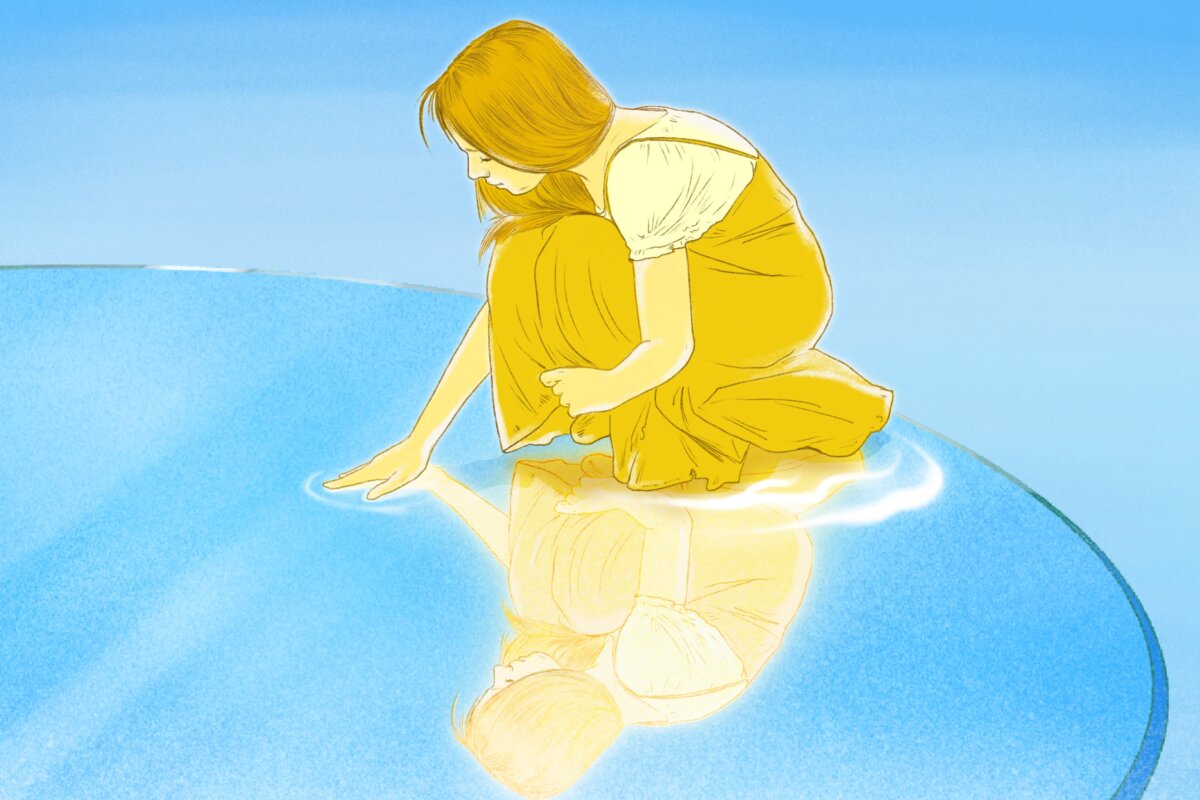
Clear presence or conscious awareness—the sense that the mind is settled—is called Shen (神) in traditional Chinese medicine (TCM). Classical Chinese physicians likened the Shen to an inner “mirror of life” that reflects everything happening within a person.
When your “inner mirror” is bright and steady, it reflects everything rationally. When clouded and stirred by emotion or illness, the mirror distorts what it reflects, and you lose true sight, and even ordinary situations can feel confusing or overwhelming.
Let me explain this with one of my patients’ stories.
What Shen Means in Real Life
A 17-year-old girl came to see me after contracting the COVID-19 infection in 2021.
Before her infection, she had been healthy, confident, and academically strong. Afterward, her parents saw her as more fearful and socially withdrawn, and she struggled to concentrate. She began having frequent nightmares, disrupted sleep, and palpitations that left her feeling unsettled even during the day. Once social, the girl began avoiding school. It was as if she were in a constant fight-or-flight mode, and her mind just could not rest.
This is what it looks like when Shen loses its anchor. To understand what was happening to her, let’s see how classical medicine describes Shen.
In the ancient medical text of “Yellow Emperor’s Classic of Internal Medicine” (Huangdi Neijing), Shen is said to dwell in the heart and travel wherever blood flows. Let me explain what that means in practical terms.
In Chinese medicine, the heart is not just the physical organ confined to the chest—it is expressed throughout the body via the movement of blood. More broadly, the heart is a functional system associated with circulation and with the crucial role of anchoring awareness. Therefore, when blood circulation is good, your consciousness (or mind) is alert and clearheaded. When circulation is poor—due to illness, chronic stress, or burnout—you feel restless and foggy-headed.
In other words, the consciousness struggles to settle because the body lacks the nutrition (resources) needed to keep it steady. Western science echoes the same.
Neuroscience places awareness and cognition within the brain’s complex network that controls attention, emotion, and self-reflection. The brain and nervous system depend heavily on the blood supply and require constant nourishment from blood to function. In other words, mental clarity depends on adequate nourishment and circulation.
In TCM, Shen is described as the basis of all human activities, encompassing both a person’s spirit (or soul) and wisdom. It is precisely how life expresses itself through presence, emotions, and vitality—a person’s complete consciousness.
Why the Mirror Turns Blurry
Several factors can dim your inner mirror’s shine. Let me break this into three simple pathways.
First, irregular rhythms and chronic stress can throw your whole system into chaos by obstructing the smooth flow of qi (vital energy). You may feel chest tightness, headaches, or restlessness. Your body is tired, but your mind won’t quiet down—Western science describes this as a hyperarousal state that can put your health at risk in the long run.
Second is what you feed your body and mind. Be it excess caffeine, alcohol, ultra-processed foods, or persistent screen use, all of these can shake your inner mirror. What follows are uncontrolled thoughts, poor sleep, and reduced focus.
Third, aging and illness can deplete blood and reserves, weakening your body’s ability to harbor Shen and making the inner mirror more fragile. You may find it hard to cope with everyday emotions and work demands.
TCM doesn’t view these patterns as just mental states but instead as systemic imbalance in the body. Restoring your Shen’s brightness and clarity requires balancing the whole body system, so that your heart can once again root for your Shen.
To see how it plays in real life, let’s go back to that teenage girl I talked about earlier.
In her case, I focused on restoring the conditions in which her inner mirror could become clear again—so that her awareness could become strong rather than scared. Her treatment plan included acupuncture once every four weeks and an individualized herbal medicine twice daily. The priority was to regulate the post-viral imbalance, nourish the body, and anchor the spirit and mind—an approach described as “calming the heart and settling Shen.”
After the first acupuncture session, she told me her chest felt lighter and that her thinking became clearer and more positive. Her fear softened enough that she could breathe more deeply, and she slept more easily that night. After four weeks, she reported that her mood and sleep were steadier and that her long-standing menstrual cramps had disappeared.
Over the following several months, her condition remained stable, and her emotional state, sleep, and physical health continued to improve. She gradually engaged in school and social activities and later won a regional public speaking competition.
In the wisdom of TCM, this patient’s recovery reflects the core principle that body and mind are one and the same and influence each other. When the body’s systems—such as nourishment, circulation, and sleep—regain balance, the mirror of awareness clears and turns bright again.
[series_posts_list][/series_posts_list]
Polishing Your Inner Mirror
I usually suggest practical self-care and moral cultivation as the quickest and most efficient ways to brighten the clouded mirror of life.
1. Start With the Basics: Create predictable rhythms to anchor Shen and make your nervous system feel in control. Wake up and go to bed at a consistent time as often as possible. Eat regular meals and avoid heavy late-night dinners. Limit caffeine and alcohol in the evenings.
2. Connect With Nature and Others: Take a break from screens and spend a few minutes outdoors each day to renew your dimmed mirror’s light. Talk to your loved ones or friends, and set a goal to listen attentively and be present in the moment. Sometimes all you need is to slow down a little and breathe more.
3. Meditative Exercises: Meditation, at its core, involves letting go of negative thoughts and mental clutter and restoring internal harmony. Neuroscience supports that meditation practices can quiet brain regions tied to rumination and strengthen the areas linked to awareness.
From a TCM perspective, “clearing” is not just mental—it’s physical too. When someone sits in meditation, external noise and busy movement quiet down. As clearing happens, the body’s internal regulation increases, qi and blood flow more smoothly, nourishing both body and mind. The Shen is no longer pulled outward by activity or stress and naturally feels settled. In modern terms, the body shifts from a reactive state to a more balanced, self-regulating one. Clarity arises naturally as the system clears.
4. Moral Clarity Guards the Mirror: Interestingly, the Chinese character for Shen (神), also used in the TCM concept of mind and spirit, means “God” or the “Divine.” This highlights how traditional Chinese culture views mind, spirit, and God—as if it purposefully did not clearly differentiate between them.
Ancient medical and philosophical texts have linked a clear and bright Shen to moral conduct, suggesting that honesty and compassion are not only virtues but also the basic foundations for health and longevity. Western medicine has begun to advocate the same, with research associating the practice of moral virtues with a range of health benefits.
Lastly, it is important to remember that having a bright and clear Shen doesn’t mean you will never feel stressed or strained. Rather, it means that you can confidently return to clarity whenever your inner mirror blurs—because that warm gaze in your eyes is rooted deep in your heart and values, connecting everything you experience right to your soul.
Views expressed in this article are the opinions of the author and do not necessarily reflect the views of The Epoch Times. Epoch Health welcomes professional discussion and friendly debate. To submit an opinion piece, please follow these guidelines and submit through our form here.