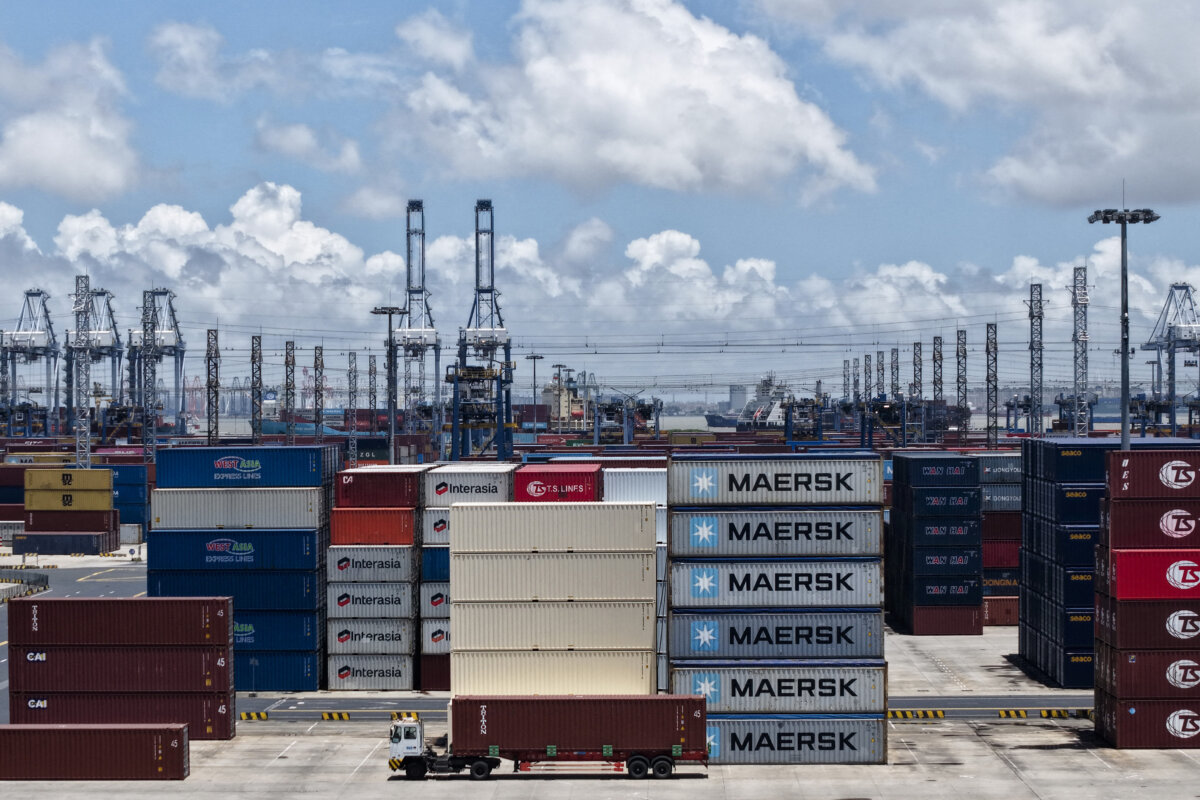

If trade disputes between the United States and China were to spiral into total export-import bans, both nations’ economies would be devastated. But China’s economy, which relies on exporting products that can be manufactured elsewhere, would suffer far more and for far longer, researchers have said.
According to Dartmouth professor Stephen Brooks, if the United States and its allies were to impose “an economic cutoff” on China, it would cause five to seven times more damage to the Chinese economy than to the U.S. economy and China’s gross domestic product (GDP) would degrade by 15 percent to 51 percent within a year.
Brooks, coauthor of “Command of Commerce: America’s Enduring Economic Power Advantage over China,” was among four experts who participated in a Dec. 5 discussion on “critical supply chains in an age of great power rivalry” at the Brookings Institution’s Strobe Talbott Center for Security, Strategy, and Technology in Washington.
All four agreed that the United States, especially if working with the European Union, Japan, South Korea, and Taiwan, is better positioned to weather a “trade war” than China’s ruling Chinese Communist Party (CCP).
That assessment is contrary to the conventional wisdom that holds that there is no way for such countries to hurt China without hurting themselves as much, Brooks said.
“That’s mostly wrong,” he said. “A big reason that’s misunderstood is China likes to say it’s 12 feet tall, and then our government says, ‘Yep, they’re 12 feet tall.’”
China is, indeed, the world’s leading processor of critical minerals that are essential in modern manufacturing, including military applications. Its industries control 90 percent of the global magnet market, as documented in a recent congressional report.
According to the report, China-based processors refine 85 percent to 90 percent of rare earths and control at least 75 percent of the global market for 30 of 54 commodities deemed “essential to national security” by the U.S. Geologic Survey in its 2025 Critical Minerals List.
U.S. manufacturers are 100 percent import-reliant for 12 of those 54 commodities and more than 50 percent import-reliant for 29 of them. Since April, the CCP has imposed “export control restrictions” on 12 rare earths—classified collectively as one critical mineral on the survey’s list—including five in October.
China has since suspended restrictions for a year on the five it sanctioned in the October trade negotiations with U.S. President Donald Trump, but restrictions imposed on seven other rare earths remain intact.
The CCP’s manipulation of global minerals markets is, “by far, the best weapon China had,” Brooks said.
Its other weapons are not nearly as valuable, according to him.
“Therefore, China may well have just used its best weapon,” he said. “If I was a Chinese strategist, I would have held … that in reserve for what I would call a true crisis.”
If the United States were to expand export restrictions on Chinese industries, it “would have such amazing power,” Brooks said.
“In terms of things China needs from the U.S. and its allies to make what it wants to make, I can’t stretch my arms wide enough,” he said.
The book “Command of Commerce,” published in April after three years of research with coauthor Ben Vagle, a 2025 Knight-Hennessy Scholar, exposed skewed and misinterpreted data, poorly defined standards in measuring economies, and a “quite shocking” revelation that “no one has actually modeled what, exactly, would happen if there was a cut-off” in trade with China, Brooks said.
Among the discoveries, he said, is the fact that “China’s economy is one-third smaller than it’s currently measured to be, not 3 percent—33 percent—which means China’s economy is more like half [the size of the United States’] rather than two-thirds.”
“The Soviet Union, at its peak of economic power in 1975, was at 57 percent of U.S. GDP,” Brooks said.
“China is not yet as large relative to us as the Soviet Union was during the Cold War.”
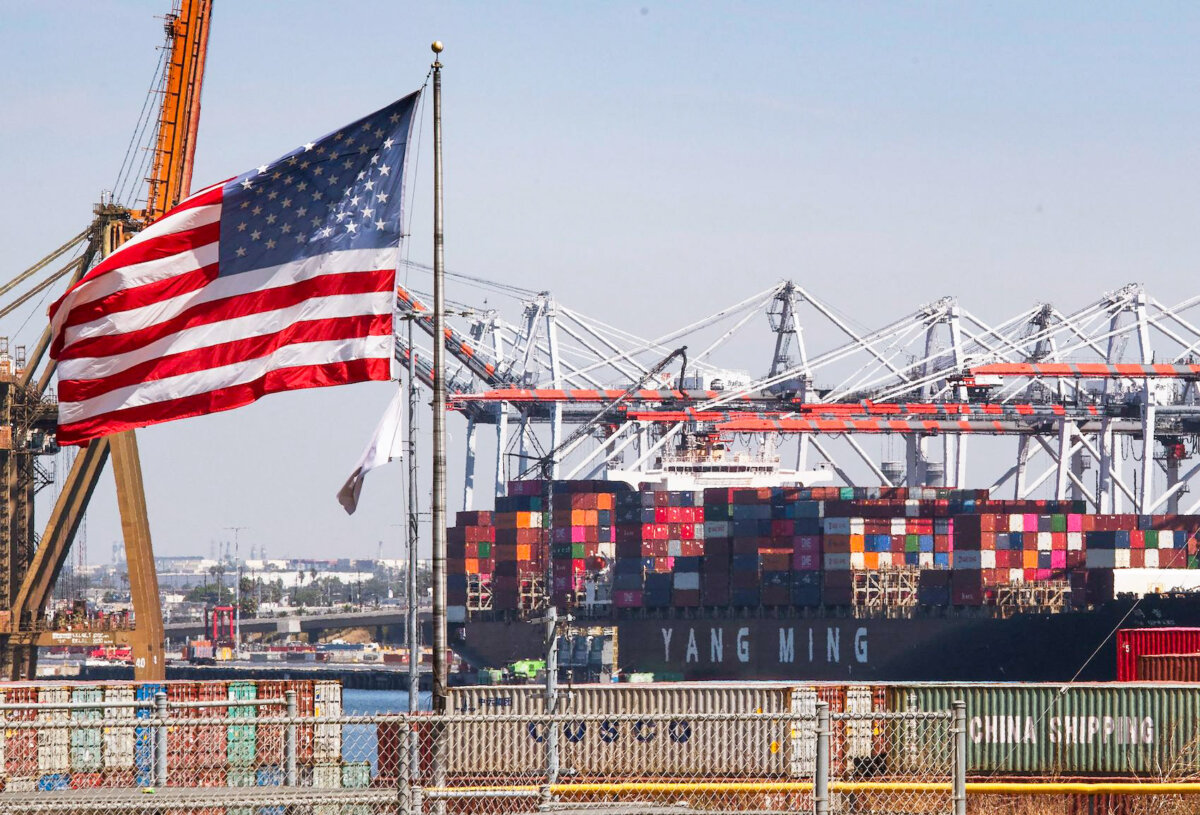
Few ‘Acute’ Vulnerabilities
Another finding, he said, is the fact that 55 percent of global high-tech profits are accrued by U.S. firms, while Chinese companies only account for 8 percent. This confirms that China is not operating where technologies are developed but, instead, where finished products are assembled—a role and opportunity that other nations could assume.
“There’s tons of stuff made in China,” Brooks said. “If you look at it geographically, China is very impressive. But if you ask, ‘What do Chinese firms themselves make?’ it’s much less impressive.”
Globalization favors the United States, according to Brooks.
“In the high-tech space, it’s essentially the U.S. plus its allies at about 85 [percent] to 90 percent [of global profits],” he said. “If that 90 percent cuts China off, China will fail.”
Among the misperceptions is “counting things like the iPhone as part of China’s technological production,” Brooks said, when 32 percent of components come from the United States, 25 percent from South Korea, 12 percent from Japan, and 7 percent from Taiwan.
“Number five is China at 3.8 percent, roughly about $20 worth of value in the iPhone,” he said. “It’s not a Chinese phone, but it’s counted as being a Chinese phone in all the data that we have, including when people say that China’s the ‘manufacturing superpower.’
“The other problem is they’re putting all manufacturing in the same boat, so that includes semiconductor chips and chopsticks both together. And so really what you need to do is separate out the things that are really of crucial importance: the high-tech production.
“And if you look at high-tech production, the U.S.—not China—is the world’s manufacturing superpower. The U.S. is at 29 percent, and China is at 16.”
Brooks said “China is a very unique economy” because investment as a share of its GDP has been at least 35 percent since the mid-1980s, despite diminishing returns without matching boosts in consumption.
“No one else is like this, and it causes [China’s] GDP to be skewed and other measures to be skewed,” he said.
According to Brooks, the book was briefed more than 20 times before publication by federal agencies, who absorbed everything but added nothing.
“The fact that our government had not done this [analysis] is quite shocking,” he said.
It was not always this way, according to him.
“In the Cold War, the biggest part of the CIA was devoted to measuring the Soviet economy,” he said. “We got rid of that. We’ve never brought it back. We need to bring it back.”
Moderator Kari Heerman, a Brookings senior fellow of trade and economic statecraft, said what makes Brooks’s book different from most analyses is that it “focuses more on the offensive capability that the U.S. can wield, particularly in a conflict scenario with China,” by examining “widely misunderstood” economic data.
She said a November Brookings analysis coauthored by the other three panelists “offers a very clear framework about how the United States should not only identify commercial relationships that might pose a national security risk … but also, very importantly, how to prioritize those potential risks.”
Michael O’Hanlon, director of the Strobe Talbott Center and author of “To Dare Mighty Things: U.S. Defense Strategy Since the Revolution” (to be published in 2026), said mounting concerns about defense industry supply chains—particularly regarding rare earths and semiconductors—justly garner attention and increasing resources.
“This got us thinking, are there other areas in the economy where, if a foreign adversary chose to really put their metaphorical foot on our throat, it could threaten the basic functioning of society, the economy, [and] put a lot of lives immediately at risk?” he asked.
The answer, O’Hanlon said, is that “there aren’t that many acute supply-side vulnerabilities” that would cause mass economic upheaval in the United States in a trade war with the CCP.
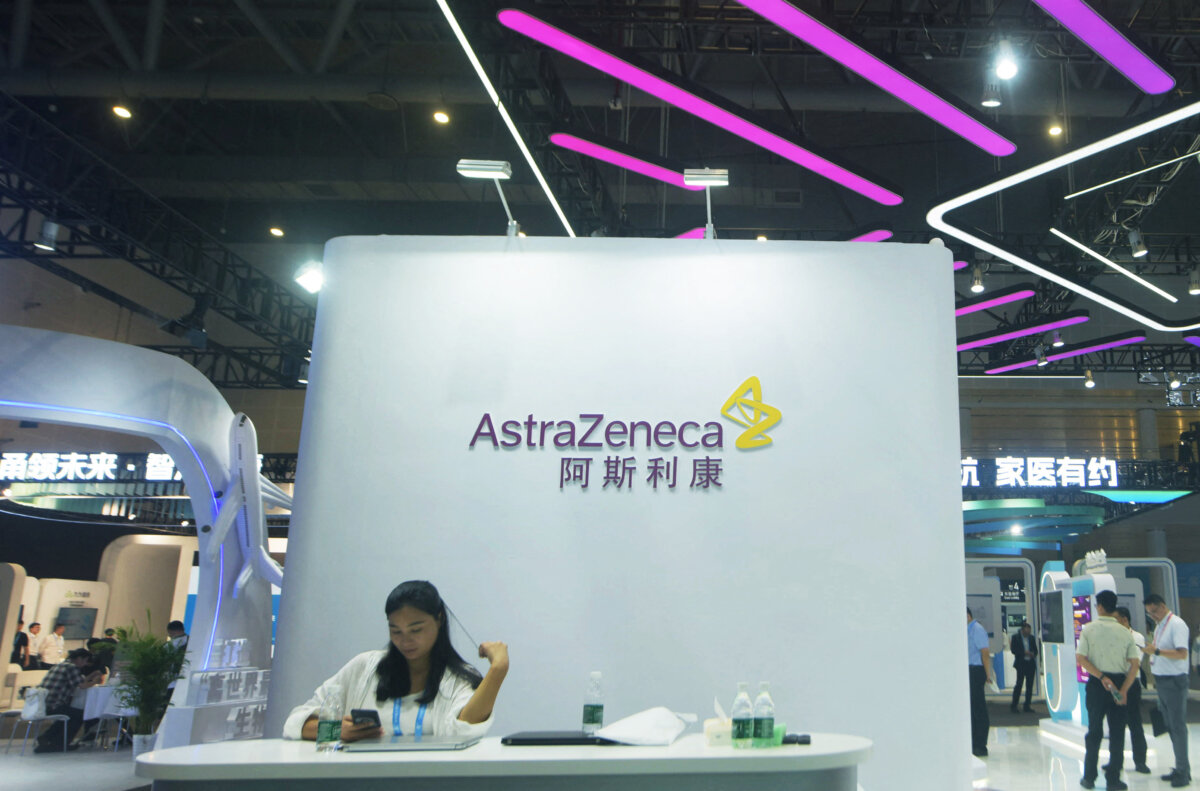
Generic Dependence in Pharma
There would be inconveniences, according to O’Hanlon, such as in constructing stadiums and other large gathering places.
“Maybe some seats come from China, maybe some big display [screens] come from China,” he said. “But if we have to forgo watching [the] Washington [Commanders] lose a football game again because a screen’s been cut off in a supply-side crisis, that’s not a big national security problem—it may even be good for my heart.”
“[A vulnerability could be] dependencies on pesticides and insecticides where, say, China has a 25 percent market share,” he said.
“That’s a gray area of national security vulnerability because if it’s 25 percent, that’s not 95 percent, and there probably are certain ways where you could afford to use a little less pesticide here and there, or do some crop substitution.”
The Brookings analysis examines “16 areas of critical infrastructure” as defined by the Department of Homeland Security and other agencies to identify “where the whole society has dependencies in the broader economy,” O’Hanlon said.
Among them is pharmaceuticals, said Brookings senior fellow of economic studies Marta Wosinska, author of a Brookings analysis on the global prescription drug supply chain and the CCP’s grip on precursor chemicals for antibiotics.
China is not producing breakthroughs but is producing generic drugs in volume, she said. A supply chain opportunity exists there for other nations, including the United States, if they could make this profitable and capture it.
“Think about generic drugs,” Wosinska said. “[U.S. manufacturers] spend so little on it—there’s no profits in that market. Sixty percent of Americans take 187 billion tablets [a year]; just tablets, not other formulations. But, you know, it’s a tiny amount of dollars in comparison [with specialized U.S.-produced pharmaceuticals].”
“We have tremendous reliance on China for antibiotics,” she said.
The United States doesn’t have to rely on China when “there are European manufacturers that make not only [active pharmaceutical ingredients], but [also] … the precursors, the intermediates, and … have enough capacity to serve the U.S. market.”
They would be “more expensive than Chinese versions,” but dependence on China is “sort of a choice,” according to Wosinska.
“We have done it to ourselves,” she said. “We continue to choose it.”
India is vying to be “the pharmacy of the world,” she said, but because its generics are derived from China-processed active pharmaceutical ingredients (APIs), the tariffs imposed by the United States on Indian goods, totaling about 50 percent—from baseline duties, “reciprocal” tariffs, and penalties for purchasing Russian oil—are hampering the development of alternates to China.
“The Indian government has been really trying to get more of the API [production] to de-risk themselves from China, and we benefit from this,” Wosinska said. “But putting the tariff on Indian manufacturers would basically force them to go for lowest-cost [APIs]. Where do they find the lowest cost? In China.”
Tariffs are useful in protecting key domestic industries and developing diverse supply chains, she said, but must be thoughtfully applied.
“Do we want to think about India as an ally in pharmaceuticals?” Wosinska asked. “If we were to choose … between India and China, we probably should really think [about] how we can work with [India]. I get very nervous about the tariff conversation around India because of that.”
Brookings Metro senior fellow Mark Muro offered “two hawkish reasons” for lowering U.S. tariffs.
First, according to him, the United States needs its allies on board in order to have a united front vis-à-vis China.
“Secondly, if we want to de-risk from China, then we can’t be having China have lower tariff rates than many of the other countries [that] … we want firms to be moving into,” he said.
 Friends Read Free
Copy
Facebook
Tweet
Friends Read Free
Copy
Facebook
Tweet