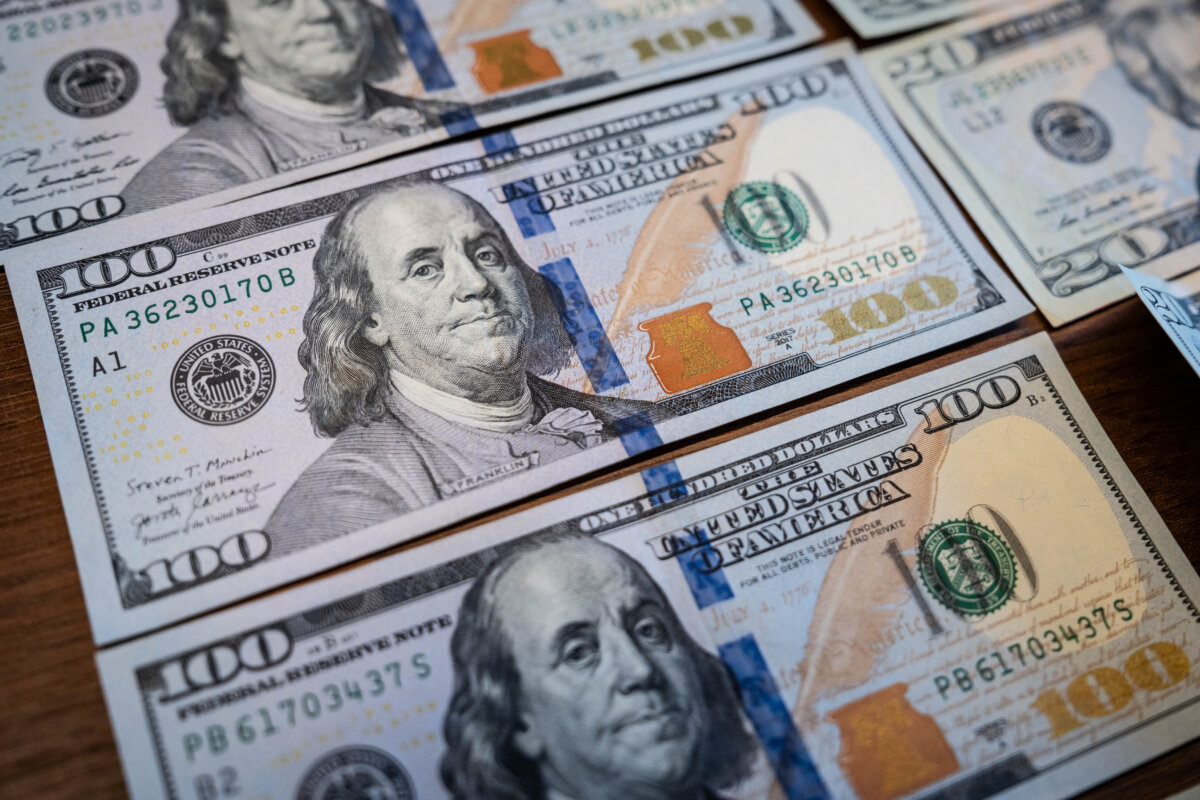

Foreign governments, including China and Japan, trimmed their holdings of U.S. Treasury securities by more than $200 billion in March.
In the first month of the war in Iran, central banks defended their currencies amid one of the largest energy price shocks in decades, adding to exchange rate volatility. To fund their currency interventions, these institutions sold off their dollar-denominated assets.
Foreign holdings of U.S. Treasury securities fell to $9.25 trillion in March, down from $9.49 trillion in February, according to Treasury Department data released on May 18.
Japan reduced its holdings by about $47 billion, or 4 percent, to $1.191 trillion. Tokyo remains the biggest holder of U.S. government bonds.
China—the world’s second-largest holder of U.S. debt—removed $41 billion, or about 6 percent, from its portfolio. Beijing’s holdings of $652.3 billion are at their lowest level since September 2008.
Crude oil’s climb above $100 a barrel has battered the currencies of economies heavily reliant on Gulf energy imports.
Japanese officials have taken measures to support the yen for the first time since 2024. While their actions have lifted the yen in the past month, the currency is still down about 1.5 percent against the U.S. dollar.
These efforts may not have been enough, especially given the interest rate differential between the Federal Reserve and the Bank of Japan.
“From a technical perspective, the intervention may not have been enough, as the USD/JPY uptrend off the April 2025 lows still remains intact,” Adam Turnquist, chief technical strategist at LPL Financial, said in a note emailed to The Epoch Times.
The White House has revealed that various countries, including the United Arab Emirates, have also sought U.S. assistance through currency swap lines to prevent dollar shortages and protect financial systems.
While scores of major economies scaled back their Treasury assets in March, the UK was one of the few to add to its balance sheet.
The country picked up almost $30 billion to $926.9 billion, making it the second-largest holder. It has had a strong appetite for Treasury securities, boosting it by 20 percent over the past year.
Hungry for Yields
The Treasury market has contributed to global market stress as of late, with short- and long-term U.S. yields accelerating.
The 10-year yield—the main U.S. benchmark—reached 4.63 percent during the May 19 trading session, the highest since January 2025.
The 30-year topped 5.15 percent for the first time since April 2006.
But it is not only U.S. yields witnessing a meteoric ascent. Many advanced economies are experiencing turbulence in the bond market.
Long-term yields on UK government bonds are at their highest levels in 30 years.
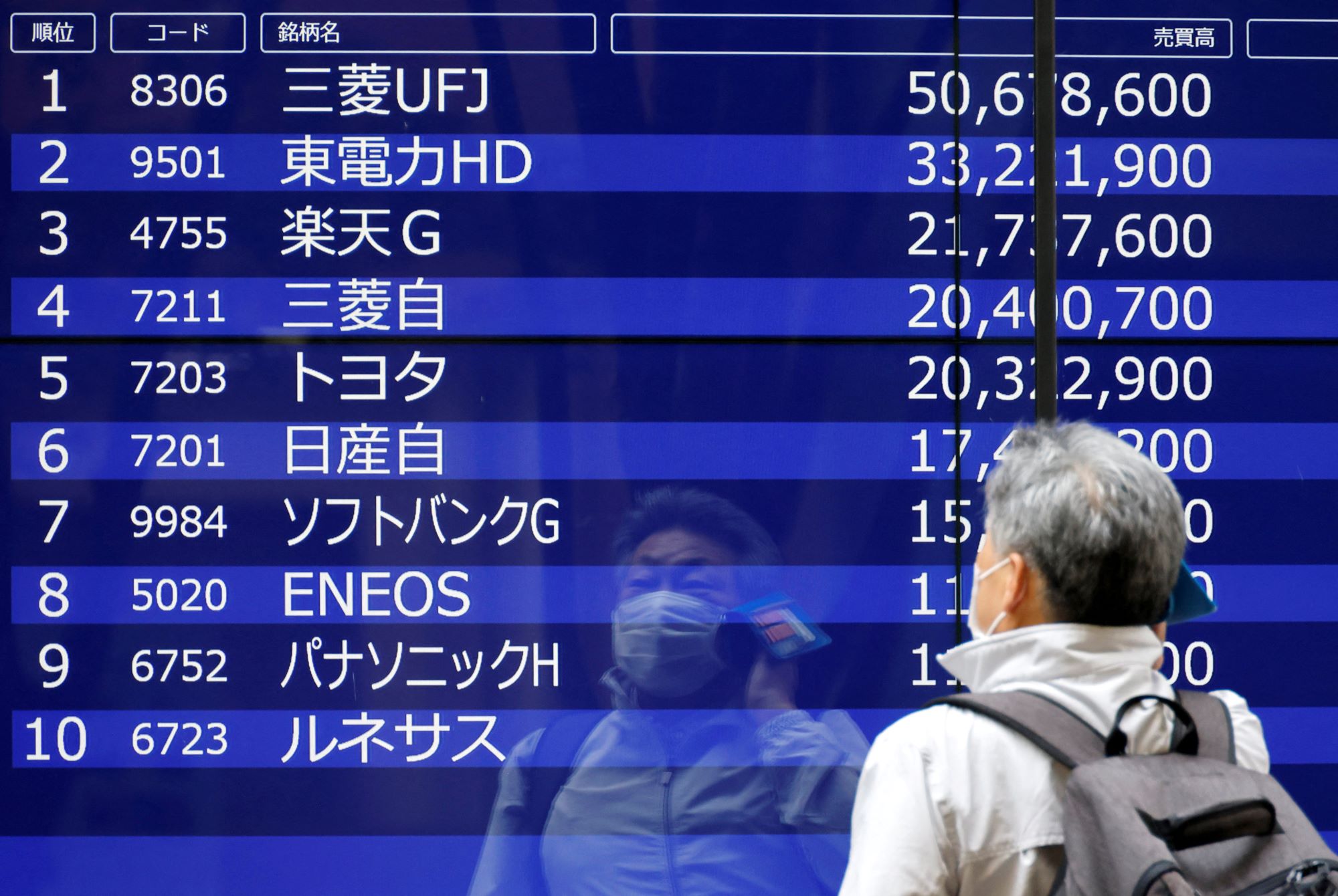 A man is reflected on an electric monitor displaying a stock quotation board outside a bank in Tokyo, Japan, on June 5, 2023. (Issei Kato/Reuters)
Japan’s 30-year yield, inching closer to 4.17 percent, is the highest on record.
Australia, Canada, France, and Germany are experiencing similar trends.
The recent increase has been fueled primarily by higher inflation expectations and by investors pricing in central banks leaving interest rates higher for longer amid the war-driven oil price shock.
As for the Federal Reserve, markets expect rate hikes heading into the first quarter of 2027, says Christian Hoffmann, head of fixed income at Thornburg Investment Management.
“I continue to believe this environment is inflationary in the short term, but potentially disinflationary over the longer term,” Hoffmann said in an emailed note to The Epoch Times.
“We haven’t fully seen the pass-through from elevated oil prices yet. Nevertheless, the last two inflation prints were worse than expected, not solely because of elevated energy costs.”
April’s annual inflation rate shot up to a higher-than-expected 3.8 percent, driven by energy and shelter. Core inflation, which strips out food and energy, also jumped to 2.8 percent—higher than the consensus forecast.
The next Consumer Price Index report is not expected to be any better.
The Cleveland Fed Nowcasting model points to a May reading of 4.2 percent.
This puts incoming Fed Chair Kevin Warsh in a predicament, Hoffmann adds. With consumer inflation surging to a three-year high, it would be challenging for Jerome Powell’s successor to advocate for rate cuts.
“Presumably, Trump nominated him on the assumption that Warsh could lower rates while maintaining credibility. It’s going to be tough to argue for rate cuts with a straight face in the current environment,” he added.
Current data suggests little chance of a quarter-point cut at the June 16–17 Federal Open Market Committee policy meeting.
 Friends Read Free
Copy
Facebook
Tweet
Friends Read Free
Copy
Facebook
Tweet