
Shoppers opened their wallets again in February after consumers stayed home during January’s severe winter storm.
Retail sales rose by 0.6 percent, from an upwardly revised 0.1 percent decline in the previous month, according to new Census Bureau data released on April 1.
Market watchers had penciled in a 0.5 percent increase.
On a 12-month basis, retail sales jumped to 3.7 percent.
This represented the best monthly gain in seven months, fueled by transactions at department stores (3 percent), health and personal care stores (2.3 percent), and apparel (2 percent). Commerce was also strong for motor vehicle and parts dealers, gas stations, and digital retailers.
Despite concerns that consumers were pulling back, various indicators suggest that the public remains optimistic about current economic conditions, both before and during the Iranian conflict.
February’s retail sales excluding automobiles and gasoline still edged higher by 0.4 percent.
A key component of the report was also positive for the broader economic landscape.
The retail sales control group—stripping out volatile categories such as car dealerships, gasoline, office supplies, and tobacco—advanced by 0.5 percent. This is a crucial measure used to calculate goods spending in the gross domestic product (GDP).
GDP took a substantial hit in the fourth quarter, growing at a 0.7 percent pace. Looking ahead to the first quarter, the Federal Reserve Bank of Atlanta estimates 2 percent growth.
‘Rockets and Feathers’ at the Pump
Still, these figures were prior to the war in Iran, which has sent global energy prices surging.
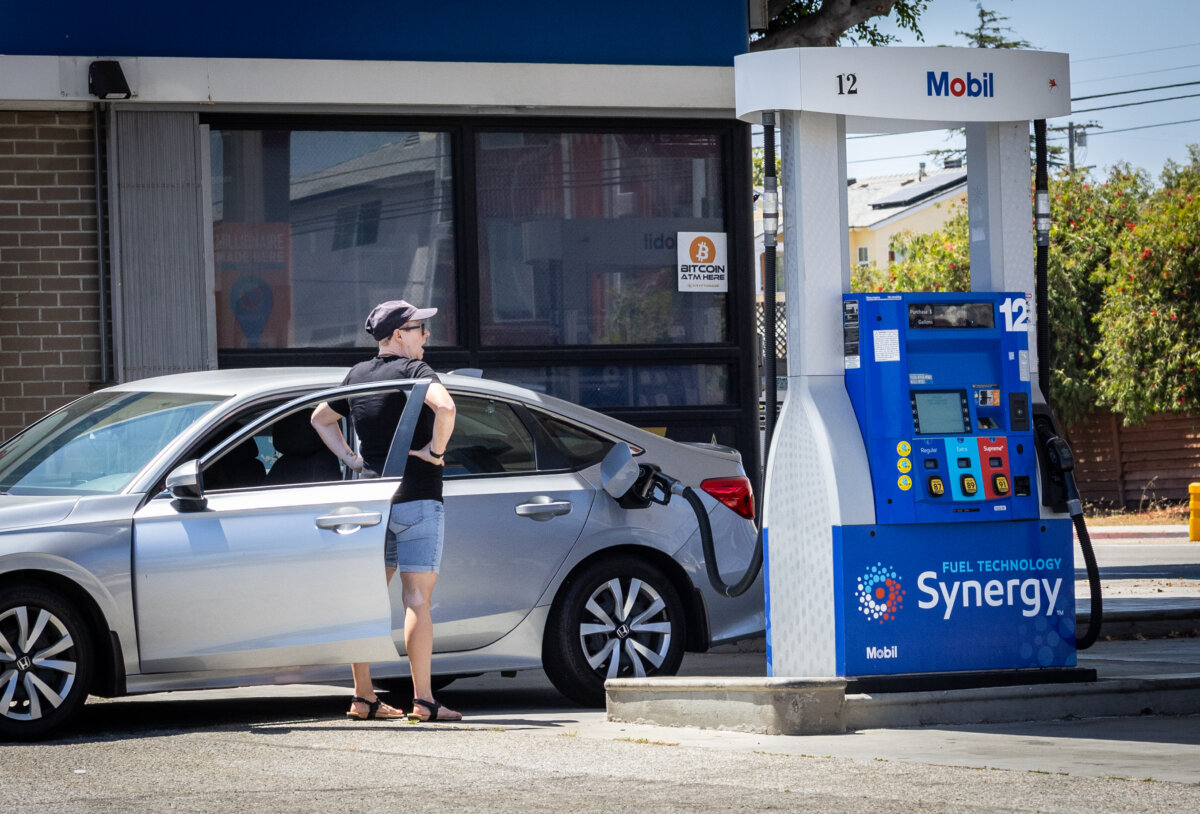
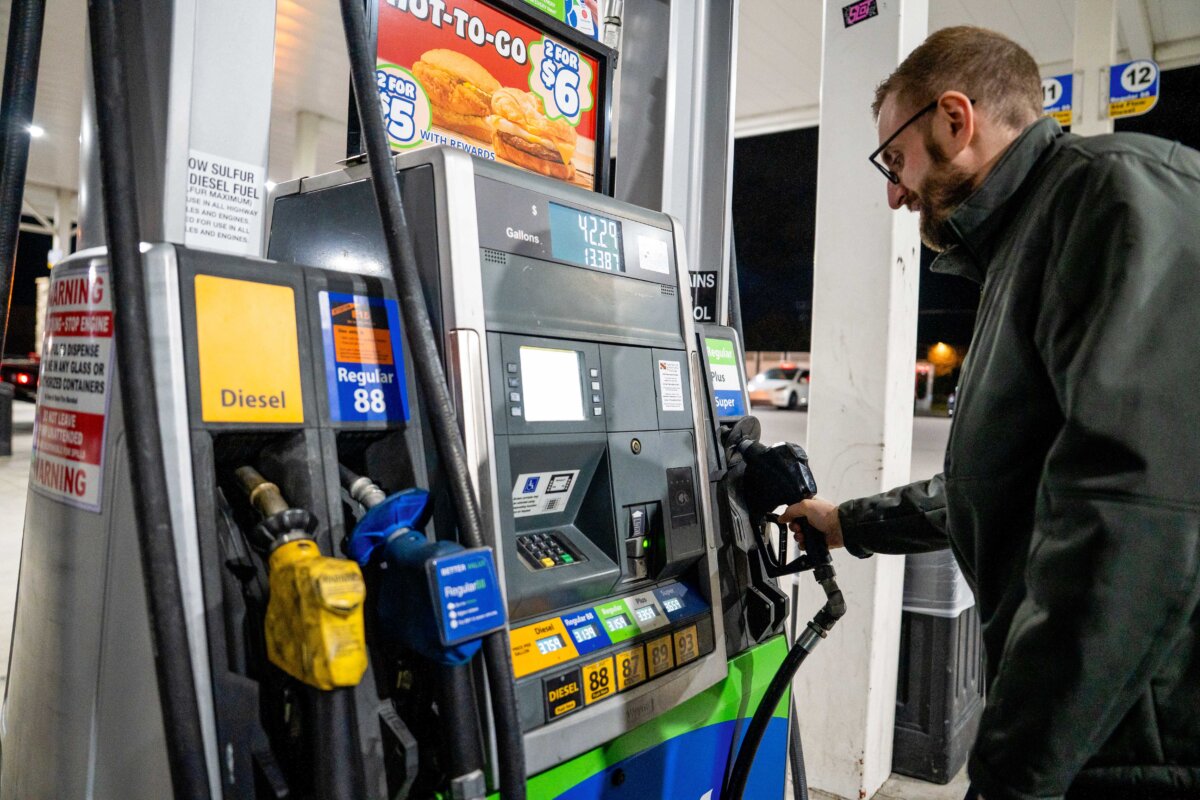
As of April 1, U.S. drivers are paying an average of $4.06 a gallon, according to AAA. This is up firmly from the $2.98 average that motorists were paying a month ago.
Even if the conflict were to be resolved, economic observers warn that crude oil prices—up by 75 percent in March—would remain elevated due to the secondary effects of geopolitical strife.
At the same time, if oil prices were to plummet, the “rockets and feathers” economic phenomenon will be a factor for motorists: Gas prices soar like rockets and then come down gradually like feathers.
Economists call this asymmetric price transmission. When crude rises, gas stations hike prices right away to cover the higher cost of their next shipment. When crude falls, they ease prices down more slowly to protect their margins and clear out fuel bought at the old, higher price.
But while one survey showed consumers penciling in higher near-term inflation, another report highlighted Americans’ optimism about the economy.
The University of Michigan’s March Consumer Sentiment Index revealed that the one-year inflation outlook rose to 3.8 percent from 3.4 percent in February. The Conference Board reported a jump in consumer confidence in March, driven by “a modest improvement in consumers’ views of current conditions” that “outweighed a slight downshift in expectations for the future,” Dana Peterson, chief economist at The Conference Board, said in a March 31 statement.
Consumers might be able to cushion the blows of higher gasoline prices for now.
Bank of America economists noted in their February Consumer Checkpoint report that “most consumers still remain in good financial health,” alluding to their credit card capacity and savings level. They are also using their tax refunds to pay down debt.
“However, it is notable that the share of consumers making only minimum credit card payments has also been rising over the past two years, though this trend appears to have slowed across income cohorts,” they wrote in the report.
That said, the longer gas prices remain high, the more they will harm households, particularly those with low incomes, according to Federal Reserve Vice Chair Philip Jefferson.
“When gasoline prices jump, families—especially those with lower incomes who spend a larger share on essentials—have less money for everything else,” Jefferson said in a March 26 speech at a Federal Reserve Bank of Dallas event.
“The longer energy prices remain elevated, the more households will need to confront tradeoffs. Families who depend on petroleum products to commute to jobs and school and to heat their homes may need to pull back on more discretionary forms of spending.”
The result could be weaker discretionary spending at restaurants and retailers, while households maintain unusually high debt loads.
 Friends Read Free
Copy
Facebook
Tweet
Friends Read Free
Copy
Facebook
Tweet