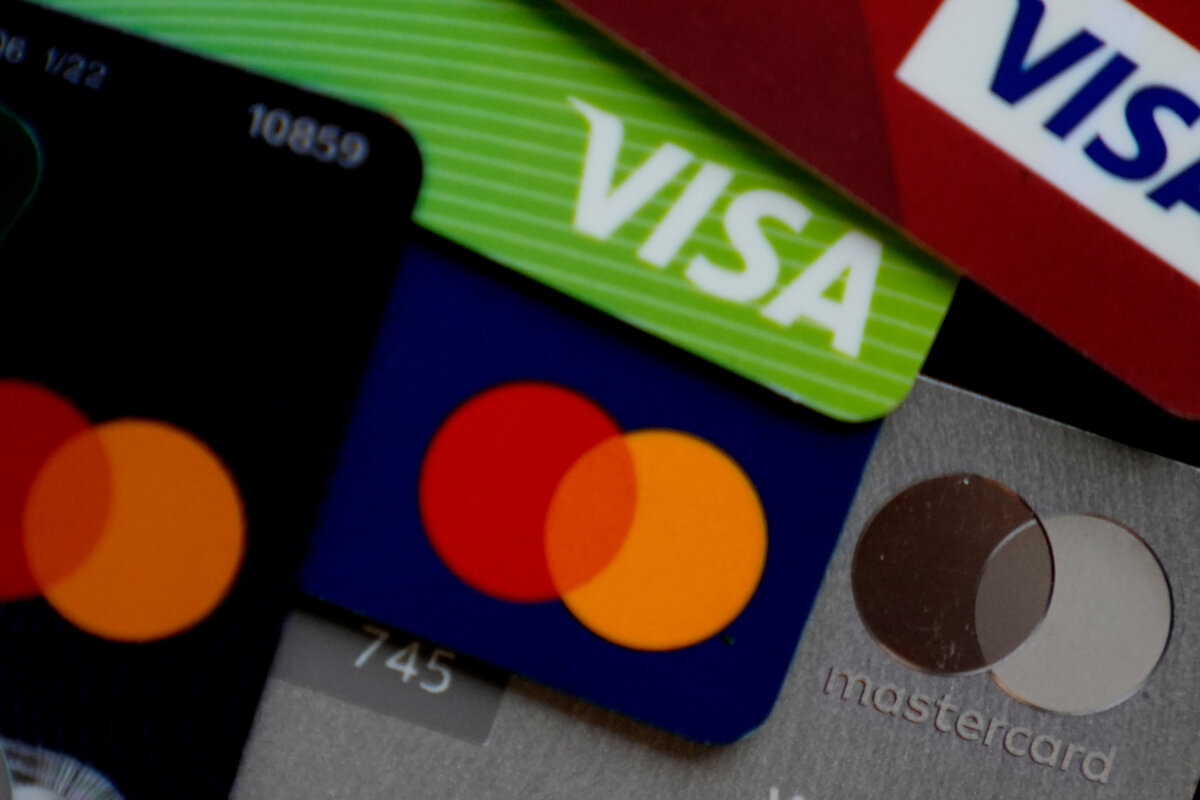

The U.S. District Court for the Eastern District of New York has granted preliminary approval of a $38 billion settlement between Visa, Mastercard and nearly 12 million merchants over “swiping fees” when processing credit cards.
The litigation between the global credit card giants and merchants dates back to 2005, stemming from allegations that fees charged to merchants for accepting credit card payments were too high and that merchants were unable to reject certain cards carrying higher fees.
The decision follows a 2024 rejection of a proposed $30 billion settlement deemed insufficient.
According to a National Retail Federation (NRF) webpage on swipe fees, retailers pay a percentage of every credit card transaction to card networks and issuing banks. The group says these fees have tripled since 2009 and maintains that the United States now has the highest such fees in the world.
The NRF also claims the “duopoly” of Visa and Mastercard is the driving force behind the rising fees.
“The two networks control over 80 percent of the market and collected a record $118.8 billion in credit card swipe fees in 2025,” the website states.
The settlement documents state that the plaintiffs had claimed Visa and Mastercard rules were anticompetitive because of several stipulations, including the “Honor All Cards” rule, which required merchants to accept all Visa or Mastercard-branded credit or debit cards, regardless of the issuing bank. They also stated that the “All Outlets” rule forced merchants to accept the cards at all of their locations, while the “No Discounting” rule prohibited them from offering discounts to cardholders.
“Additionally, Plaintiffs challenge the Networks’ ‘default interchange fees,’ which are fees that are assessed to the merchants or their banks … in connection with all Visa and Mastercard transactions in the absence of a negotiated fee,” the documents state.
The amended settlement now provides more relief than the first one, including the repeal of the “Honor All Cards” rule, allowing merchants to choose to accept only standard cards and reject higher-cost commercial cards.
In addition, merchants could choose to reject certain categories of cards across all locations operating under the same brand name in the United States, while still accepting those cards at locations under a different brand. Other rules such as “No Discounting” will also be amended as part of the settlement.
Under the terms of the settlement, merchants will also have access to an education program designed to help them use the relief benefits and negotiate fees. The settlement sets aside $21 million for this education fund—$6 million more than in the initial proposed settlement.
The settlement states that within 20 days of the Court’s final approval, the defendants will pay attorney’s fees of up to $206 million, “with Visa paying up to two-thirds of the approved amount and Mastercard paying up to one-third.”
Upon final approval of the amended settlement, the defendants would be released from “any and all manner of claims, demands, actions, suits, and causes of action.”
Meanwhile, the Retail Industry Leaders Association has expressed its disappointment with the preliminary settlement.
“Retailers continue to face excessive and ever-increasing swipe fees in a broken payments market that lacks competition,” a June 10 press release states.
“The proposed settlement offers no meaningful relief and leaves intact the underlying system that enables Visa and Mastercard to dictate the rules and costs that merchants and consumers must bear.”
The NRF indicates that in 2025, U.S. businesses paid $198.25 billion in credit card and debit card swipe fees, which it said have now become the second-highest operating costs after labor for most retailers. It further indicates that merchant swipe fees drive up consumer prices by more than $1,200 a year for the average household.
 Friends Read Free
Copy
Facebook
Tweet
Friends Read Free
Copy
Facebook
Tweet