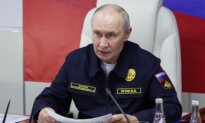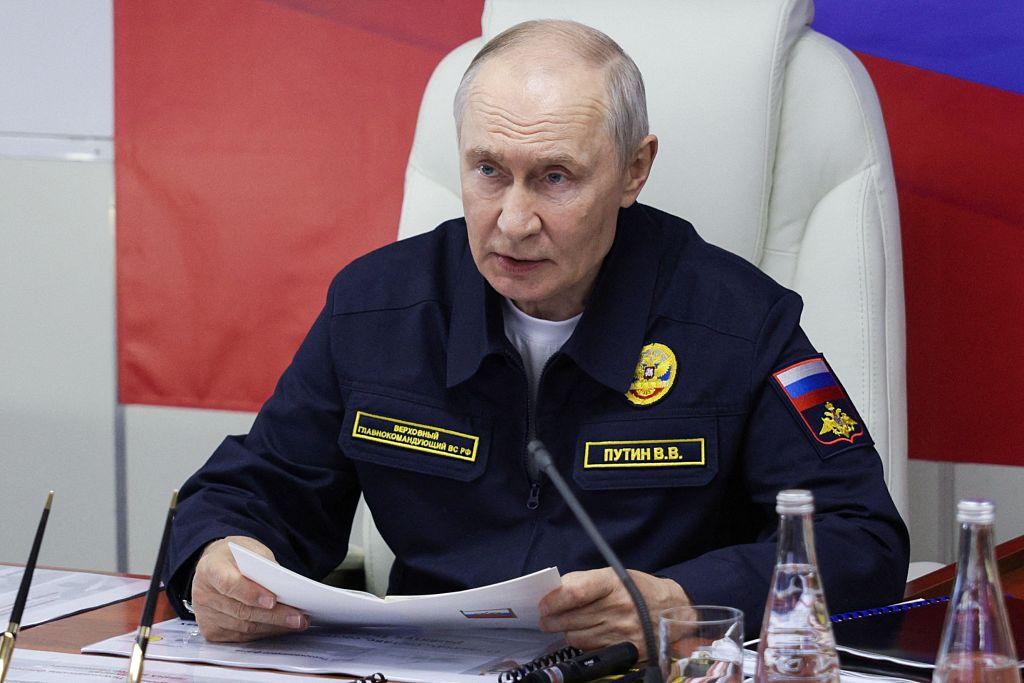

Russian President Vladimir Putin said on Aug. 12 that plans by European countries to seize Russian merchant vessels constitute “piracy,” and vowed to respond in kind.
The comments, which Putin made as he oversaw navy drills in Russia’s Far East, come as the EU attempts to increase pressure on Russia’s so-called shadow fleet, expanding sanctions against hundreds of vessels and detaining some ships and their crews for checks. Some European governments have said they are exploring tougher maritime enforcement measures against ships suspected of sanctions evasion.
“We see that the authorities of some countries are attempting to restrict the movement of our economic operators’ ships in violation of international maritime law. I want to emphasize that these ships are peaceful,” the Russian leader said, according to Russian state news agency TASS.
“Recently, they’ve even considered seizing our ships and selling property stolen from us. … Of course, this is nothing less than piracy and robbery.”
He added that if this happens, Russia “will be forced to respond in kind.”
He said that Moscow’s response would not necessarily be executed in the waters where the ships were seized, saying the retaliation could occur “wherever we deem it necessary and appropriate, including the Pacific Fleet’s area of responsibility.”
Western nations believe Russia uses a vast fleet of ships to evade international sanctions imposed after Moscow sent troops into Ukraine in February 2022. France and the UK have both detained tankers suspected of being part of the so-called shadow fleet.
In July, the European Council said the EU is continuing to target Russia’s “shadow fleet” by extending the scope of the existing rules to “cover vessels supporting the shadow fleet, by providing bunkering and other services, and listing 41 more vessels on top of the 632 already sanctioned.”
The Russian Foreign Ministry accused the EU in an Aug. 12 statement of using its naval force in the Mediterranean, named “Operation EUNAVFOR MED Irini,” to carry out unlawful inspections of foreign vessels.
“Operation Irini is effectively being used by the European Union to intimidate commercial carriers and obstruct freedom of navigation. This constitutes an abuse of existing norms of international law and an expansive interpretation of its powers,” the Russian Foreign Ministry said.
“By resorting to such actions, the European Union, through measures it has adopted that are wholly inconsistent with the norms of international law, is ultimately exposing itself to serious dangers.”
During an informal meeting of defense ministers in Nicosia, Cyprus, in June, EU foreign policy chief Kaja Kallas said the operation had advanced to boarding vessels.
“Our Operation IRINI has changed the rules of engagement and has now started to board the ships as well,” Kallas said. “So also, the idea is to change the best practices, what different countries are doing with those ships, because it is really posing a danger, and of course also the idea is to curb Russia from the funding of this war.”
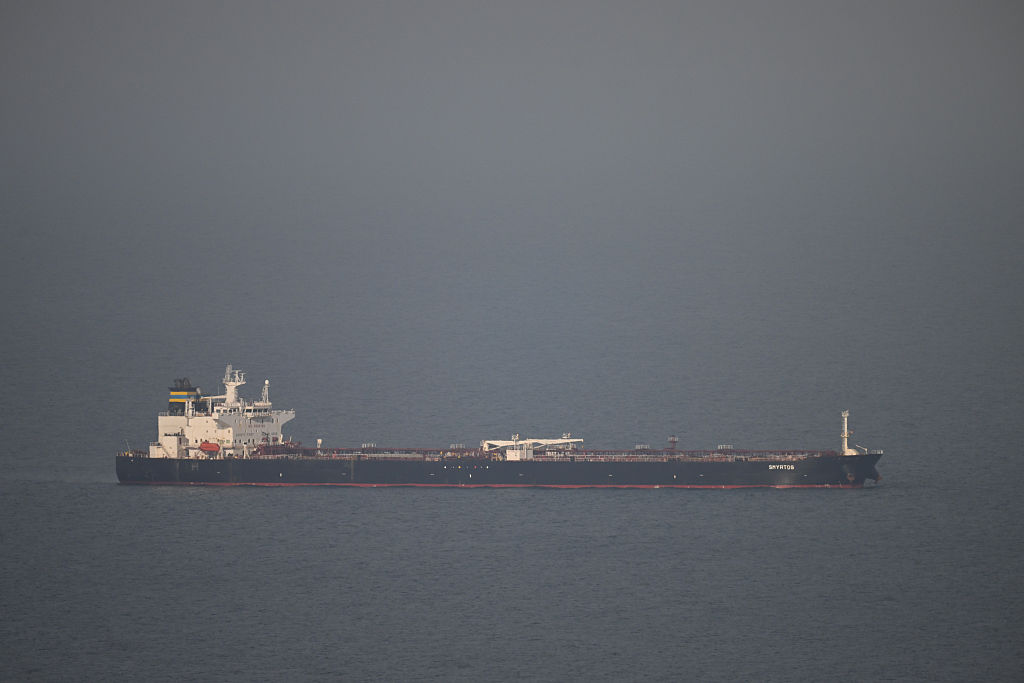 A general view of the detained Smyrtos vessel outside the harbor in Portland, England, on June 15, 2026. (Finnbarr Webster/Getty Images)
The vessel Smyrtos, sailing under a Cameroonian flag, was boarded by marines and National Crime Agency (NCA) officials in the early hours of that day, with support from Chinook heavy-lift helicopters, Merlin Mk4 commando helicopters, and Wildcat naval aircraft.
The Daily Telegraph reported at the time that the UK could hold an auction to sell off the 100,000 tons of Russian crude oil on board the vessel.
France has seized a total of five Russian-linked vessels since September, according to French outlet Le Monde, with the most recent seizure taking place off the coast of Sicily on June 25, when the Cameroonian-flagged oil tanker “Deliver” was boarded by the French Navy.
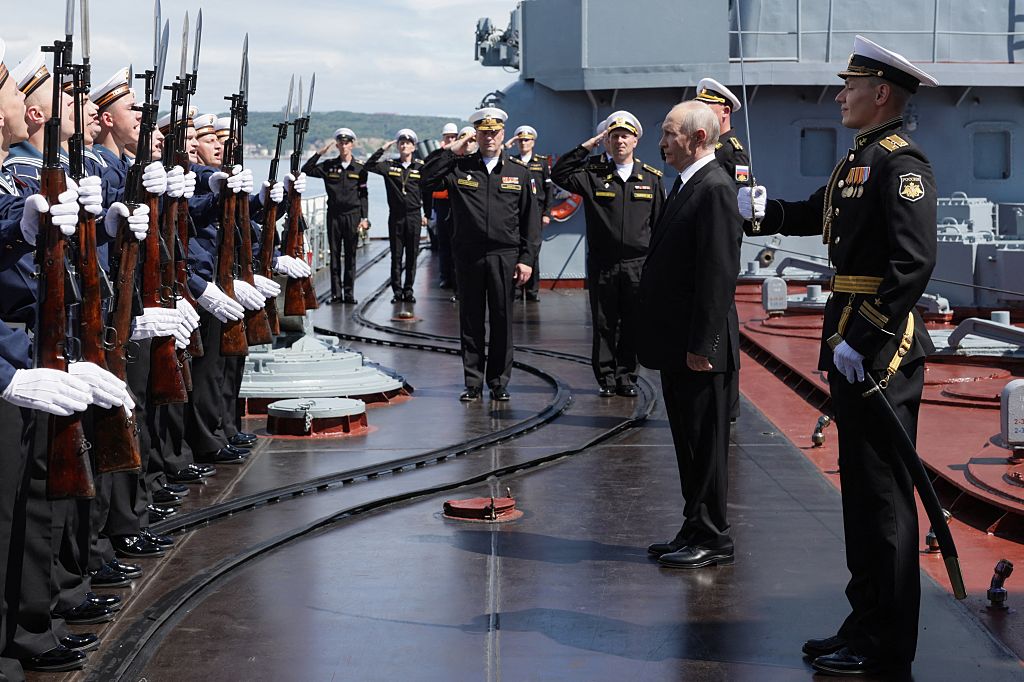 Russian President Vladimir Putin visits the Russian Navy’s guided missile cruiser Varyag as he oversees the final stage of a Pacific Fleet’s naval drills on far eastern Sakhalin Island on Aug. 12, 2026. (Gavriil Grigorov/ AFP via Getty Images)
He told Putin that what he described as hostile countries such as the UK and France transported goods on vessels flying flags of convenience, which, if the EU and the UK’s own language was used, could also be described as a “shadow fleet.”
Former Russian President Dmitry Medvedev, who held the post between 2008 and 2012, also noted that many ships belonging to European carriers fly “flags of convenience” just as Moscow’s ships do.
“Western European dogs are hysterically barking about the so-called Russian shadow fleet. Let’s take a look at what this actually means,” he wrote in an Aug. 12 post on Telegram.
“It refers to ordinary merchant vessels that sail under non-Russian flags but carry out shipments in our interests. Such a flag is commonly called a ‘flag of convenience’ or a ‘favorable flag.’ This is a system in which a vessel is registered in a country other than the owner’s country in order to save on taxes and regulatory costs.”
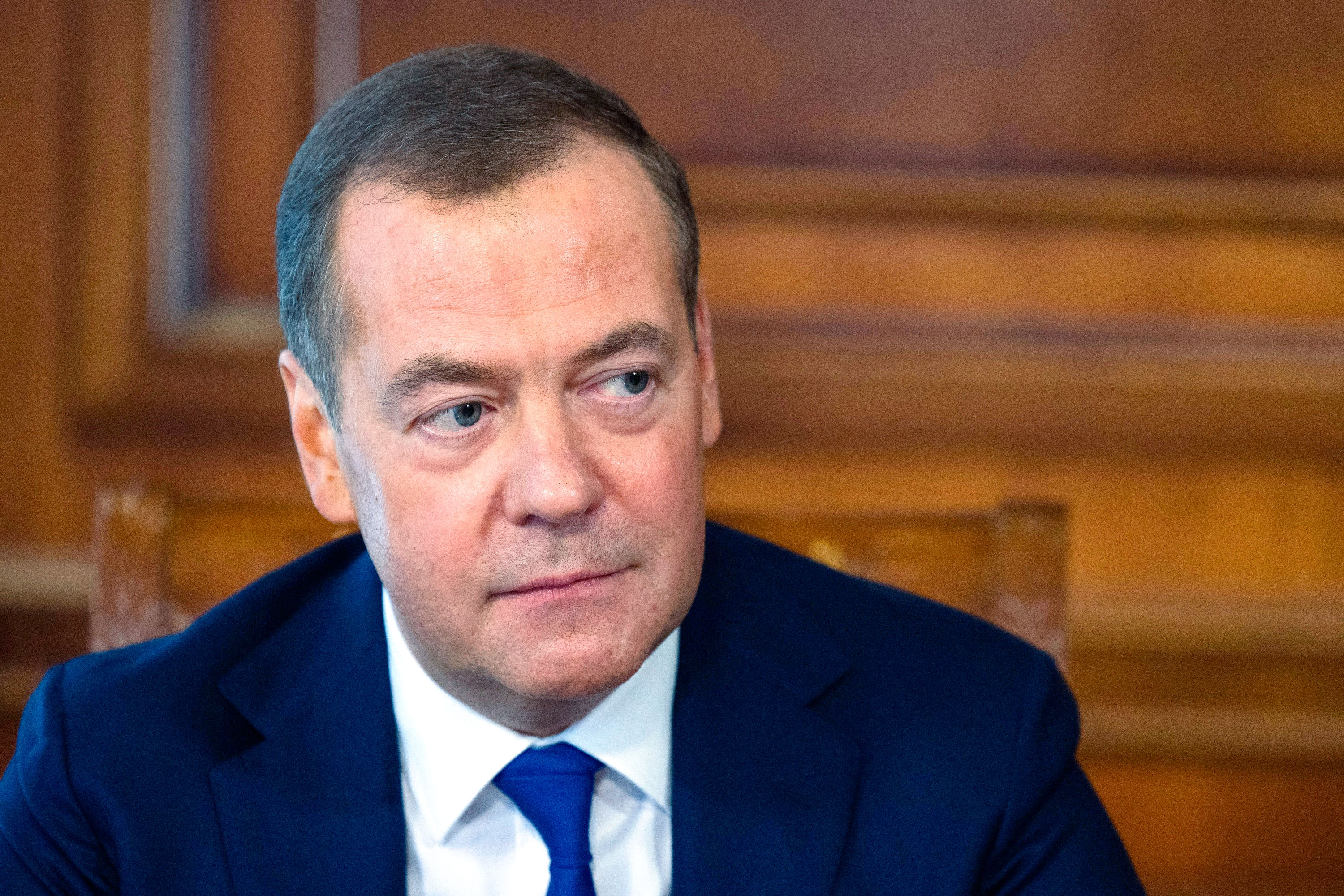 Former Russian President and current Security Council Deputy Chairman Dmitry Medvedev speaks to Russian media at the Gorki state residence, outside Moscow on March 23, 2023. (Ekaterina Shtukina/via AP)
Germany, the UK, and 10 other European countries agreed in December 2024 on measures to “disrupt and deter” Russia’s “shadow fleet”.
“The shadow fleet presents risks to the environment, maritime safety and security, international seaborne trade, as well as international maritime law and standards,” the countries said in a joint statement. “It also works to circumvent our sanctions and soften their impact.”
 Friends Read Free
Copy
Facebook
Tweet
Friends Read Free
Copy
Facebook
Tweet