
The European Union on Dec. 15 announced sanctions against five businessmen and four companies, calling them enablers of Russia’s shadow fleet.
The Council of the EU said in a statement that the businessmen are linked directly or indirectly to state-owned Russian oil companies Rosneft and Lukoil and are involved in providing a source of revenue for the Russian government.
“Additionally, they control vessels transporting crude oil or petroleum products, originating in Russia or being exported from Russia, concealing the actual origin of the oil, while practicing irregular and high-risk shipping practices,” the council said.
The four entities are shipping companies based in Russia, the United Arab Emirates, and Vietnam, and are accused by the EU of owning or managing tankers that comprise Russia’s shadow fleet.
The council, which consists of national ministers from each of the 27 member states, said that those nine designated individuals and entities are subject to asset freezes, with EU citizens and companies forbidden from providing funds to them.
The EU has now rolled out 19 sanctions packages targeting Russia, aiming to curb Moscow’s war funding and economic reach.
The EU’s latest sanctions tighten restrictions by banning EU citizens and companies from doing business with newly listed Russian-linked entities, further cutting access to maritime services and insurance.
In total, more than 2,600 individuals and companies are now sanctioned
The statement said that the sanctions are “in response to Russia’s ongoing unjustified and unprovoked military aggression against Ukraine.”
The so-called shadow fleet is accused of transporting Russian oil to generate revenue for Moscow’s war effort. The conflict is nearing its fourth year, following Russia’s Feb. 24, 2022, invasion of Ukraine.
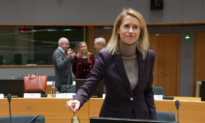
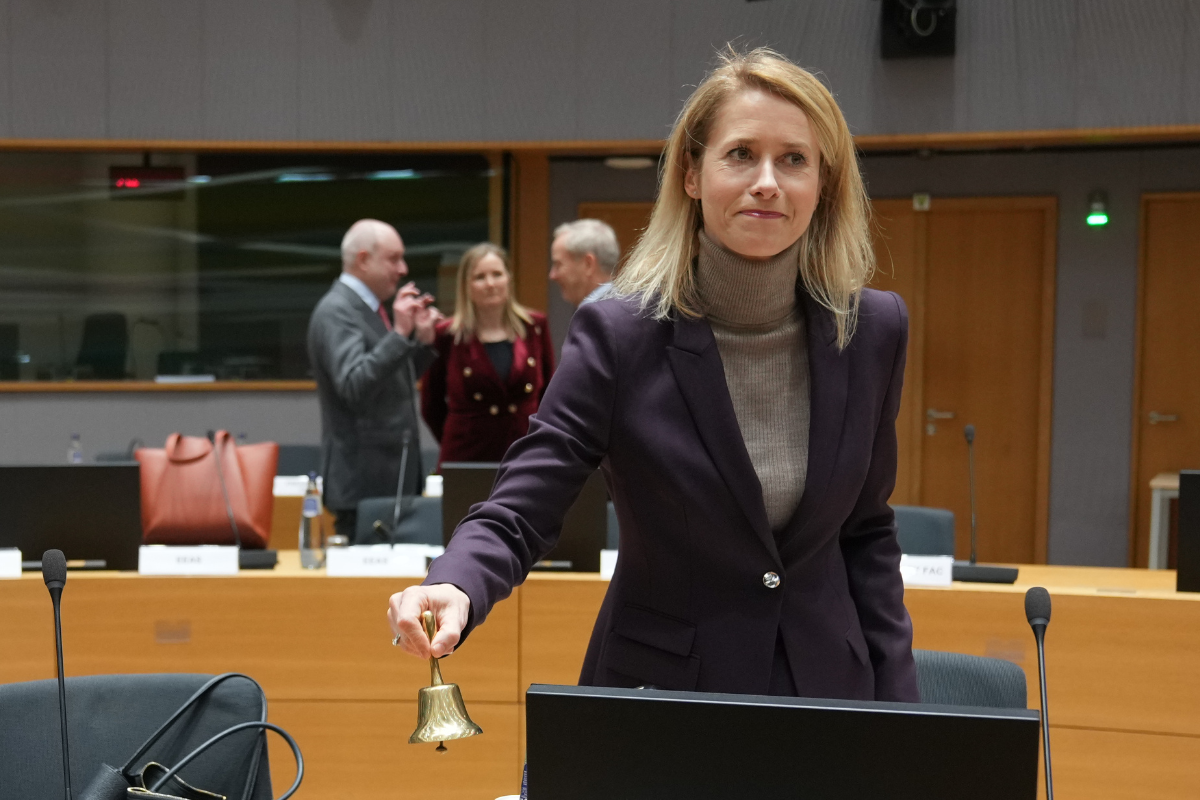
“Russia’s shadow fleet remains its cash lifeline. We are cutting it,” the EU’s foreign policy chief, Kaja Kallas, wrote in a post on X on Dec. 15.
She added that the bloc will be sanctioning shadow fleet vessels “on a rolling basis, with decisions every month.”
The Permanent Mission of the Russian Federation to the European Union and Euratom said in a post on X on Dec. 15 that the bloc had, in introducing the restrictions, “once again demonstrated its blind desire to breed ever new anti-Russian ‘sanctions’ that are illegitimate from the standpoint of international law.”
“We regretfully note the inability of Brussels to realize a simple truth: if the same action is repeated multiple times and does not yield the desired result, it means that the initial strategy fundamentally does not work and is flawed,” the post said.
The mission concluded that the EU’s actions “will receive a timely and adequate response from Russia.”
Sanctions for Hybrid Threats
Separately, the council also announced sanctions—related to “Russian hybrid threats”—against 12 individuals and two entities over malicious cyber activities and foreign information manipulation and interference.
The council said in a Dec. 15 statement that among the sanctioned individuals, it was listing “foreign-policy analysts embedded in institutions, think-tanks and universities closely linked to or affiliated with the Kremlin’s policy and messaging apparatus, and influencers promoting pro-Russian propaganda and conspiracy theories on Russia’s invasion of Ukraine, as well as anti-Ukraine and anti-NATO narratives.”
Sanctions were placed on members of the Russian Military Intelligence Agency, GRU, and the cyber threat group Cadet Blizzard.
“They took part in cyber-attacks against government organisations in Ukraine and targeted EU member states and NATO Allies to gain sensitive information and aiming to destabilise their political situation,” the council said.
EU’s Sanctions Program
These restrictions form part of broader efforts by the bloc to impose measures in response to “destabilising actions,” or “hybrid activities.”
The council says in an explainer on Russian sanctions that it has detected a range of hybrid activities by Moscow, including “cyber-attacks, information manipulation and interference campaigns, cases of arson, vandalism and sabotage, and the instrumentalisation of migration.”
The bloc also accuses Russia of disrupting satellite communications and violating European airspace.
Notably, incidents of drones flying over European airspace have been blamed on Russia. The incursions have prompted the EU to draft measures to strengthen defenses on its eastern flank and establish a “drone wall.”
“These malicious activities carried out by Russia are part of a broad and coordinated hybrid campaign to destabilise and weaken the EU and its member states and to undermine the EU’s support for Ukraine and its ability to defend itself,” the bloc says.
Russia has consistently denied these accusations.
The EU on Dec. 15 also expanded the scope of its sanctions policy against Belarus, a close ally of Russia, to include “hybrid activities” aimed at undermining democracy, the rule of law, or the security of member states.
This follows an uptick in weather balloons carrying contraband from Belarus that are flying through Lithuanian airspace. Vilnius has accused Minsk of failing to do enough to stop the criminal activity.
On Dec. 13, President Donald Trump’s special envoy John Coale said Belarusian President Alexander Lukashenko “agreed recently” to work to stop the balloons, adding that Lithuania was also doing everything it could to stop those receiving the contraband.
 Friends Read Free
Copy
Facebook
Tweet
Friends Read Free
Copy
Facebook
Tweet