
The European Union on Dec. 15 broadened the scope of its sanctions policy against Belarus to include “hybrid activities” aimed at undermining democracy, the rule of law, or the security of member states.
“The new criterion will allow the EU to impose restrictive measures against those who plan, direct, engage in support or facilitate foreign information manipulation and interference,” the Council of the EU said in a statement.
“The EU will also be able to target the unauthorised entry into the territory of a member state.”
The bloc also said the new policy also covers actions aimed at damaging or disrupting critical infrastructure.
The EU has so far sanctioned 310 individuals and 46 entities in Belarus. The bloc said the restrictions imposed against Minsk are in response to Belarus’s military support for Russia during its ongoing war against Ukraine, repression and human rights abuses, and the 2020 elections, the results of which Brussels does not recognize and deems fraudulent.
The Council of the EU said the decision followed recent incursions of meteorological balloons—used to smuggle contraband across the border—into Lithuania’s airspace.
EU officials said that since Jan. 1, Lithuania has recorded a growing number of drone and weather balloon incursions.
Last week, Lithuania declared a state of emergency over what it called “hybrid attacks.”
“In combating the Belarusian hybrid attack, we must take the strictest measures and defend the areas most affected by this attack,” Lithuanian Prime Minister Inga Ruginiene said on Dec. 9.
Belarus has consistently denied being responsible for the balloons, accusing Vilnius of politicizing the issue.
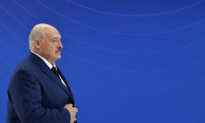
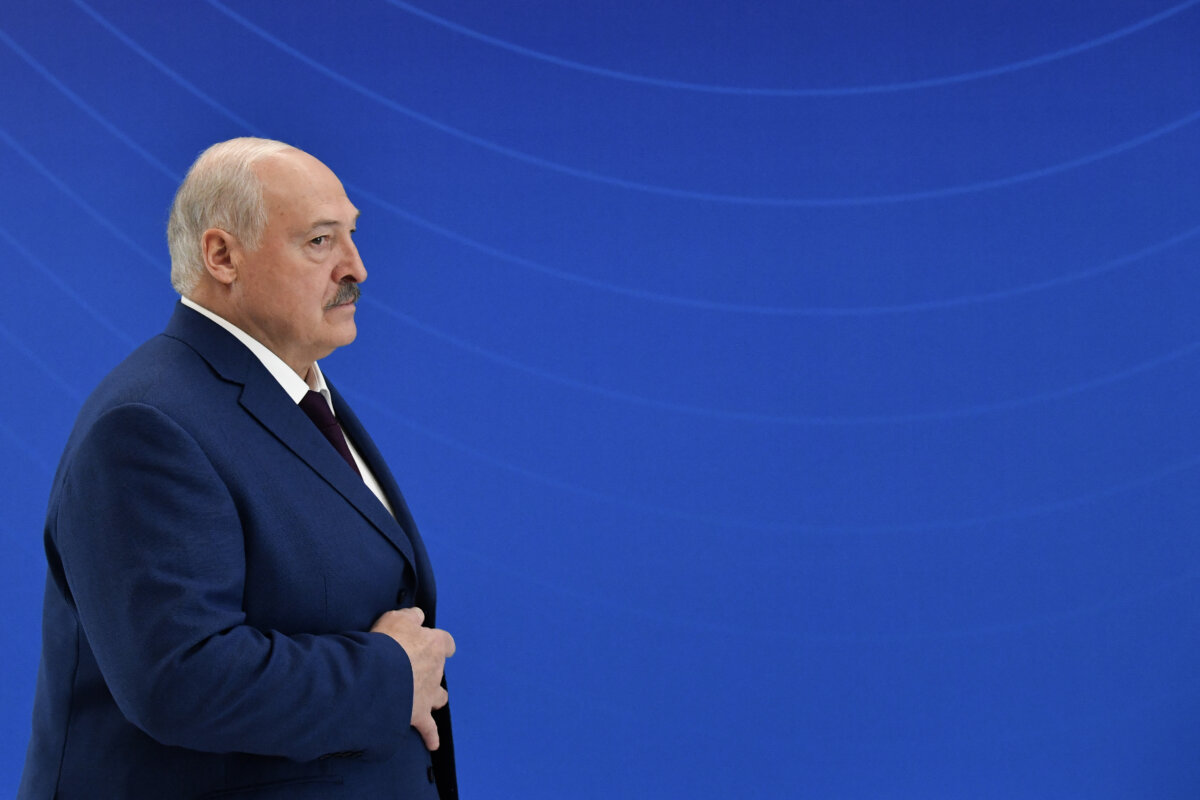
After Vilnius declared the state of emergency, Belarusian President Alexander Lukashenko called for negotiations with Lithuanian officials, saying his government was ready to discuss the situation.
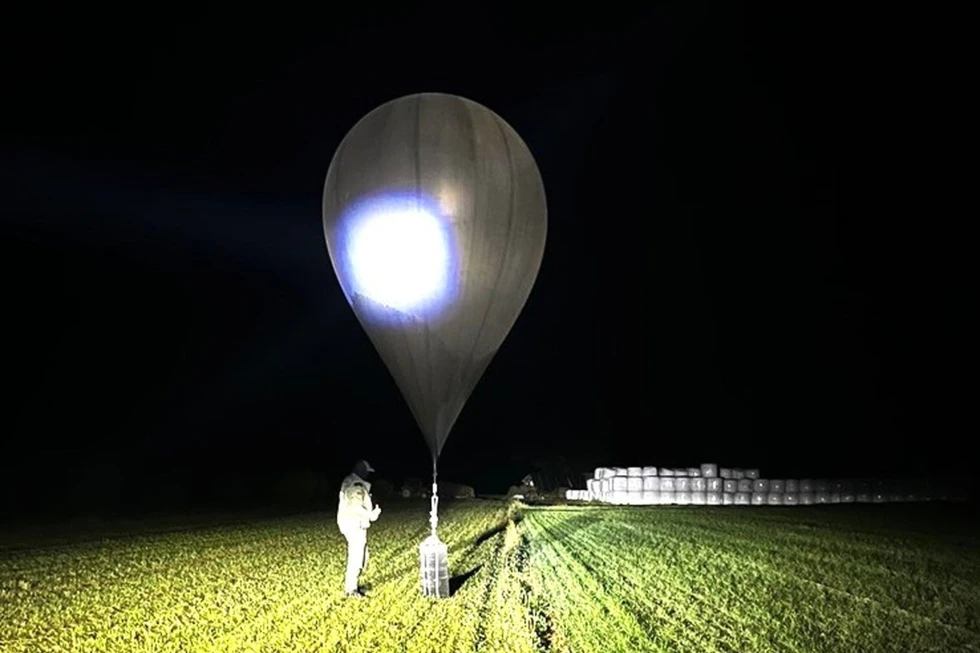
According to the Council of the EU, meteorological balloons carry up to 110 pounds of contraband, flying at altitudes of five miles to nine miles at speeds of 62 to 124 mph, “thus posing serious security and safety risks, primarily to civil aviation.”
The council said these incursions have disrupted hundreds of flights, caused financial losses for airlines, and inconvenienced thousands of travelers.
“[The incursions] aim to destabilise an EU member state and to intimidate European citizens through direct threats posed to civilian aviation,” the statement said.
“The use of these balloons occurs in the context of a broader targeted hybrid campaign, along with other actions that also include state-sponsored migrant smuggling.”
Hybrid Warfare
The term “hybrid” activities—in particular “hybrid warfare”—has been used several times in recent months among European politicians, in relation not only to Belarus but also to Russia’s alleged intentional incursions into European airspace using drones, accusations Moscow denies.
On Oct. 8, European Commission President Ursula von der Leyen said that Europe must respond with measures that go beyond traditional defense to tackle Russia’s hybrid warfare.
During a speech at the European Parliament, von der Leyen told lawmakers, “It’s time to call it by its name: This is hybrid warfare, and we have to take it very [seriously].”
NATO describes hybrid warfare as a fusion of conventional and unconventional means, including subversion or destabilization of the adversary and attacks conducted in ways that make identifying those responsible difficult.
Hybrid warfare often occurs in the gray zone, the threshold below conventional war, which can include cyberattacks, attacks on critical infrastructure, and espionage.
Stopping the Balloons
In recent months, Belarusian and Lithuanian officials have blamed each other for the smuggling of balloons. Belarus says that smuggling has been a longstanding problem and Vilnius should focus more on organized gangs in Lithuania, while Vilnius accuses Minsk of not doing enough to stop the criminal activity originating from its country.
On Dec. 13, U.S. President Donald Trump’s special envoy John Coale said Lukashenko “agreed recently” to stop the balloons.
“I believe that the president of Belarus is sincerely trying to calm it down. I think it will take some time, but I think it can be resolved. He wants [a] normal relationship with his neighbors—so he assures me,” Coale said in Vilnius, after two days of talks with the Belarusian president.
The envoy said Lithuania was doing everything it could to stop those receiving the contraband and that “both sides are working.”
Coale was in Belarus to negotiate the release of 123 political prisoners, in a deal brokered by the United States tied to the lifting of U.S. sanctions on Minsk.
He said on Dec. 13 that about 1,000 remaining political prisoners could be released in the coming months.
“I think it’s more than possible that we can do that. I think it’s probable,” Coale stated. “We are on the right track, the momentum is there.”
Reuters contributed to this report.
 Friends Read Free
Copy
Facebook
Tweet
Friends Read Free
Copy
Facebook
Tweet