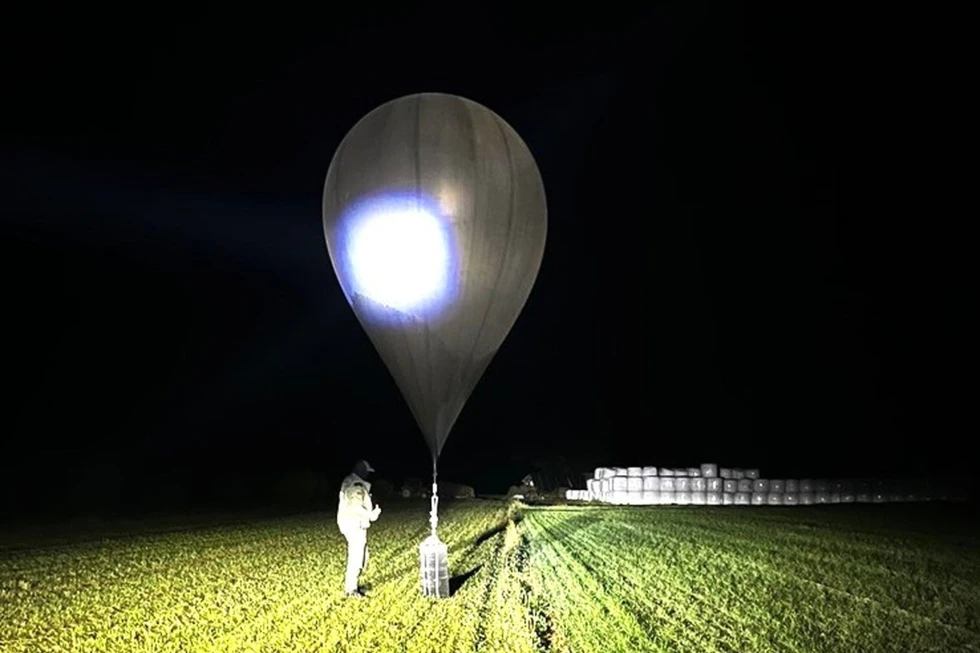

On Oct. 27, Lithuania announced it would close its border with Belarus indefinitely after repeated sightings of smuggling balloons led to the suspension of flights at Vilnius Airport.
Lithuania’s Ministry of the Interior said the Salcininkai checkpoint will be closed indefinitely, with no movement of people or vehicles allowed. There will also be restrictions in place at the Medininkai checkpoint; only diplomats, those transporting diplomatic mail, and EU citizens will be permitted to enter.
Both checkpoints were temporarily closed on Oct. 26 following the latest balloon sightings. The ministry said the final approval on closing the border will be made by the Cabinet on Oct. 29.
Vilnius airport was forced to suspend air traffic because of balloons—suspected of being used by smugglers to transport cigarettes from Belarus—that entered its airspace for three consecutive days.
Lithuanian Prime Minister Inga Ruginiene suggested that Belarus was not doing enough to stop the criminal activity originating from its country.
“This is how we send a signal to Belarus and say that no hybrid attack will be tolerated here, and we will take all the strictest measures to stop such attacks,” Ruginiene said, according to Lithuanian public broadcaster LRT.
“If Belarus does nothing about it and does not fight, we also assess these actions accordingly. … We see the participation [of the Belarusian regime] through inaction. That’s it. We, of course, assess this as a hybrid attack.”
She added that starting on Oct. 27, the military will take “all measures” necessary to stop the balloons, including kinetic options.
Ruginiene also said that although the balloons may not have intentionally flown into the airport, preventive actions needed to be taken, including closing the airspace.
‘Provocation’
Belarusian Foreign Minister Maxim Ryzhenkov called the move to shut the border a “provocation,” suggesting that Vilnius should focus its attention on “organized gangs of Lithuanians who use smuggling for profit.”
“These balloons with smuggled cigarettes have been flying there for ages,” Ryzhenkov said. “But, most interestingly, we haven’t received any diplomatic notes.”
Belarusian opposition leader Sviatlana Tsikhanouskaya said that the balloon incidents were “yet another sign that the regime is using cigarette smuggling as a tool of hybrid aggression against Europe.”
“The closure of border crossings is a logical step to protect security,” Tsikhanouskaya said. “We support Lithuania and its partners in strengthening sanctions against producers, transporters, and organizers of cigarette smuggling.”
‘United, Resolute Response’ Needed
Protecting NATO airspace has become a point of major focus for European nations in recent months, particularly along the defense alliance’s eastern flank, following several sightings of suspected Russian drones and aircraft.
The uptick in unmanned aerial vehicle (UAV) sightings began on Sept. 9, when Poland shot down drones that breached its airspace, prompting NATO to reinforce its eastern defenses and European Commission President Ursula von der Leyen to call for a “drone wall.”
Similar incidents followed, including Russian aircraft allegedly entering Estonian airspace and UAV sightings over Denmark.
As a result, the European Commission proposed four flagship defense projects on Oct. 16, including a drone wall and fortification of Europe’s eastern border, as part of measures to boost the bloc’s defense by 2030.
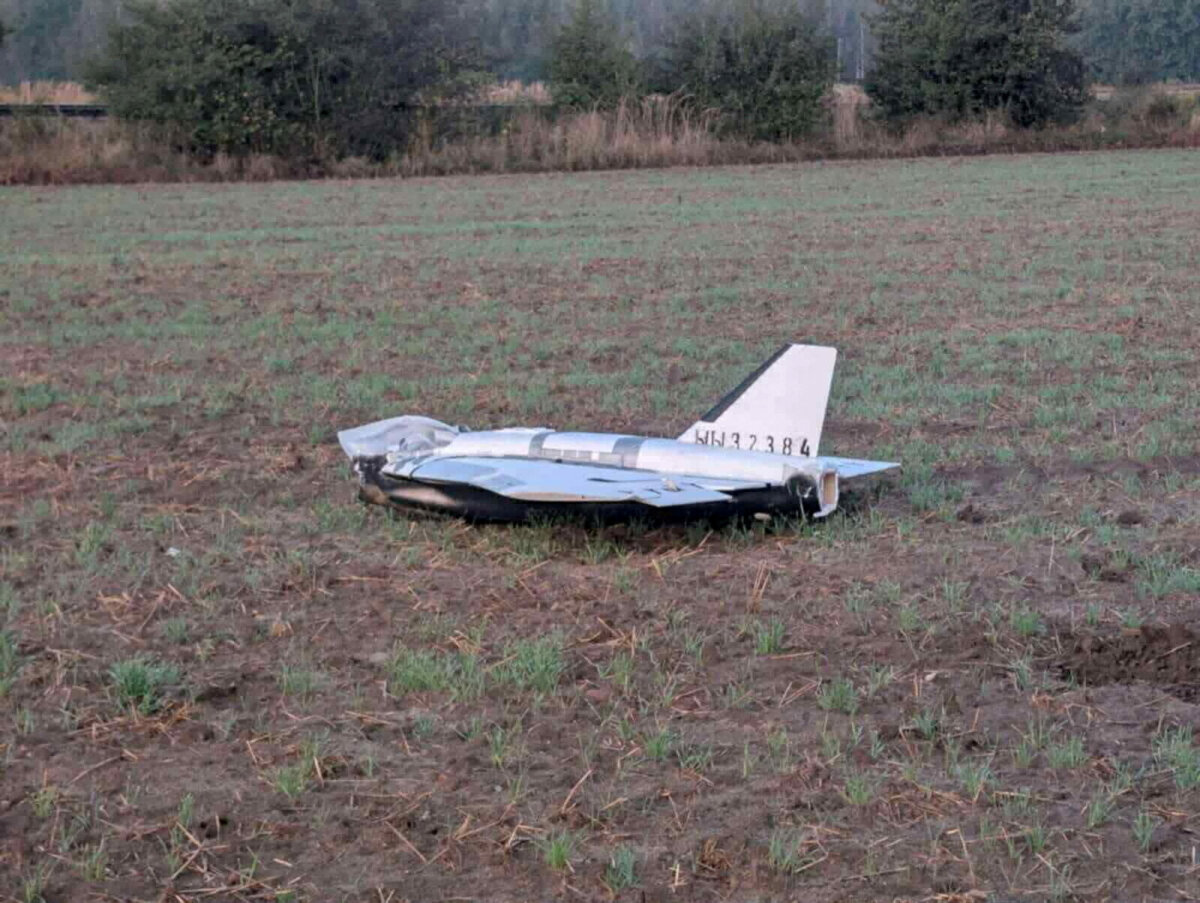
Ruginiene appeared to allude to Belarusian President Aleksandr Lukashenko and Russian President Vladimir Putin in an X post on Oct. 27 that said: “Autocrats are once again testing the resilience of EU and NATO against hybrid threats. In recent days, dozens of helium balloons from Belarus have entered our airspace—drifting toward major airports and disrupting civil aviation.”
The Lithuanian prime minister called for a “united, resolute response” from allies, including more sanctions on Russia and Belarus and strengthened defense capabilities.
The Associated Press contributed to this report.
 Friends Read Free
Copy
Facebook
Tweet
Friends Read Free
Copy
Facebook
Tweet