NATO’s supreme commander in Europe, U.S. Gen. Alexus Grynkewich, said on Sept. 10 that lessons would be learned from an incident in which the alliance reported that “numerous Russian drones violated Polish airspace” and were shot down.
Grynkewich, speaking in the Lithuanian capital, Vilnius, said NATO had not yet identified the total number of drones that entered Polish territory on Sept. 9, nor whether they crossed the border deliberately or somehow went astray.
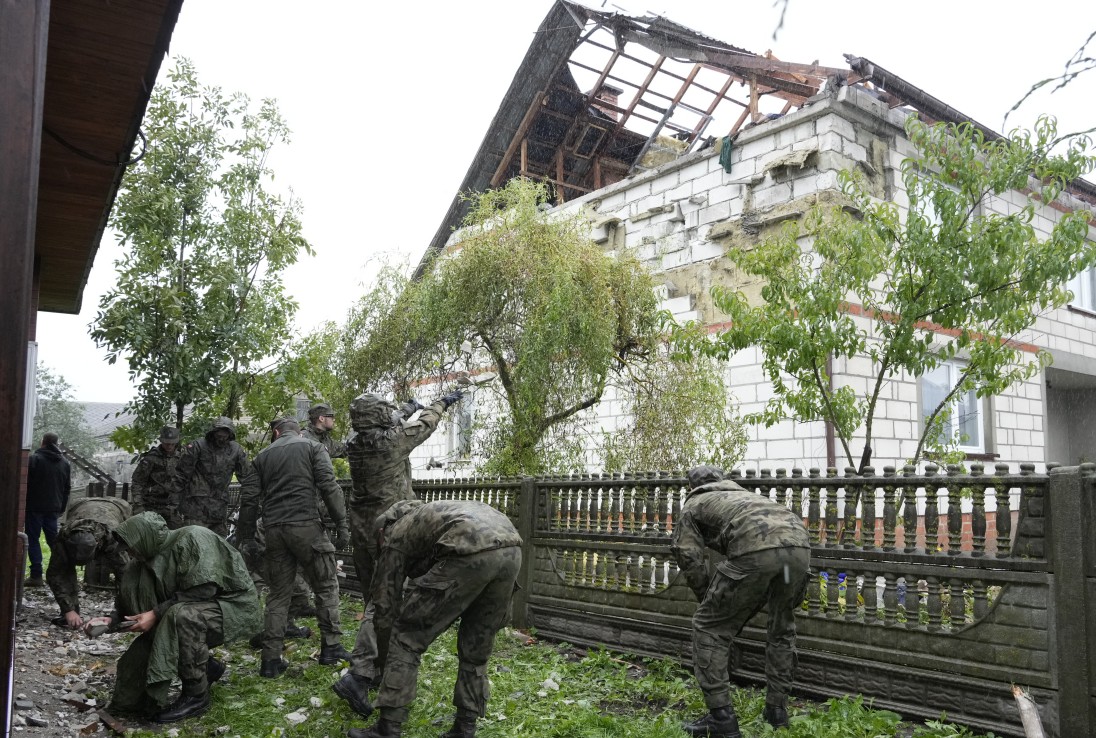
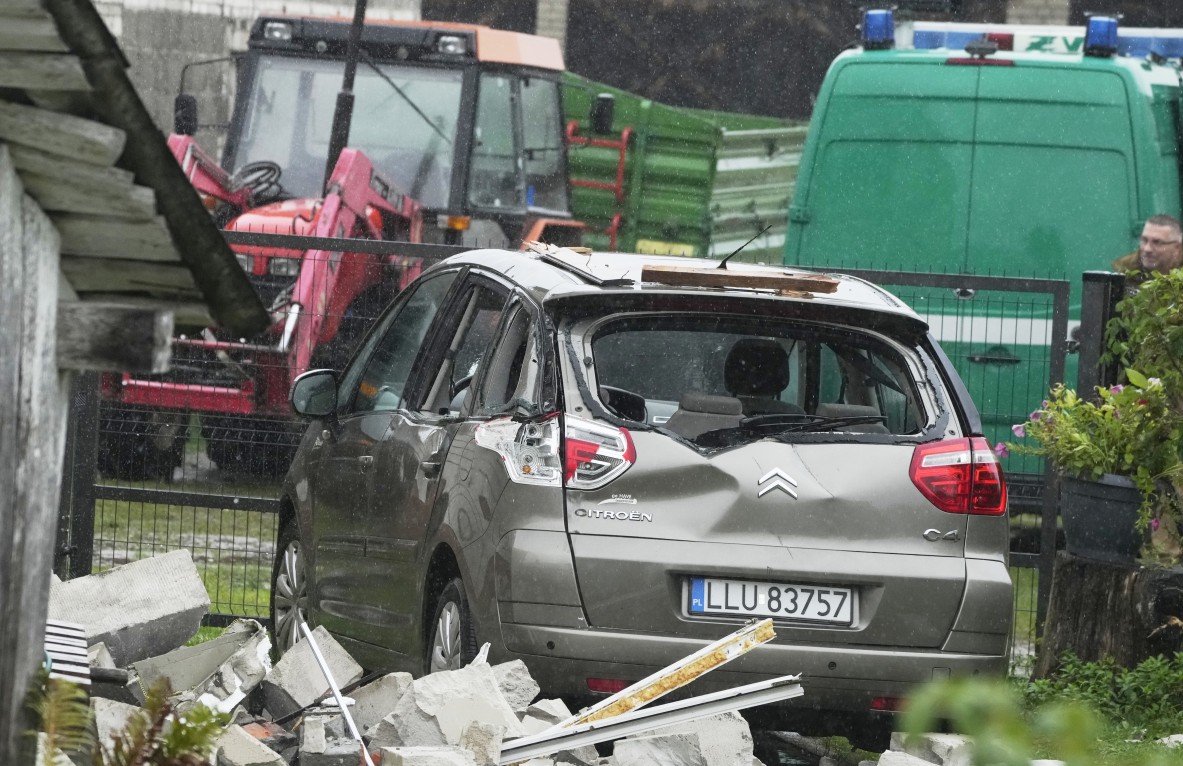
Authorities in Warsaw said they had detected 19 airspace violations and said they shot down four drones over eastern Poland.
“We do not yet know if this was an intentional act or an unintentional act, I would also have low confidence in any numbers that you’ve heard,” Grynkewich told reporters. “I would not be able to tell you with any confidence today that it was 20 or that it was 10. We just have to get into the technical details to figure that out, to debrief the crews that were up, see what they saw.”
Grynkewich added that NATO would “learn of things that we need to enhance our posture, to handle these limited incursions.”
Accidental Incursion ‘Defies Imagination’
Polish Foreign Minister Radek Sikorski said on Sept. 11 that one or two drones crossing into Polish airspace could have been a “technical malfunction,” but said it “defies imagination that it could have been accidental” when there were 19.
The foreign ministers of Ukraine, Poland, and Lithuania published a joint statement strongly condemning the drone intrusion.
“This was a deliberate and coordinated strike constituting an unprecedented provocation and escalation of tension,” they said. “Russia’s actions and Belarusian acquiescence to the use of its airspace pose a direct threat to the security of all nations in the region.”
The three countries, together known as the Lublin Triangle, also asked their NATO partners to “urgently strengthen Ukraine’s air defence and support Lithuania and Poland in their efforts to secure eastern flank of NATO and EU.”
Russian ally Belarus said on Sept. 10 that drones had gone astray as a result of electronic jamming during an exchange of strikes between Russia and Ukraine. Belarus Chief of the General Staff Maj. Gen. Pavel Muraveiko said his forces had to shoot down unmanned aerial vehicles (UAVs) that found their way into Belarusian territory.
“During the night-time exchange of strikes by UAVs between the Russian Federation and Ukraine, the Air Defence Forces and assets of the Republic of Belarus on duty continuously tracked UAVs that had lost their track as a result of the impact of the parties’ electronic warfare assets,” Muraveiko said.
“Some of the lost drones were destroyed by our country’s Air Defence Forces over the territory of the republic.”
Macron: ‘We Will Not Yield’
French President Emmanuel Macron said that three Rafale fighter jets would be deployed in Poland to beef up NATO’s eastern frontier.
“Following the Russian drone incursions into Poland, I have decided to deploy three Rafale fighter jets to contribute to the protection of Polish airspace and of NATO’s Eastern Flank together with our Allies,” Macron said in a Sept. 11 post to X. “The security of the European continent is our top priority. We will not yield to Russia’s growing intimidation.”
UK Prime Minister Keir Starmer spoke to Macron and German Chancellor Friedrich Merz on Sept. 11 about the incident.
A spokesman for Starmer said it “was clear that Russia was continuing to ramp up its aggression, systematically stepping up its attacks through a campaign of increasingly belligerent actions.”
Berlin said it will “extend and expand air policing over Poland.”
U.S. President Donald Trump, writing on his Truth Social platform on Sept. 10, said, “What’s with Russia violating Poland’s airspace with drones? Here we go!”
When later asked about the incident on Sept. 11, Trump told reporters, “It could have been a mistake.”
Last week, Trump told Polish President Karol Nawrocki, who was visiting the White House, that U.S. forces would remain stationed in Poland and indicated that Washington was ready to send additional troops if requested.
“We will help Poland protect itself,” Trump said.
Finnish President Alexsander Stubb, speaking alongside Ukrainian President Volodymyr Zelenskyy in Kyiv on Sept. 11, said, “The line between war and peace has been blurred.”
The Russian Ministry of Foreign Affairs said in a Sept. 10 statement that the Russian Ministry of Defence “unequivocally reaffirmed” that strikes against Ukraine that night “did not include any targets in the territory of the Republic of Poland, and that the range of the drones that delivered a strike at the Ukrainian defense industry facilities, which, according to Warsaw, entered Poland’s airspace, is below 700 kilometers [435 miles].”
“These facts overturn the myths which Poland is spreading again to aggravate the Ukrainian crisis,” the ministry added.
The United Nations Security Council has scheduled an emergency meeting on the drone incursion later on Sept. 12, at Poland’s request.
The Associated Press and Reuters contributed to this report.
 Friends Read Free
Copy
Facebook
Tweet
Friends Read Free
Copy
Facebook
Tweet