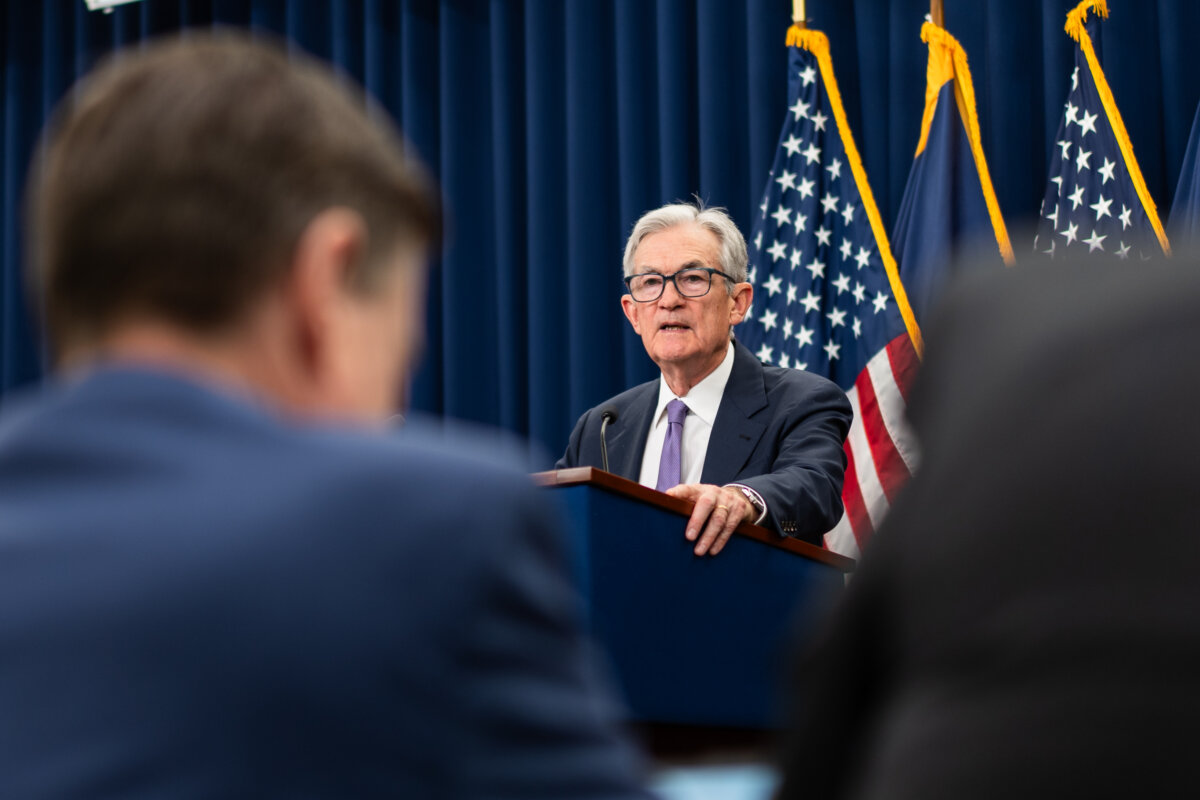

The Federal Reserve has lowered interest rates three times this year, but the U.S. central bank does not appear to have unanimity on the path of a key policy decision heading into 2026.
For months, monetary policymakers have expressed diverging views on what the Fed should do about interest rates. While officials agree that the dual mandate—maximum employment and price stability—has been under threat in tandem, some have emphasized one side over the other.
Current employment trends suggest the labor market is not immaculate, says Fed board member Christopher Waller.
Speaking with CNBC at the Yale CEO Summit on Dec. 17, Waller has been arguing since the summer that it is time to gradually bring down interest rates. His primary support stems from weakening employment conditions.
Based on his interview with executives and data, Waller estimates that approximately 70 percent are either firing workers or maintaining staffing levels.
“That’s not what I would call particularly a really healthy labor market,” Waller said. “There’s nothing telling me that data is going to get a lot better going forward.”
“My own view is I think we can continue bringing [rates] down,” he continued. “Whether my colleagues want to go along with it, that’s another story.”
The diverse array of views was also highlighted at the December policy meeting, in the minutes from the October gathering, and in public speeches.
Parsing Through Fed Talk
Federal Open Market Committee (FOMC) members voted 9–3 last week to follow through on the third consecutive quarter-point rate cut, bringing the target range to 3.5 percent and 3.75 percent.
Fed board member Stephen Miran, appointed by President Donald Trump, advocated again for a half-point rate reduction.
In a Dec. 15 speech at a Columbia University event, Miran said he expects further disinflation in housing services that could counterbalance increases in core goods inflation. Should shelter inflation continue to ease, Miran believes the Fed will undershoot its 2 percent inflation target.
Miran, on the other hand, warns that the bigger threat to the economy is downside risks to the labor market.
“Experience suggests that labor market deterioration can occur quickly and nonlinearly and be difficult to reverse,” he said. “In part because monetary policy lags several quarters, a quicker pace of easing policy—as I have advocated—would appropriately move us closer to a neutral stance.”
Miran’s term will expire in January and will either be reappointed by the president or return to the White House as the head of the Council of Economic Advisors.
Chicago Fed President Austan Goolsbee and Kansas City Fed President Jeffrey Schmid supported leaving policy unchanged, but for different reasons.
Goolsbee, meanwhile, thinks interest rates will be lower over the next year. But he thought the Fed should have waited to pull the trigger on a rate cut until more information was released.
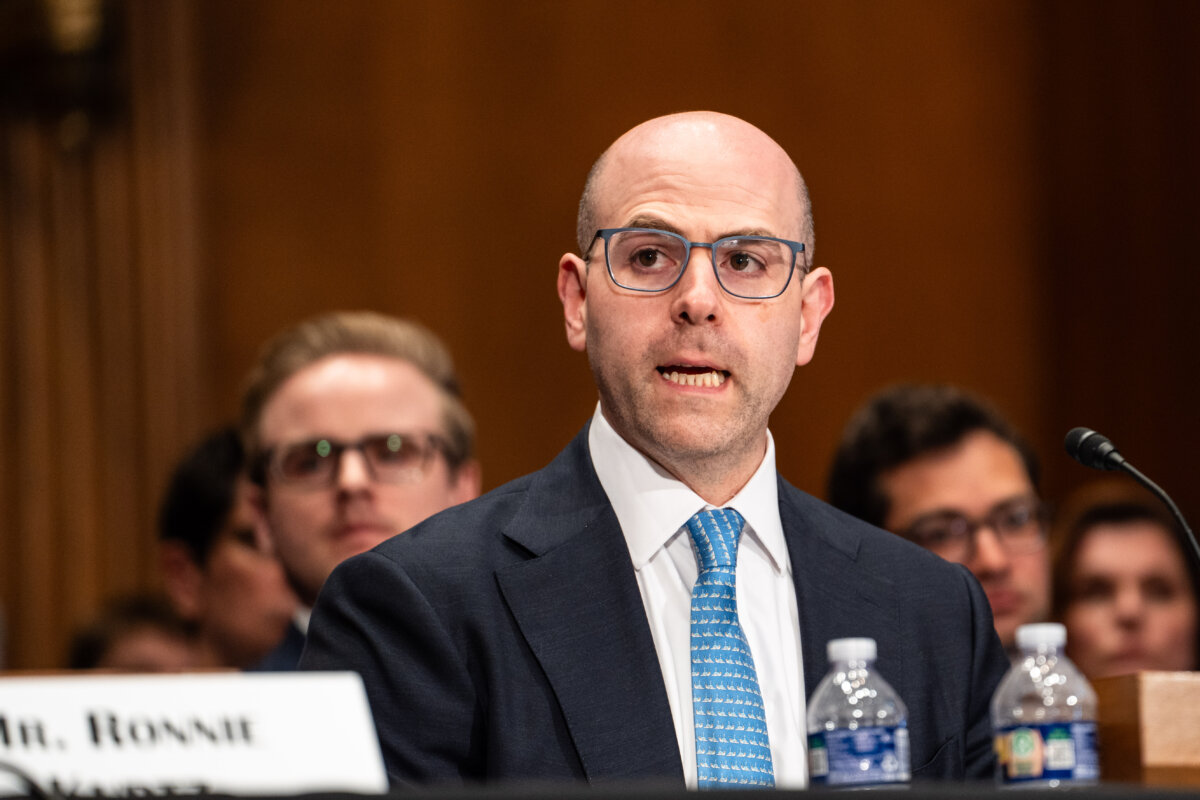
“While I voted to lower rates at the September and October meetings, I believe we should have waited to get more data, especially about inflation, before lowering rates further,” Goolsbee said in a Dec. 12 post on the Chicago Fed’s website.
Goolsbee will not be a voter on the rate-setting Committee next year but will still participate in meetings.
Schmid said he believed economic conditions had not changed since their last meeting.
The Kansas City Fed chief thinks inflation is too high, the U.S. economy still has momentum, and the labor market remains in balance.
“I view the current stance of monetary policy as being only modestly, if at all, restrictive,” Schmid said in a dissent statement. “With this assessment, my preference was to leave the target range for the policy rate unchanged.”
He is scheduled to be a voting member in 2026.
Atlanta Fed President Raphael Bostic says, however, that price stability remains “the most pressing risk” facing the committee.
Bostic, who is retiring from the regional central bank in February, argued that shifting labor market dynamics are challenging to decipher. But Bostic believes that restoring inflation to the Fed’s 2 percent target will be essential to maintaining the institution’s credibility.
“If underlying inflationary forces linger for many months to come, I am concerned that the public and price setters will eventually doubt that the FOMC will hit the inflation target in any reasonable time frame,” Bostic wrote.
“Will the public lose faith after five years of above-target inflation? Six years?” he continued. “Nobody knows. But what we do know is that credibility is a cornerstone of effective monetary policy.”
Policy Path
Updates to the Summary of Economic Projections—a quarterly survey of officials’ expectations for policy and the economy—indicate the central bank will follow through on one quarter-point cut.
The periodic median forecast also points to stronger growth, lower unemployment, and easing inflationary pressures.
However, a deeper dive into the survey suggests committee members worry that stagflation—an economic climate of elevated inflation, stagnating growth, and a weaker labor market—is the biggest risk in 2026.
While economists have repeatedly warned of stagflationary forces over the years, they have not materialized. The last time the U.S. economy endured a bout of stagflation was in the 1970s.
“Currently, FOMC members foresee upside risks to the unemployment rate and inflation,” Torsten Slok, chief economist at Apollo Wealth Management, said in a note emailed to The Epoch Times.
“In other words, the Fed continues to forecast stagflation and is concerned that we in 2026 may experience rising inflation and rising unemployment at the same time.”
Officials will convene their next two-day meeting on Jan. 27 and 28.
According to the CME FedWatch Tool, investors are betting that the central bank to leave interest rates unchanged. The futures market does not expect the next rate action until the spring.
 Friends Read Free
Copy
Facebook
Tweet
Friends Read Free
Copy
Facebook
Tweet