
The U.S. stock market rally could be broadening beyond artificial intelligence enthusiasm.
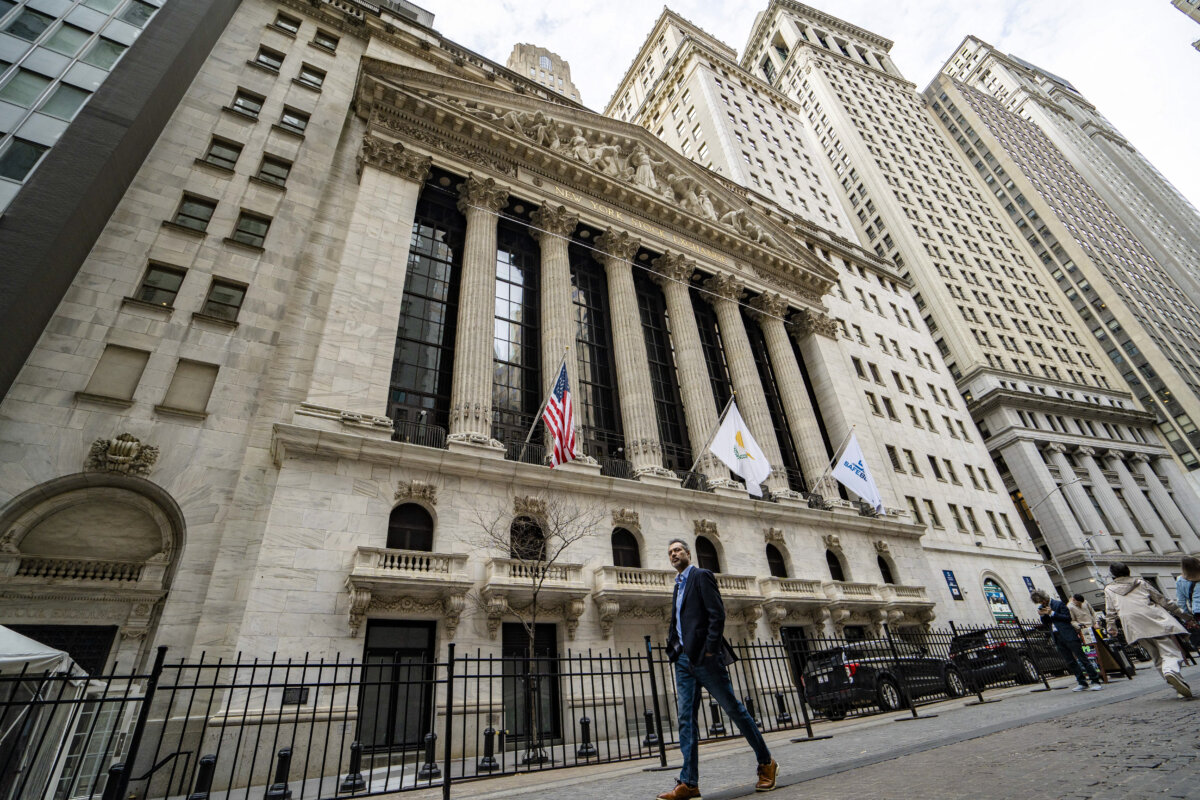
On Feb. 6, the blue‑chip Dow Jones Industrial Average shattered a milestone, closing above 50,000 for the first time after surging by more than 1,200 points, or 2.5 percent, to 50,115.
The index registered a weekly gain of 2.5 percent and is up by about 4 percent year to date.
“The price‑weighted Dow easily pushed through the 50,000‑point milestone today, clearing a major psychological barrier,” Adam Turnquist, chief technical strategist for LPL Financial, said in a note emailed to The Epoch Times.
The sudden surge followed sharp swings in the leading benchmark averages during the trading week, driven by losses in technology stocks and selloffs in cryptocurrency and precious metals.
But rather than rotate out of tech and into value stocks, gains were broad-based: Caterpillar (7.06 percent), Goldman Sachs (4.31 percent), Nvidia (7.87 percent), and Boeing (2.57 percent).
Other leading benchmarks also posted notable gains.
The tech-heavy Nasdaq Composite Index increased by almost 500 points, or 2.2 percent, to finish above 23,000. The broader S&P 500 rose by more than 100 points, or 2 percent, to 6,932. The Russell 2000 Index, which tracks small-cap stocks, soared by nearly 4 percent to 2,670.
Earlier in the session, shares of online retail giant Amazon plunged by about 5 percent after the company revealed plans to significantly increase its capital expenditures, with a focus on AI.
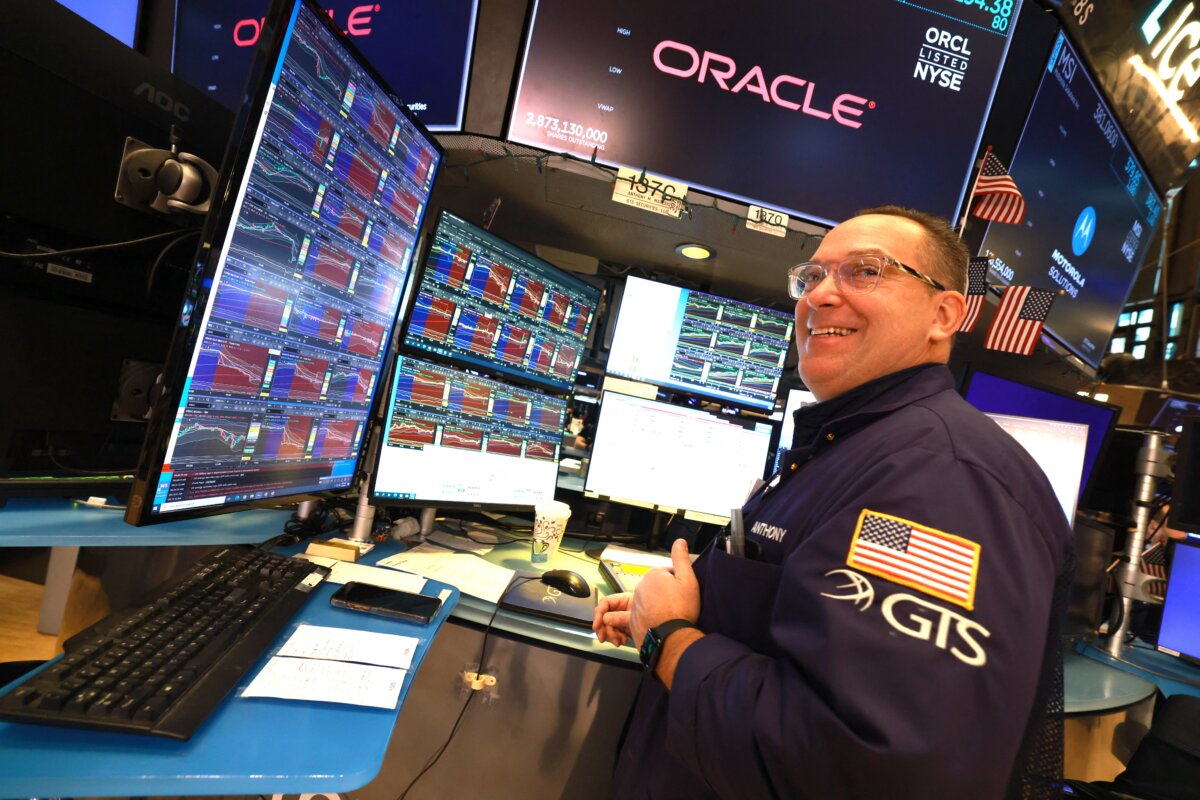
The company joins the growing chorus of tech’s megacaps—Alphabet, Meta, Microsoft, Nvidia, and Oracle—in raising capital expenditure (CapEx) spending for the year ahead to nearly $700 billion. The mixed response from investors wiped out hundreds of billions of dollars collectively from their valuations this past trading week.
“Last week, when Microsoft and Meta gave their CapEx guidance for the next fiscal year, they blew it out on the upside and surprised people, growing about 40 percent from last fiscal year to this one. I already thought 40 percent was a huge increase, and now they’re talking about closer to 90 percent,” Paul Meeks, head of technology research at Freedom Capital Markets, said in a note emailed to The Epoch Times.
“If you put their CapEx budgets along with Google’s together in dollar terms, we’re talking about $400 [billion] to $500 billion from just three companies, which blows me away.”
AI bubble talk has been circulating on trading floors for months, with market watchers questioning whether the level of CapEx spending is justified and if it can continue.
But while observers worry that popping a potential AI bubble could sink Wall Street, the broad-based rally on Feb. 6 may have spotlighted the market’s resilience.
The bounce back may have also revealed that retail is prepared to buy the dip and deploy the trillions of dollars sitting on the sidelines in cash.
As of the third quarter of 2025, approximately $7.8 trillion is parked in money market funds, according to Federal Reserve data.
Even cryptocurrency reversed its sharp losses.
After sinking below $61,000 a day earlier—the lowest since September 2024—bitcoin staged an incredible rebound, soaring by more than 10 percent to $70,580.
Much of the crypto market was also in positive territory. Ethereum added 9.5 percent, XRP surged by 17 percent, and Cardano rose by about 11 percent.
Still, whether equities can sustain the rebound next week will depend on tech, Turnquist said.
“For the broader market to make sustainable progress, renewed tech participation will likely be essential,” he said. “We expect the S&P 500 may have difficulty clearing the 7,000‑point milestone without stronger contributions from the tech sector—especially from software.”
Fundamentals, Not the Fed
Wall Street has navigated through numerous headwinds, including higher interest rates, global economic uncertainty, and geopolitical tensions. Despite all this, stocks keep moving higher.
“That tells us confidence is real, and 2026 will be less about the Fed and more about fundamentals,” Gina Bolvin, president of Bolvin Wealth Management Group, said in an emailed note to The Epoch Times.
Investors remain in the dark as to what Kevin Warsh, President Donald Trump’s nominee to lead the Federal Reserve, may have planned for monetary policy.
Since the president officially revealed his choice, analysts have been combing through past speeches and public remarks to potentially determine the path of policy under a new regime at the U.S. central bank.
The expectation is that Warsh will curtail the Fed’s power rather than independence by printing less money, shrinking the balance sheet, and returning to the congressional dual mandate of price stability and maximum employment.
For now, traders anticipate that monetary policymakers will leave interest rates unchanged—the federal funds rate rests in a range of 3.5 percent to 3.75 percent—until June or July. What happens when Chair Jerome Powell’s term expires in May could be anybody’s guess.
As a result, U.S. Treasury yields and the greenback have held steady since Warsh’s nomination on Jan. 30.
The U.S. Dollar Index—a gauge of the greenback against a weighted basket of currencies—posted a 0.7 percent weekly gain.
Yields on U.S. Treasury securities were mixed, with the benchmark 10-year little changed at 4.206 percent. The two-year, which tends to track Fed policy, picked up 1.2 basis points to 3.495 percent. The 30-year yield slid by one basis point to 4.853 percent.
Next Stop: 100,000
It took the Dow Jones Industrial Average more than 400 days to add 10,000 points—the index crossed 40,000 in May 2024—and the president thinks it will keep rising over the next few years.
“I am predicting 100,000 on the Dow by the end of my term. Remember, Trump was right about everything! I hope the United States Supreme Court is watching,” he said in a Feb. 6 Truth Social post, an apparent reference to an upcoming ruling on his tariffs authority.
Trump attributed the record level to his tariff agenda.
Travis Gillmore contributed to this story.
 Friends Read Free
Copy
Facebook
Tweet
Friends Read Free
Copy
Facebook
Tweet