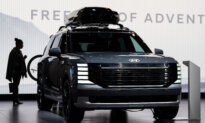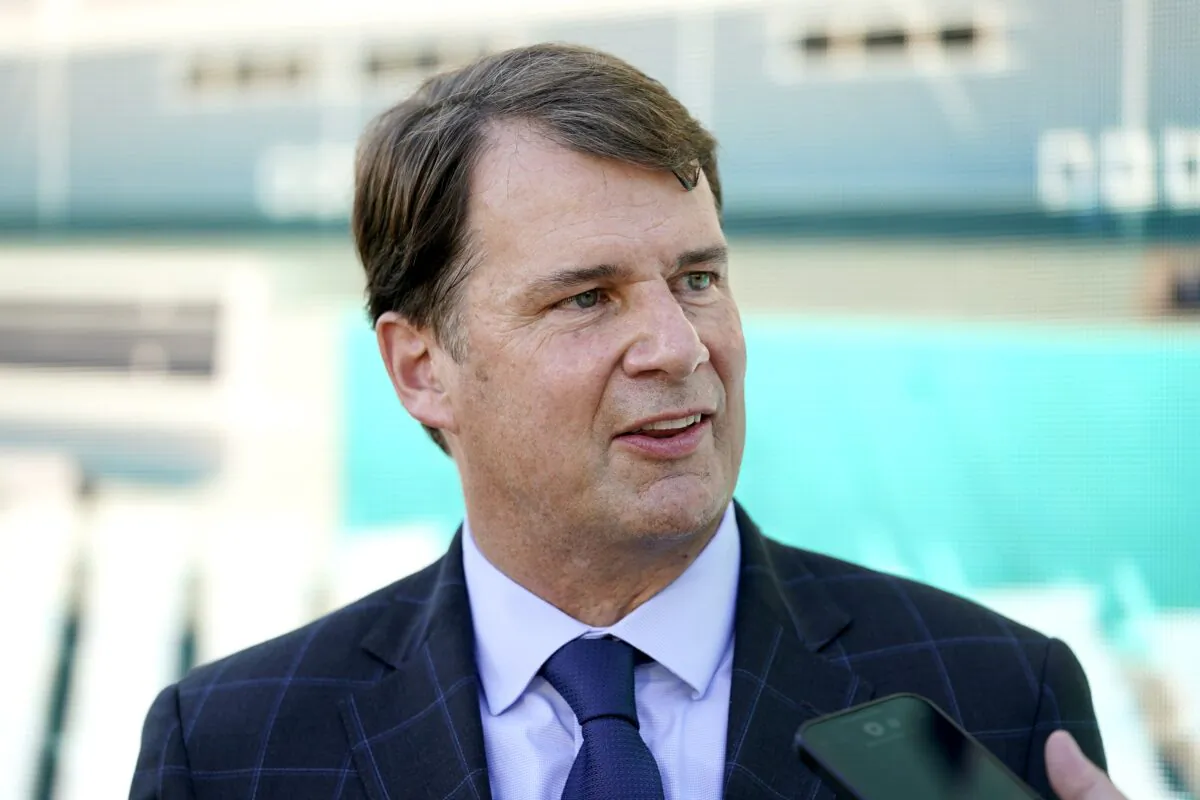

Ford CEO Jim Farley on Tuesday urged the United States to carefully consider the potential impact of allowing Chinese automakers access to its market, warning that America should learn from Europe, where, he said, it’s already too late to counter the influx of Chinese vehicles.
“As far as here in the United States, I think it’s important for us to take our time to be considerate. I watch what’s happening in Europe right now, where that was not the case, and it’s really something that they have to deal with now, and it’s too late,” Farley told an audience at the Automotive News Congress in Detroit.
“These vehicles can drive themselves. They can take videos of everything. You know, it’s amazing what a car can do. For your national security alone, it’s critical that we think about how do we find the right balance.”
Trade associations representing major automakers, including Ford and Tesla, have previously called on President Donald Trump to maintain policies barring Chinese automakers from selling, importing, or manufacturing vehicles in the United States.
They said current U.S. policies have limited China’s dominance in materials used for domestic automotive production, while Washington maintains 100 percent tariffs on Chinese vehicle imports.
Steffen Michulski, regional consultant for Europe at automotive data and analytics firm JATO Dynamics, said on July 2 that Chinese manufacturers were rapidly expanding in Europe after accelerating vehicle development in their domestic market.
“What we’re witnessing is not just growth, it’s industrial acceleration on a scale Europe has never experienced before,” he said.
JATO projects Chinese brands’ registrations in Europe will exceed 1.3 million vehicles in 2026, up from just over 50,000 in 2020.
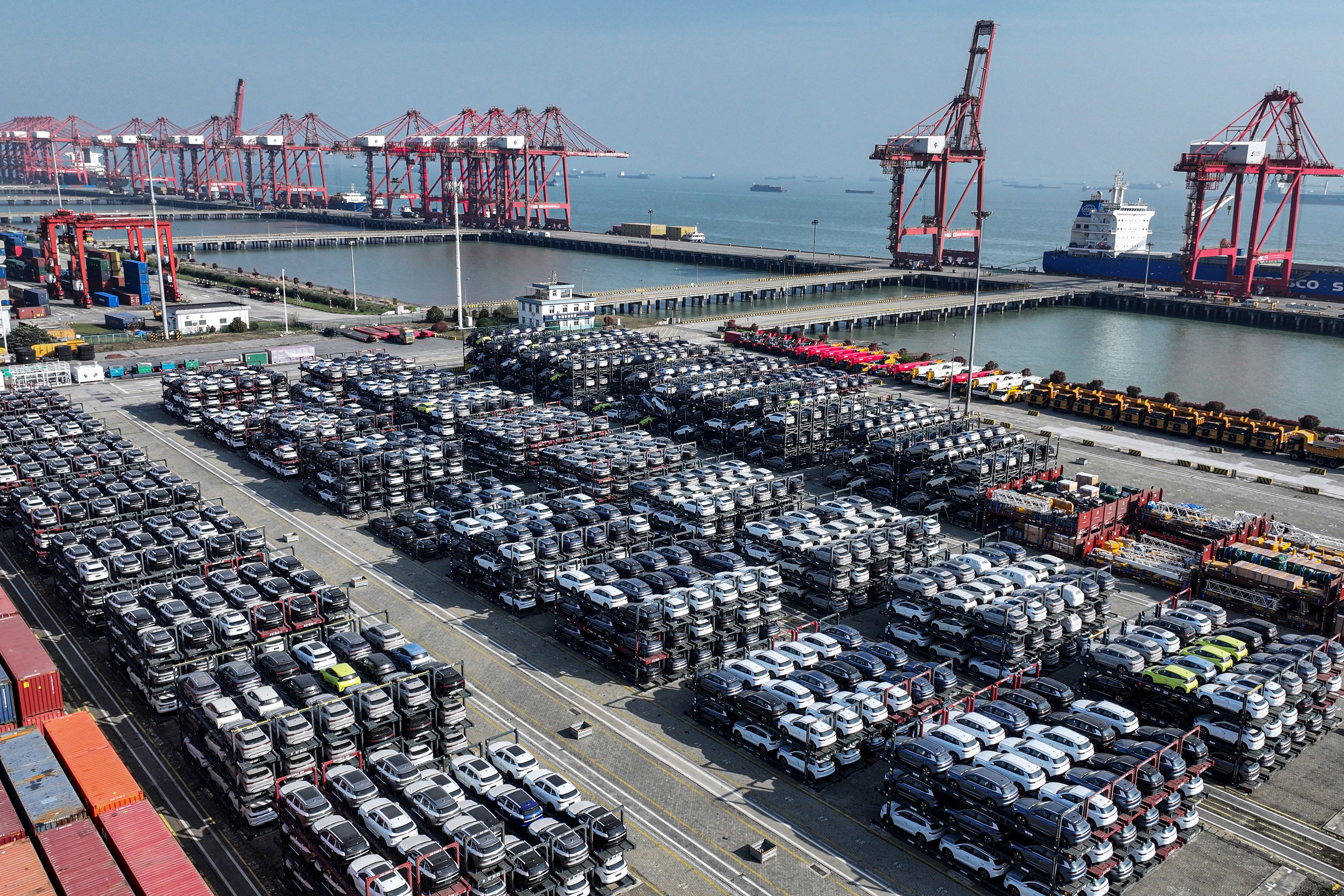 BYD electric cars and other car brands for export are stacked at the Taicang port in Suzhou, Jiangsu Province, China, on April 7, 2025. (AFP/Getty Images)
Farley said Ford will partner with Chinese companies when the situation is capital-efficient and in areas where the automaker lacks expertise.
“We’re also going to compete with them directly,” he said. “And both can be totally fine. They aren’t mutually exclusive.”
Earlier this month, Transportation Secretary Sean Duffy wrote to Farley expressing concerns about Ford’s strategic trajectory with Chinese companies and citing potential implications for U.S. national automotive manufacturing integrity, supply chain exposure, and reliance on technologies of foreign adversaries.
“While DOT recognizes the intense competitive pressures of the global market, the company’s recent strategic decisions paint a troubling picture of a foundational American brand actively intertwining its future with Chinese state-backed enterprises,” Duffy wrote in a Sept. 3 letter.
In its response, Ford called Duffy’s letter a “wrongheaded attempt to capture headlines” and reiterated its support for the Trump administration’s vision for advancing American innovation and manufacturing.
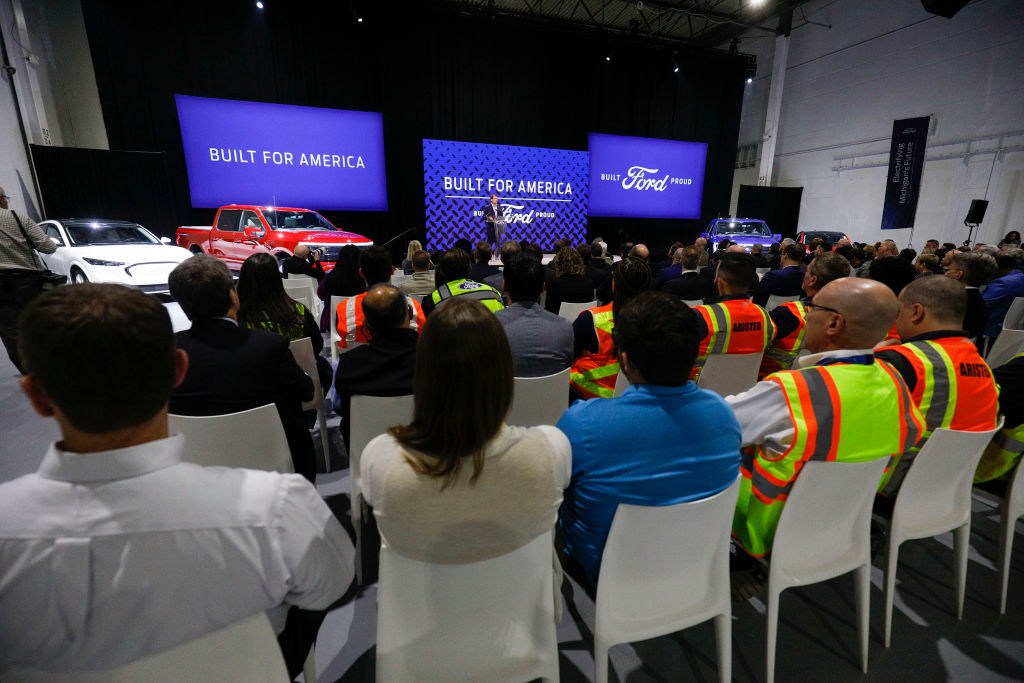 Ford CEO Jim Farley announces at a press conference that Ford Motor Company will create an electric-vehicle battery plant in Marshall, Michigan, on Feb. 13, 2023. (Bill Pugliano/Getty Images)
“While others continue to import Chinese batteries, Ford is investing to build batteries here in America. The CATL arrangement is a limited technology-licensing and services agreement, not a joint venture or foreign-owned manufacturing operation. Ford owns the plant, controls the operation and employs the workforce,” the company wrote in a Sept. 8 letter.
The company noted that the White House highlighted the Michigan project in an August press release.
“Michigan is locking in tens of billions in new capital and thousands of high-paying jobs as companies respond to the Trump Administration’s America First agenda,” the White House stated at the time. “Ford Motor Company is investing $3 billion in its BlueOval Battery Park in Marshall, creating 1,700 new jobs.”
Earlier this month, Ilaria Mazzocco, deputy director and senior fellow at the Center for Strategic and International Studies, said, “There’s a general consensus that the U.S. wants to be less dependent on China, but I don’t think there’s actually a lot of consensus on exactly what that looks like.”
Reuters contributed to this report.
 Friends Read Free
Copy
Facebook
Tweet
Friends Read Free
Copy
Facebook
Tweet