



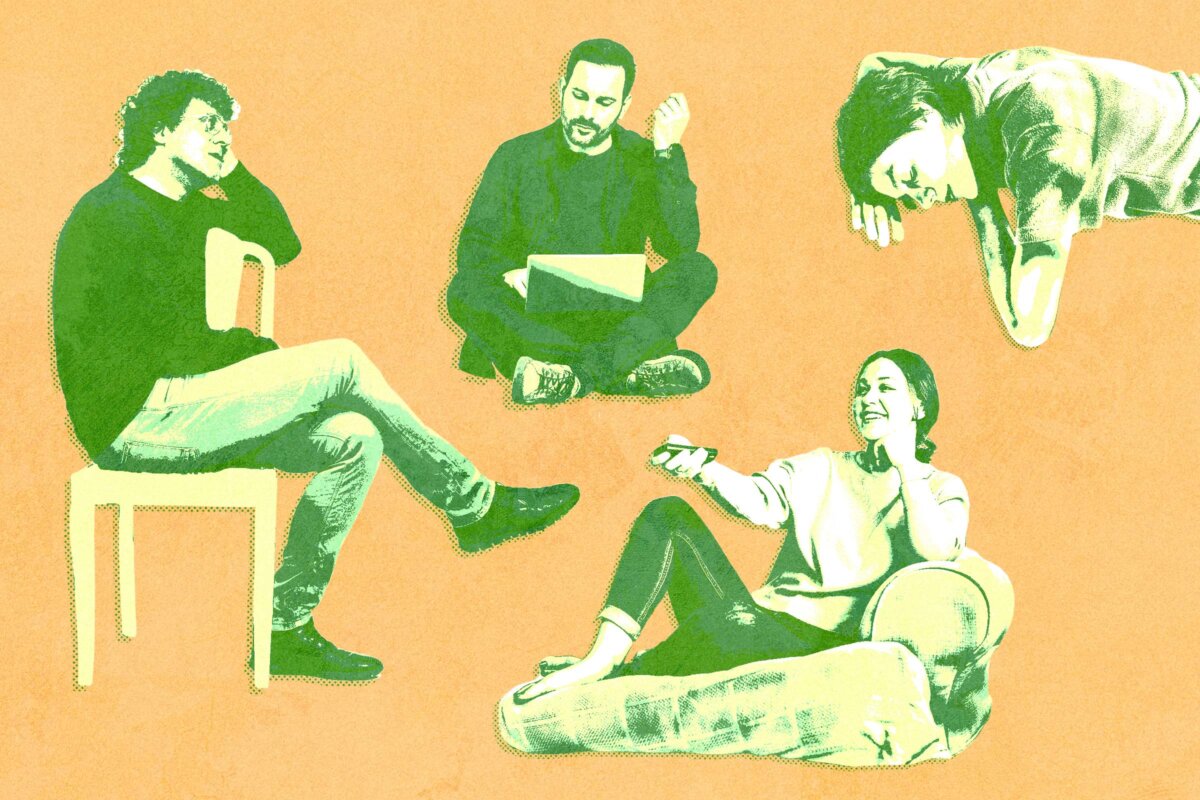
You settle onto the sofa, tuck one leg beneath you, and look down at your phone. Half an hour later, your neck feels stiff. At your desk, you cross your legs without thinking, then stand up with an aching lower back.
The positions themselves are not necessarily harmful. The trouble often comes when you stay in one position long after your body starts asking you to move.
Dr. Wang Jun-ping, director of Runsheng Rehabilitation Clinic in Taiwan, told The Epoch Times that uncomfortable positions held for long periods can strain muscles and ligaments. He recommends paying attention to when stiffness begins, changing position regularly, and building strength through simple exercises.
4 Common Incorrect Postures
Wang identified four common incorrect postures that can cause pain and other health issues:
1. Single Leg Crossing
Crossing the legs at the knees when you sit puts excessive pressure on one leg and compresses the nerves and spine. Over time, this can lead to lower back pain, pelvic misalignment, and even abdominal compression, causing indigestion, constipation, and poor blood circulation.
2. Sitting Cross-Legged
When sitting with both legs crossed, the upper body tends to lean forward naturally, leading to a hunched back and putting pressure on the hip joints and knee cartilage. Maintaining this posture for extended periods can also place excessive pressure on the lumbar spine, leading to lower back pain and numbness in the legs.
3. Lying at an Angle
Lying at an angle, such as when on a sofa with your feet raised, can leave the lumbar and cervical spine unsupported, leading to abnormal bending or suspension. Over time, this posture increases pressure on the neck and hips, potentially leading to herniated discs or injuries to muscles and ligaments.
4. Lying Face Down
Lying face down while reading puts excessive pressure on the spine, straining the neck and back. Maintaining this posture for extended periods can lead to neck stiffness, shoulder pain, and numbness in the hands.
Furthermore, a chair that is too high or a desk that is too low can cause excessive strain on the neck and shoulders, resulting in headaches and shoulder tension.
Daily Prevention and Improvement
Adjusting our daily habits can significantly reduce the risk of spinal injury, Wang said. He recommended the following tips:
-
Maintain a Natural Curvature: Avoid prolonged sitting or maintaining the same posture for extended periods. Choose ergonomic office chairs or cushions to provide appropriate lumbar support.
-
Use Appropriate Desk and Chair Height: While sitting, keep your feet flat on the ground, your knees at approximately 90 degrees, and your elbows relaxed at your sides to avoid overexertion of the neck and shoulders.
-
Avoid Excessive Stress: When lifting heavy objects, maintain proper posture and avoid sudden twisting or excessive bending to reduce the risk of back injury.
-
Control Body Weight: Excess weight increases pressure on the spine. Maintaining a healthy weight through a healthy diet and regular exercise helps prevent and improve lower back pain.
-
Warm and Cold Compresses: Cold compresses can relieve pain during acute inflammation; for chronic tightness, warm compresses are recommended to promote blood circulation and relax muscles.
Core Training Strengthens the Spine
The core muscles are the spine’s natural lumbar “support belt,” spreading out much of the pressure, Wang said. The following three simple exercises require only five to 10 minutes daily and can be done at home without any equipment:
1. Bridge Pose
Bridge pose trains the gluteus maximus, hamstrings, and core muscles, helping stabilize the pelvis and reduce pressure on the lumbar spine.
Steps: Lie on your back on a flat surface, knees bent and feet flat on the floor, and palms facing downward. Inhale, and as you exhale, press down through your feet and lift your hips upward as far as they will rise. Hold for several breaths before lowering down.
2. Plank Pose
Plank pose strengthens the core muscles and improves spinal stability, helping to reduce lumbar spine strain and improve posture.
Steps: Starting on your hands and knees, step one foot all the way back, and then the other. With the balls of your feet on the floor, press out through your heels and engage your core to maintain the pose. Take several breaths in the pose, then gently release.
3. Bird-Dog
Bird-Dog trains the core and back-stabilizing muscles, improving spinal stability and reducing lumbar spine strain.
Steps: Starting on all fours, engage your core and stretch one leg back, parallel to the floor. Once you feel grounded and balanced, extend the opposite arm forward. Keep your head aligned with your spine. Hold for several breaths, then repeat on the other side.
Small Activities Are Important
In addition to core training, regular daily activities are equally important. After sitting for about 30 to 60 minutes, spinal pressure increases significantly. Wang recommended getting up and moving around or stretching the body for two to three minutes to help relax muscles, promote blood circulation, and reduce soreness and numbness.
Clinically, many patients dismiss minor aches and pains, only to find them worsening over time, sometimes requiring rehabilitation or treatment for relief. Conversely, those who adjust their lifestyles early on typically prevent deterioration and experience a significant improvement in work efficiency.
TCM Approach Using Acupoints
In addition to daily posture adjustments and core training, acupoint massage from traditional Chinese medicine (TCM) can provide a more comprehensive solution for aches and pains and improve overall health.
Chen Hsin-hung, a TCM practitioner at Hanyitang Chinese Medicine Clinics in Taiwan, spoke with The Epoch Times and offered advice for neck and lower back problems.
Relieving Neck Stiffness
When the neck and shoulders are tense, massage or moxibustion (a gentle heat therapy using dried mugwort) at the Shoulder Well (Jian Jing, GB21), Heavenly Gathering (Tian Zong, SI11), and Vital Region Shu (Gao Huang, BL43) acupoints can help relax the muscles.
Shoulder Well: Located at the midpoint of the line connecting the Big Vertebra (Da Zhui, GV14) acupoint (the most prominent bone at the bottom of the neck) and the acromion (the prominent bone on the outer side of the shoulder).
Heavenly Gathering: Located in the depression in the center of the scapula.
Vital Region Shu: Located below the spinous process of the fourth thoracic vertebra, four finger-widths to the left and right, in the depression on the medial side of the scapula.
Relieving Lower Back Pain
Lower back pain can be improved by stimulating acupoints on the lower back.
Lumbar Shu (Yao Shu, GV2) Acupoint: Located at the sacral hiatus.
Large Intestine Shu (Da Chang Shu, BL25) Acupoint: Located below the fourth lumbar spinous process, two finger-widths (index and middle fingers together) lateral to the midline.
Middle of the Crook (Wei Zhong, BL40) Acupoint: Located in the center of the popliteal fossa behind the knee.
If discomfort keeps returning, notice when it begins. A different sitting position, a brief walk, or a few minutes of strengthening may help. Seek a medical assessment if pain persists or worsens, especially if it comes with increasing numbness or weakness.