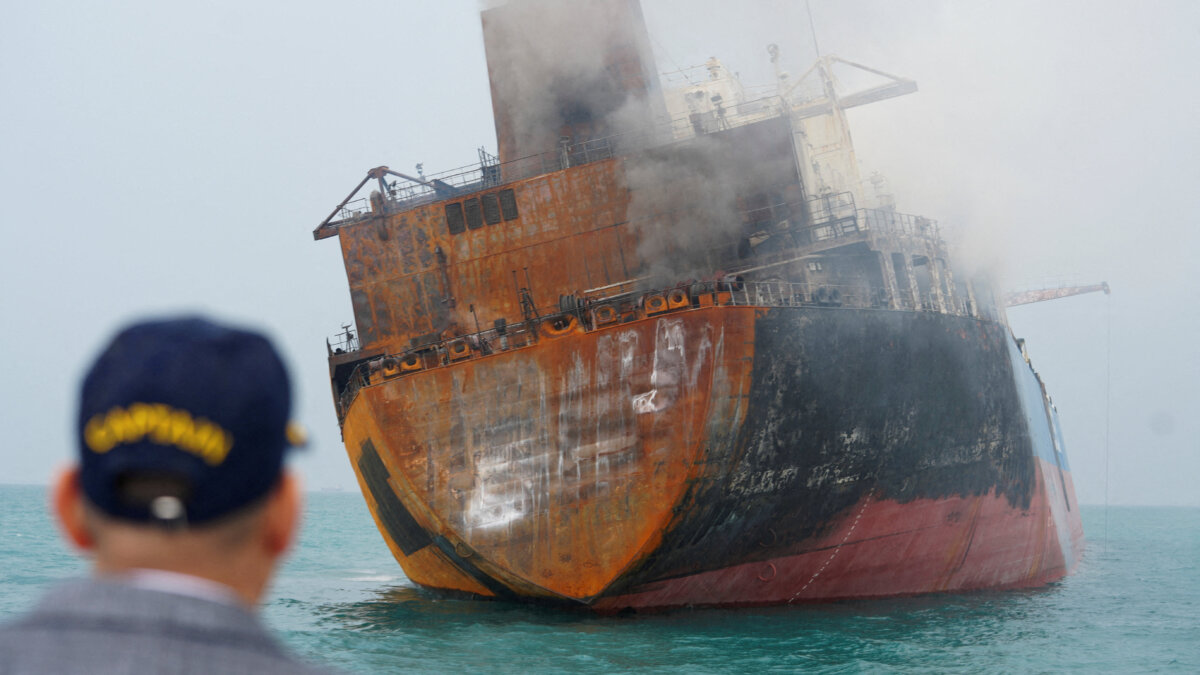

The International Monetary Fund (IMF) has said a return to pre-war global transport conditions will be difficult, while the World Bank and International Energy Agency warned that the Middle East conflict is pushing up energy prices and disrupting global supply.
The IMF said on April 29 that disruptions in the Red Sea, particularly around the Suez Canal route, offer a possible preview of how longer-term instability in the Strait of Hormuz could affect global trade.
The fund pointed to attacks on shipping in the Red Sea that began in 2023, which forced vessels to reroute around Africa instead of transiting through the Suez Canal.
As a result, traffic through the Bab-el-Mandeb Strait remains at roughly half its pre-attack level more than two years later.
The organization said this prolonged disruption highlights the risk that key choke points such as the Strait of Hormuz could face similar recovery paths.
“The war in the Middle East has severely disrupted maritime and air traffic, damaging infrastructure and interrupting transport corridors that are critical for global energy and goods,” the IMF blog said. “Even in the best case, there will be no neat and clean return to the way things were.”
The IMF said disruptions to shipping and aviation are raising costs and slowing trade, especially for tourism-dependent and import-reliant economies.
Consumers are already seeing higher prices for essential goods, and lower-income households are bearing the largest share of the impact, it stated.
Energy, Food, Commodity Pressures
The conflict is heightening risks to global energy supply as the United States and Iran have yet to reach an agreement.
U.S. President Donald Trump said in an April 29 interview with Axios that Iran was seeking to end the blockade through a deal with the United States, but he indicated that he was unwilling to lift it, citing concerns about the possibility that Tehran obtains a nuclear weapon.
In its April 28 commodity markets outlook, the World Bank said that energy prices are projected to rise by 24 percent in 2026.
Overall commodity prices are forecast to increase by 16 percent, driven by rising energy and fertilizer costs, it stated.
Brent crude prices remained more than 50 percent higher in mid-April than at the start of the year and are forecast to average $86 per barrel in 2026, up from $69 in 2025, the outlook said.
“The war is hitting the global economy in cumulative waves: first through higher energy prices, then higher food prices, and finally, higher inflation, which will push up interest rates and make debt even more expensive,” said Indermit Gill, the World Bank’s chief economist.
He said that “the poorest people, who spend the highest share of their income on food and fuels, will be hit the hardest.”
Fertilizer prices are expected to increase by 31 percent in 2026, and urea prices are expected to rise by 60 percent, the World Bank said. The increase is expected to reduce affordability for farmers and affect crop yields.

The Trump administration has outlined steps to address fertilizer supply risks.
U.S. Agriculture Secretary Brooke Rollins said on April 29 that the administration is working to reshore fertilizer production, projecting significant increases in domestic output over the next several years.
“We believe that in short order, in the next year to two years, we could expand, back of napkin, our domestic nitrogen production by more than 30 percent, just in a short period of time, our domestic phosphate production by over 200 percent, and our domestic potash production by over 100 percent,” Rollins said.
She told a Senate Appropriations subcommittee last week that federal agencies are coordinating daily with the White House on what she described as an “all-government approach” to fertilizer policy.

The World Bank has also warned that prolonged disruptions could push up to 45 million more people into acute food insecurity this year, citing estimates from the World Food Programme. Prices for metals, including aluminum and copper, are also projected to rise, and inflation in developing economies is now projected to reach 5.1 percent in 2026.
Growth is expected to slow to 3.6 percent, a downward revision from earlier forecasts, according to the World Bank. Ayhan Kose, the World Bank’s deputy chief economist, said on April 28 that governments should focus on targeted support measures.
His remarks came as JPMorgan Chase CEO Jamie Dimon said on April 28 that although he is not currently concerned about inflation, he still sees stagflation as a possible worst-case economic scenario.
Natural Gas Markets
The International Energy Agency said last week that the conflict has significantly altered global natural gas markets and delayed expected growth in liquefied natural gas (LNG) supply.
Disruptions in the Strait of Hormuz have removed almost 20 percent of global LNG supply, contributing to price increases in Europe and Asia.
Natural gas prices in those regions rose to their highest levels since January 2023 during March, the agency said.
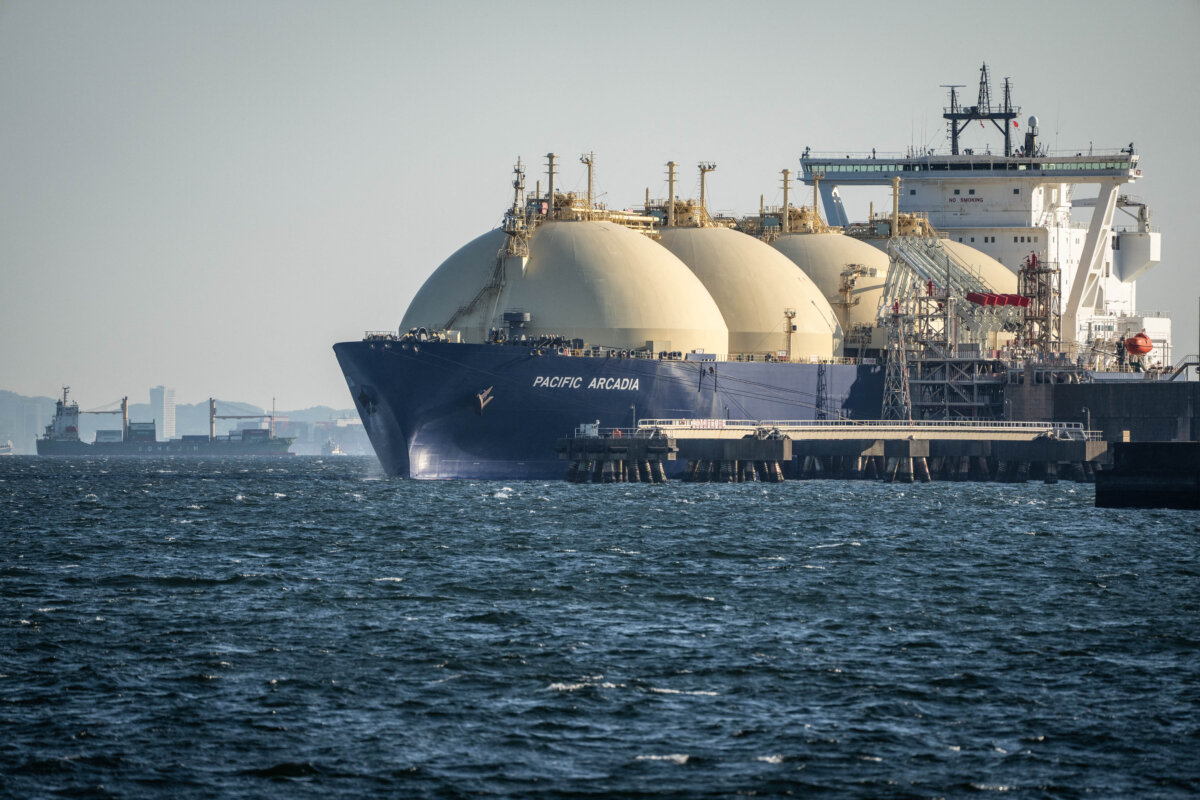
Global LNG production declined by 8 percent year-on-year, driven by reduced exports from Qatar and the United Arab Emirates.
The International Energy Agency said infrastructure damage is expected to delay the expansion of LNG supply capacity by at least two years, and a cumulative supply loss of about 120 billion cubic meters between 2026 and 2030 is projected.
 Friends Read Free
Copy
Facebook
Tweet
Friends Read Free
Copy
Facebook
Tweet