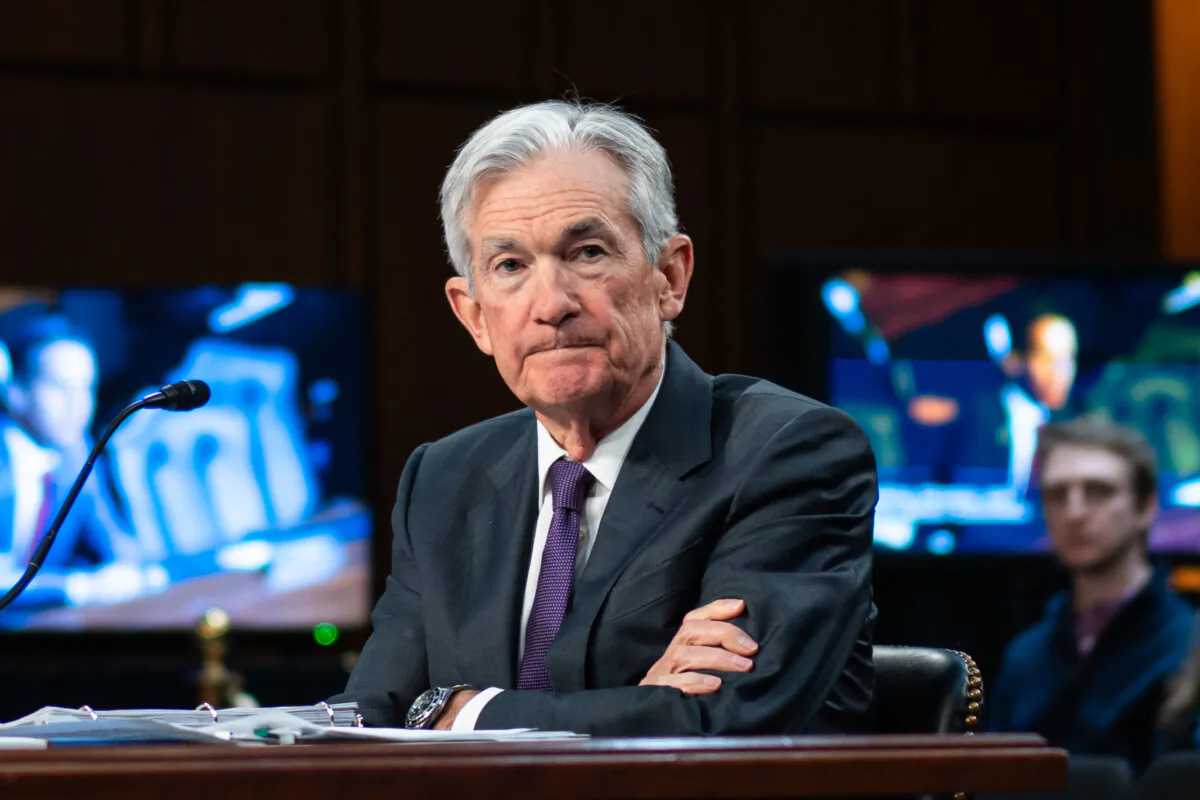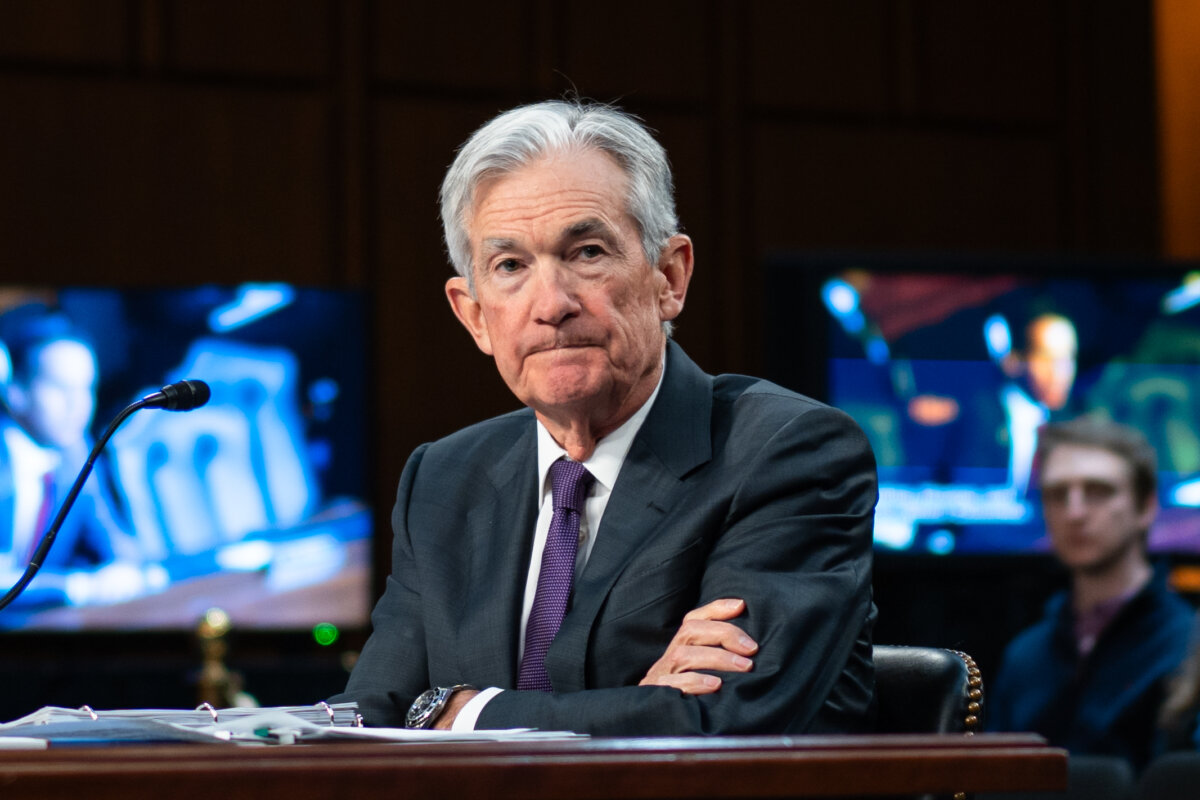

Federal Reserve Chair Jerome Powell said on Oct. 14 that challenges to inflation and the labor market suggest there is “no risk-free path” for central bank policy.
While the U.S. government shutdown has delayed vital economic data releases, the figures published prior to the closure and alternative private-sector measures indicate persistent pressures facing the labor market.
Because of a decline in labor force growth amid lower immigration and labor force participation, payroll gains have “slowed sharply,” Powell noted.
“In this less dynamic and somewhat softer labor market, the downside risks to employment appear to have risen,” Powell said at a National Association of Business Economists event after receiving the Adam Smith Award.
“While official employment data for September are delayed, available evidence suggests that both layoffs and hiring remain low, and that both households’ perceptions of job availability and firms’ perceptions of hiring difficulty continue their downward trajectories.”
The government shutdown, now entering its third week, has prevented the Bureau of Labor Statistics from publishing the September jobs report.
The Department of Labor has also been unable to release the weekly jobless claims data.
For now, according to Powell, monetary policymakers and staff economists are combing through the broad array of substitutes for employment data, such as payroll processor ADP’s National Employment Report.
Still, at least for inflation, the longer the shutdown persists and the more data the central bank misses, “it could become more challenging” to craft policy, he said.
The Bureau of Labor Statistics will publish the September Consumer Price Index (CPI) on Oct. 24.
But economic data from September suggest that economic activity has been “surprising to the upside,” according to Powell. Despite low levels of job creation, consumers are still opening their wallets.
In the end, because the institution’s dual mandate is facing simultaneous challenges, Powell observed that “there is no risk-free path for policy.”
Interest Rate Outlook
Powell’s latest comments were his final scheduled remarks before the central bank’s next policy meeting later this month.
Minutes from the September Federal Open Market Committee (FOMC) meeting show that senior leaders anticipate the Fed will follow through on a second, consecutive quarter-point rate cut.
Investors also overwhelmingly expect the institution will lower the benchmark federal funds rate—a key policy rate that influences borrowing costs for businesses and households—to a new target range of 3.75 percent to 4 percent.
Still, meeting minutes and comments from a plethora of monetary policymakers suggest a divided Federal Reserve.
While “around half” of monetary policymakers, according to the minutes, believe the Fed will lower interest rates by a total of three times this year, the outlook heading into 2026 remains uncertain.
The updated Summary of Economic Projections—a periodic survey highlighting officials’ forecasts for policy and the broader economy—points to a more conservative outlook with one 25-basis-point rate cut next year.
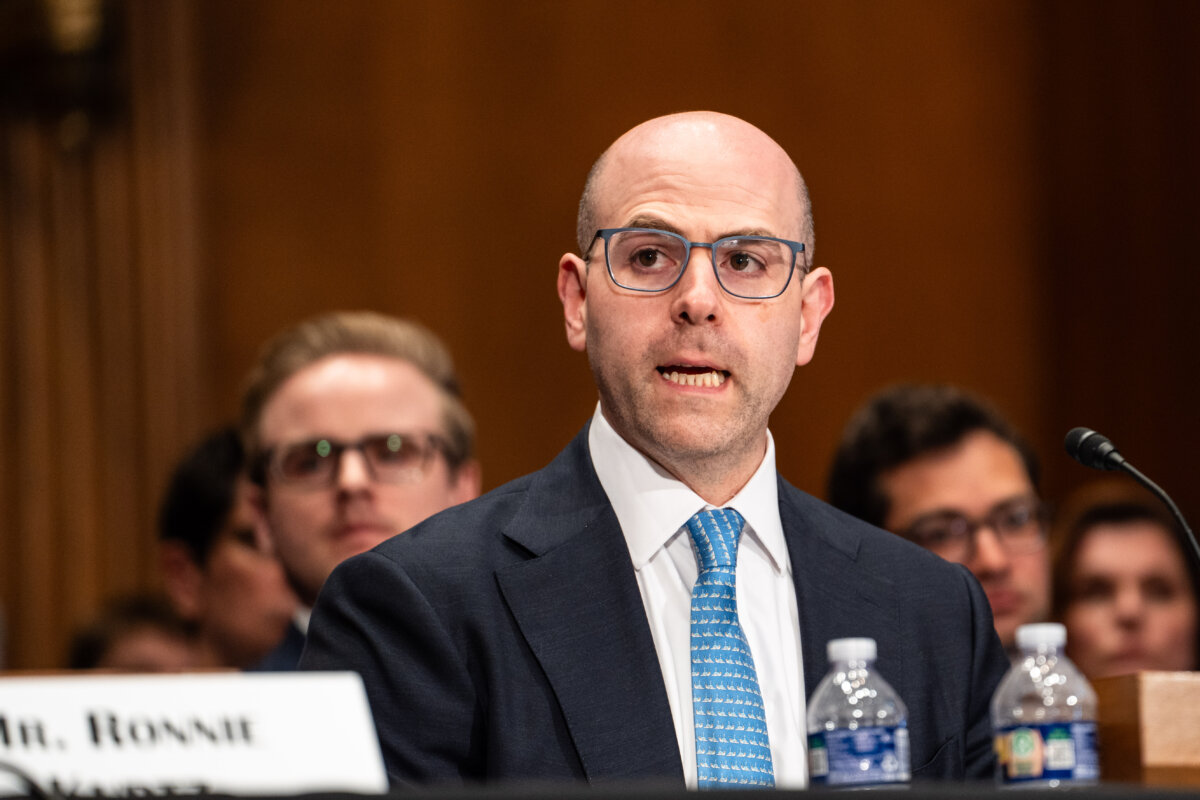
In an Oct. 3 interview with CNBC’s “Squawk Box,” Chicago Fed President Austan Goolsbee expressed caution about front-loading interest rate cuts and moving too quickly to a neutral stance.
He said that both sides of the central bank’s dual mandate—price stability and maximum employment—are under threat.
“This uptick of inflation that we’ve been seeing, coupled with the payroll jobs numbers deteriorating, have put the central bank in a bit of a sticky spot where you’re getting deterioration of both sides of the mandate at the same time,” Goolsbee said.
“I’m a little wary about front-loading too many rate cuts and just counting on the inflation going away.”
At the same time, he noted, current underlying economic conditions can help to have interest rates fall over time, but “in a gradual basis.”
Fed Governor Stephen Miran has advocated for a more aggressive rate-cutting campaign, stating that monetary policymaking needs to be forward-looking rather than depending on what the old data shows.
“My view is that if policy is out of whack, you should adjust it at a reasonably brisk pace,” Miran told Bloomberg Television earlier this month, adding that if the Fed leaves policy restrictive for too long, new economic challenges could materialize.
“We’re not at the point yet where if you sort of keep it there another day, it’s a crisis,” he said. “But if you keep it there for an extra year, yeah, I think you have problems on your hands.”
Philadelphia Fed President Anna Paulson believes the current forecast for two more quarter-point rate cuts is “appropriate.”
Speaking at the National Association for Business Economics conference on Oct. 13, Paulson voiced concern about economic growth prospects narrowing to a handful of factors, including investments in artificial intelligence (AI) and high-income consumer spending, over the next year.
“Indeed, some business contacts are wondering where future demand will come from. This is something to watch closely,” Paulson said in prepared remarks.
The Fed will hold its next two-day policy meeting on Oct. 28 and Oct. 29.
 Friends Read Free
Copy
Facebook
Tweet
Friends Read Free
Copy
Facebook
Tweet