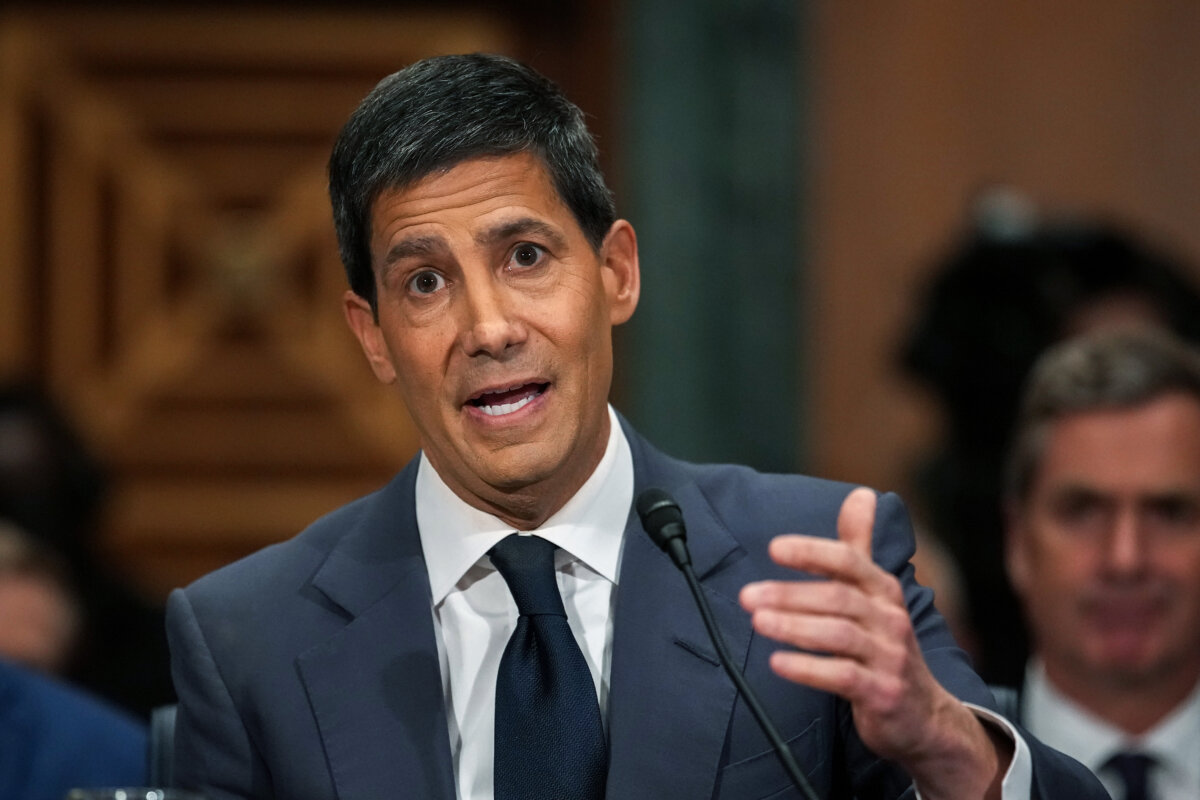
Kevin Warsh, the nominee for chair of the Federal Reserve, testified before the Senate Banking Committee on April 21, fielding a wide range of questions.
Warsh, selected to replace outgoing Fed Chair Jerome Powell next month, faced questions about monetary policy and central bank independence.
He also faced pushback from lawmakers regarding his financial disclosures and his relationship with President Donald Trump.
Despite opposition from several members of the committee, including Sen. Thom Tillis (R-N.C.), prediction markets widely expect the former Fed governor to be confirmed by June 30 at the latest.
For now, here are key takeaways from Warsh’s appearance on Capitol Hill.
Federal Reserve Independence
Over the past year, lawmakers have expressed concern that Warsh would not be an independent central bank chief and would implement decisions based on the president’s demands.
Warsh repeatedly reaffirmed his commitment to Fed independence. But he said this does not mean the Fed should avoid listening to elected officials.
“I do not believe the operational independence of monetary policy is particularly threatened when elected officials—presidents, senators, or members of the House—state their views on interest rates,” Warsh said in his opening remarks.
When pressed by the committee’s Democratic senators about media reports that the president has pressed him to lower interest rates during their meeting, Warsh stated that Trump did not.
Warsh said the reporters “either needed better sources or better journalist standards.”
“The president never asked me to commit to interest rate cuts at any particular meeting over the period of my tenure at the Fed,” he told Sen. Ruben Gallego (D-Ariz.).
“He didn’t ask for it. He didn’t demand it. He didn’t require it, and nor would I have ever done so.”
Shortly before the hearing, the president told CNBC’s “Squawk Box” that he would be disappointed if Warsh did not lower interest rates after arriving at the central bank.
‘Regime Change’
Throughout the approximately three-hour hearing, Warsh championed “regime change” at the century-old institution through policy and personnel.
Citing policy missteps, the 56-year-old argued that the Fed needs significant changes to restore its credibility and ensure it can live up to its dual mandate of price stability and the labor market.
“Once you let inflation take hold in the economy, it’s more expensive and harder to bring it down, and so the fatal policy error going back four or five years is still a legacy that we’re dealing with,” he said.
“I think that means a regime change in the conduct of policy. I think that means a different, new inflation framework.”
Warsh reiterated his support for reducing the balance sheet, though he stopped short of specifying the level he would be comfortable with moving forward.
“Any changes, senator, in the balance sheet would be part of a public discussion, debated rigorously, and if and when the central bank comes to a judgment about a new balance sheet policy, which I hope the central bank would be described well in advance,” Warsh stated.
He would also prefer to see “big, robust deliberations” at the Federal Open Market Committee’s rate-setting meetings.
“I tend to favor messier meetings than some, where people don’t show up with rehearsed scripts, but we can have a good family fight,” Warsh said.
Communications
The future of post-meeting news conferences could be in doubt as Warsh did not commit to continuing the tradition that started under Ben Bernanke more than a decade ago.
“Right now, press conferences are held periodically. If you ask me my true personal opinion right now, Fed chairs and other central bankers around the FOMC, they speak quite frequently. There is no lack of transparency,” Warsh stated.
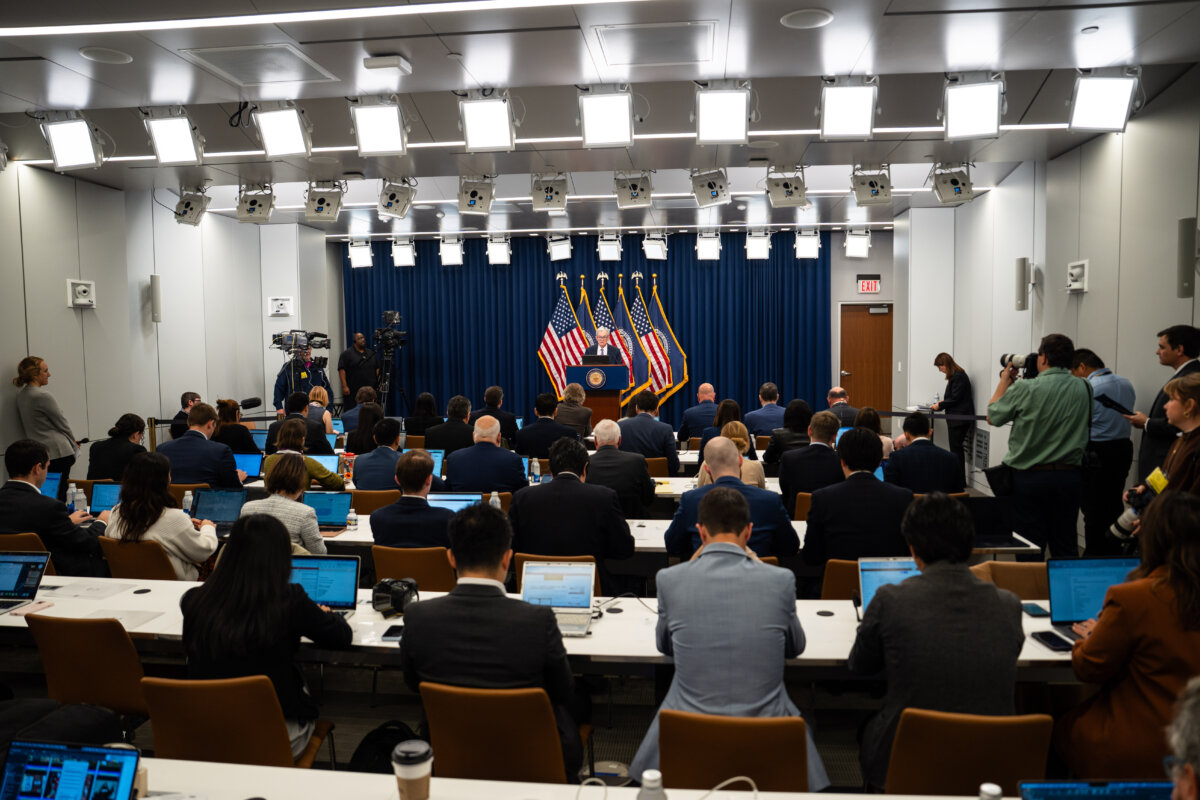
“But I would say this, I think truth-seeking is more important than repetition.”
Powell adjusted the schedule to have a press conference after each of the Federal Open Market Committee’s eight meetings.
Introduced by Alan Greenspan in the early 2000s, forward guidance and the Summary of Economic Projections could also experience some change to telegraph upcoming policy moves and expectations about the broader economy.
Warsh told the committee that he does not believe in forward guidance because officials should not be “previewing for you what a future decision might be.”
“The Fed tells the whole world what their dots are going to be, what their forecasts are going to be. The Fed’s human. Then they hold on to those forecasts longer than they should,” he said.
“I think these are big changes that are needed.”
Disclosures and Divestment
Early in the confirmation hearing, Sens. Elizabeth Warren (D-Mass.) and Jack Reed (D-R.I.) concentrated on Warsh’s financial assets.
Last week, the Fed nominee released his disclosures, showing a net worth of at least $100 million.
If confirmed, he would be the wealthiest Fed chair in the organization’s history.
Warren asked if any of those investments are affiliated with the president or his family, companies that have facilitated money laundering, and Chinese firms financing vehicles set up by Jeffrey Epstein.
Warsh refrained from diving deeper into his holdings.
Instead, he noted that he worked closely with the ethics officials at the Office of Government Ethics and agreed to divest all of his assets upon confirmation and taking office.
After some debate among committee members about whether Warsh complied with the process, Tillis noted that he checked with staff, who informed him that he would be “in compliance if he executes the agreement.”
Support
Tillis has been vocal that he would not support Warsh’s nomination until the investigation into the Fed and Jerome Powell is resolved or dropped.
For weeks, the outgoing senator has criticized the administration’s probe into the Fed’s renovations of its headquarters in Washington.
Approved in 2017, the central bank’s construction budget has ballooned from $1.9 billion to approximately $2.5 billion, citing asbestos issues and higher material costs.
But Trump said he believes the investigation should continue, even as a federal judge quashed two subpoenas.
“The whole thing is crazy, and I think it’s going to cost more than $4 billion when it’s finished,” the president told CNBC’s “Squawk Box.”
Meanwhile, Sen. Catherine Cortez Masto (D-Nev.) commended Warsh for his comments on the Fed’s reconsideration of how it measures inflation.
“Listening to you today and talking with you, I respect that you truly believe as an economist and a theorist in this theory,” the senator said.
In the end, Sen. Bernie Moreno (R-Ohio) believes Warsh will be confirmed as the next head of the Federal Reserve.
“I’m going to ruin the suspense for everybody. You’re going to be confirmed to be the Federal Reserve Chairman. Most importantly, you’re going to do an incredible job,” Moreno said before the hearing concluded.
The Senate Banking Committee consists of 22 members: 12 Republicans and 10 Democrats.
The timing of a vote on his confirmation is unclear.
 Friends Read Free
Copy
Facebook
Tweet
Friends Read Free
Copy
Facebook
Tweet