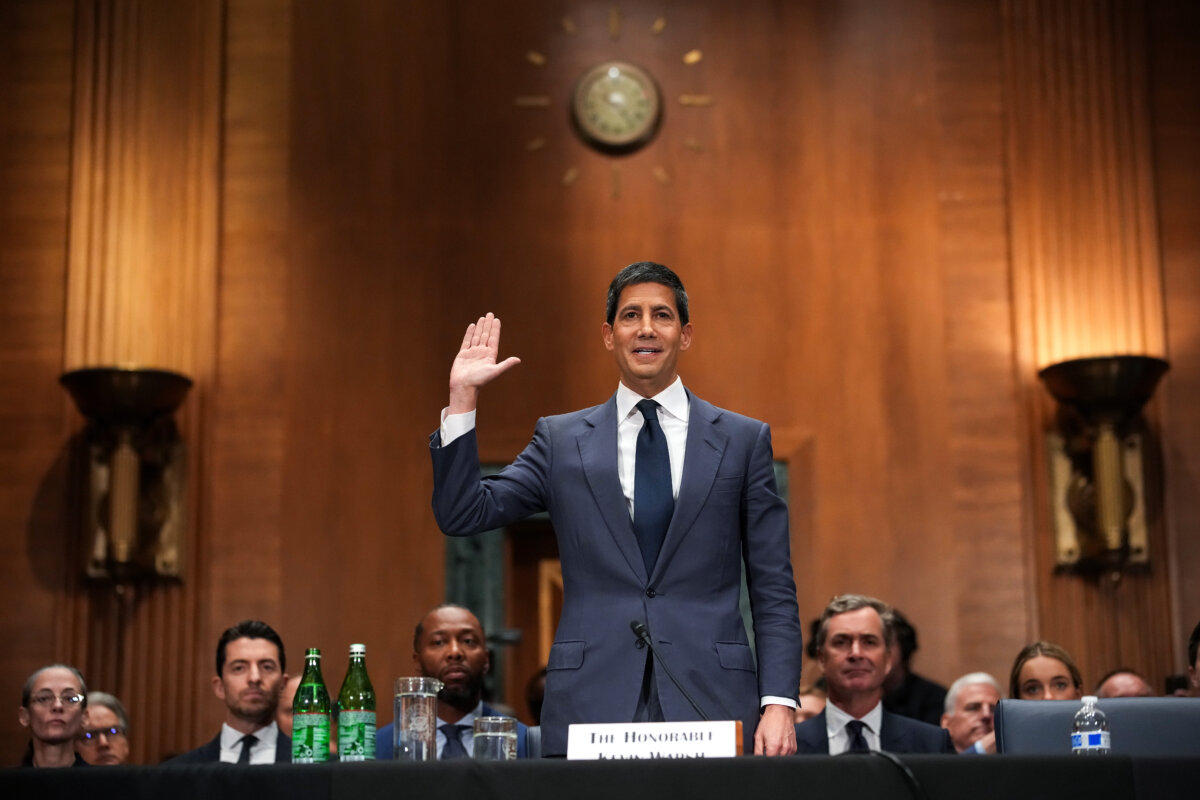
Kevin Warsh, President Donald Trump’s nominee to replace Jerome Powell as chair of the Federal Reserve, called for a “regime change” at the central bank.
At his April 21 confirmation hearing, Warsh reaffirmed the importance of Fed independence, but he touted reforms to restore the century-old institution’s credibility.
“Once you let inflation take hold in the economy, it’s more expensive and harder to bring it down, and so the fatal policy error going back four or five years is still a legacy that we’re dealing with,” Warsh told the Senate Banking Committee.
“I think that means a regime change in the conduct of policy. I think that means a different, new inflation framework.”
He pointed to the Fed’s various policy missteps, particularly during the COVID-19 pandemic.
“After COVID, when prices went up to the tune of 25–35 percent for virtually all deciles of the American people, that’s an indication that the Fed missed its mark,” he said.
“We are still dealing with the legacy of the policy errors in 2021 and 2022.”
Sens. Elizabeth Warren (D-Mass.) and Jack Reed (D-R.I.) asked about Warsh’s independence, expressing concern that he could be a “puppet” for the administration.
Warren asked Warsh whether there is anything about Trump’s economic agenda that he disagrees with.
“I do have a disagreement,” Warsh joked. “I think even this morning, [Trump] said that he thought I was out of central casting. I think central casting, I’d look older, grayer, maybe show up here with a cigar of sorts.”
Officials also focused on the Fed nominee’s financial holdings in their questions.
The former Fed governor disclosed last week that he has more than $100 million in assets.
Warsh worked with the Office of Government Ethics and agreed to divest himself of his holdings upon confirmation, but Democratic senators pushed back, questioning potential conflicts of interest.
Warsh stated that he has disclosed all of the necessary information.
“I agreed to divest virtually all of my financial assets, a large majority of which will be divested before I raised my right hand and sworn into office by this body,” he said.
Sen. Thom Tillis (R-N.C.) said that he checked with staff and that Warsh would be “in compliance if he executes the agreement.”
Trump Talks Lower Rates
Shortly before the hearing, the president told CNBC that he would be disappointed if Warsh does not lower interest rates upon arrival.
“I think Kevin’s great. He’s really casting central. I think he’s going to do a great job,” Trump told “Squawk Box.”
“We should have the lowest interest rate in the world. When I was a young guy growing up, we always had the lowest interest rate worldwide. We always did. And then 15 years ago, 20 years ago, it started where Switzerland and other people had lower rates than us.”
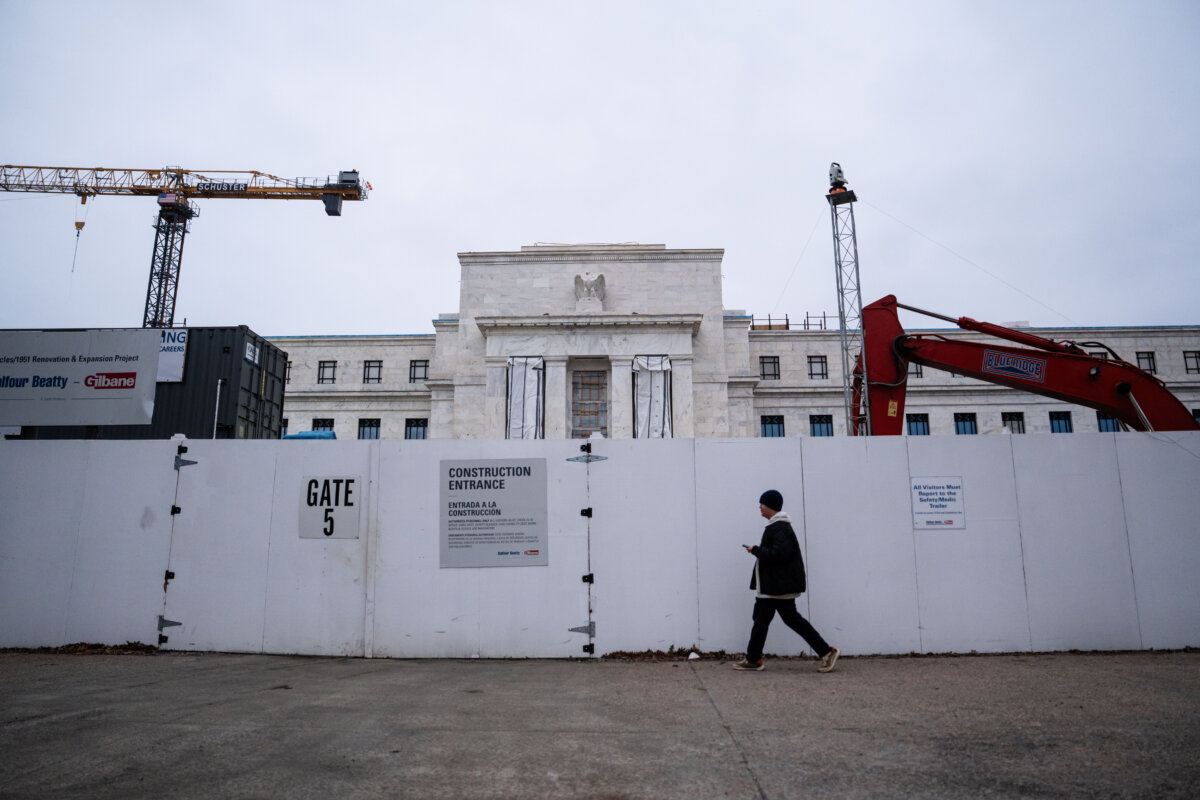
If Warsh were confirmed as head of the U.S. central bank, he would still need to convince 11 other voting members on the Federal Open Market Committee to support lowering the benchmark federal funds rate.
So far, many monetary policymakers have expressed support for the Fed to adopt a wait-and-see approach before taking its next rate action to monitor the war in Iran and its possible inflationary effects.
Futures market data suggest that traders do not expect any rate cuts this year, instead penciling in the next reduction for next summer.
But although the focus is on interest rates, Warsh has advocated an overhaul of the U.S. central bank, from policy to personnel.
Warsh could present a series of reforms, including expediting regulatory review and working closely with the Treasury Department.
One of the main concerns is that he will be an extension of the current administration.
Robert Kaplan, former president of the Dallas Federal Reserve, has said that politics will not likely influence Warsh’s decision-making.
“There’s no problem with elected officials giving strong views, but that’s not going to affect his thinking, and he’s going to need to project that, and I think he will,” Kaplan said in an April 21 interview with CNBC’s “Squawk Box.”
“The sooner he can get in the seat, in my opinion, the better he can begin that process.”
Warsh’s path to confirmation remains bumpy; even a Republican senator expressed opposition to Warsh’s nomination.
Since an investigation into Powell began, Tillis has said that he would oppose any of the president’s central bank nominations until the case is resolved or dropped by the Department of Justice.
Senate Democrats are concerned about Warsh’s financial disclosures and ties to the White House.
“Without transparent information on his holdings and divestures, there is no way for the public to have confidence that Mr. Warsh is making decisions based on what is in the best interest of our economy, instead of his own bottom line or the interests of Wall Street,” Senate Democrats on the Banking Committee said in an April 20 report.
Nathan Worcester contributed to this report.
 Friends Read Free
Copy
Facebook
Tweet
Friends Read Free
Copy
Facebook
Tweet