



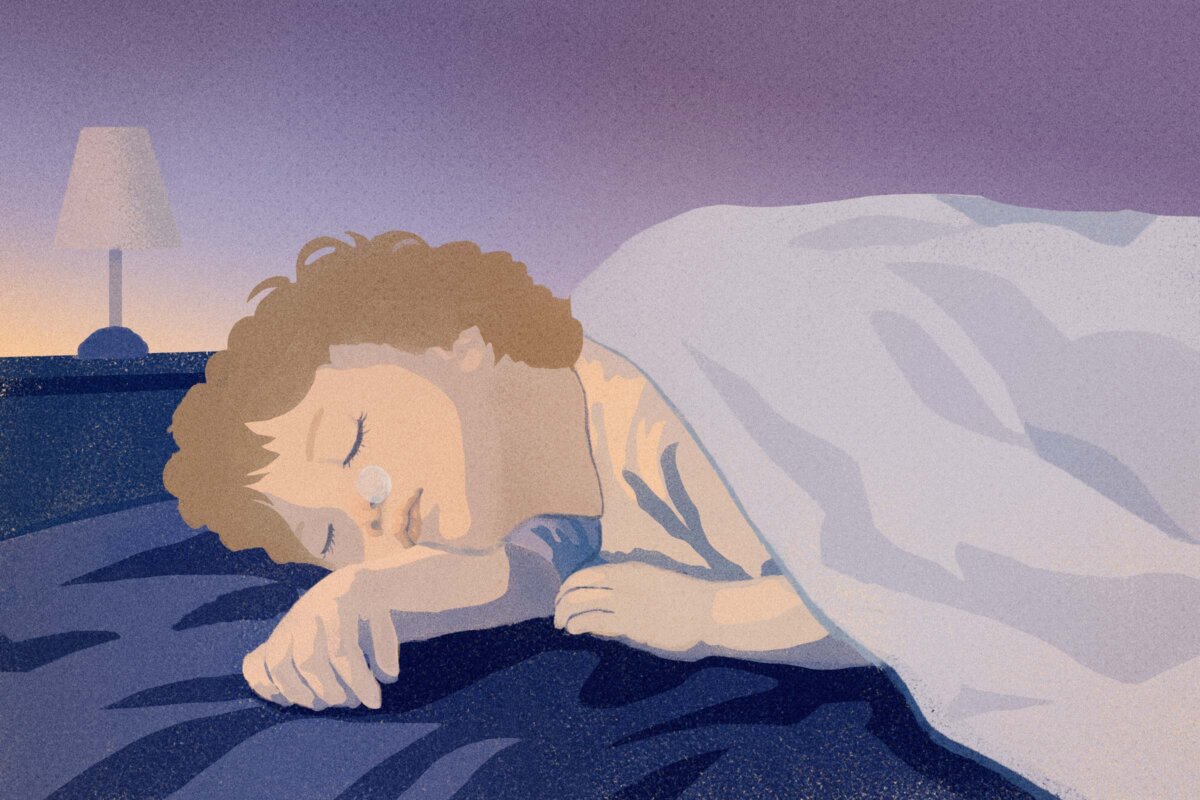
“You cannot expect a brain to perform at its best when sleep is being interrupted hundreds of times a night,” Dr. Muhammad Usama, a sleep medicine physician, told The Epoch Times.
For children diagnosed with attention-deficit/hyperactivity disorder (ADHD), sleep-disordered breathing is often an overlooked explanation. Yet it is rarely checked during diagnosis.
Not Just a Breathing Problem
Sleep-disordered breathing is abnormal breathing during sleep, ranging from habitual snoring to sleep apnea, in which the airway repeatedly narrows or collapses.
This leads to “either a disruption to sleep or a decrease in body oxygen levels, often both,” David McIntosh, an ear, nose, and throat specialist and associate professor at James Cook University, told The Epoch Times.
The effects can extend to and affect multiple body systems, sometimes in obvious ways and sometimes more subtly. In children, the two systems most commonly affected are the cardiovascular system and the brain, McIntosh said.
The ADHD Overlap
The connection between disrupted sleep and ADHD-like behavior is striking.
Sleep disorders have been diagnosed in up to 70 percent of children with ADHD, and some estimates put the co-occurrence of sleep-disordered breathing and ADHD as high as 50 percent.
“Poor sleep quality leads to difficulties with attention, impulse control, emotional regulation, and behavior during the day, symptoms that closely overlap with ADHD,” Athenea Faye, a clinical psychologist specializing in neurodevelopmental disorders and ADHD, told The Epoch Times.
The mechanism is reasonably well understood. Reduced oxygen levels and repeated sleep interruptions affect brain development and cognitive function. Children with sleep-disordered breathing have also been found to have elevated levels of inflammation, which may further contribute to poor attention span.
When sleep is disrupted, so are vital physiological processes that regulate behavior. In adults, this can lead to excessive daytime sleepiness.
“In children, tired brains do not always look sleepy,” Usama said. “They can look restless, oppositional, or unable to focus.”
ADHD broadly includes two main components: hyperactivity and inattention. Sleep-disordered breathing appears to drive both.
On the hyperactivity side, in children in particular, sleep-disordered breathing impairs the prefrontal cortex, which is the brain’s brake on impulsive behavior.
The inattention side is often driven by simple brain fatigue. Sleep is a restorative process that supports focus and concentration. It’s also when learning is consolidated into memory and the brain is reset for the day ahead.
The effects can build over time. One bad night may have a subtle impact, but ongoing disrupted sleep can compound into significant cognitive consequences, McIntosh said.
“Not every child with ADHD symptoms has a sleep disorder, but every child with ADHD-like symptoms deserves a sleep history,” Usama said.
When ADHD Is Misdiagnosed
Because sleep-disordered breathing can closely mimic ADHD symptoms, misdiagnosis is a genuine and documented problem.
Such misdiagnosis wasn’t always common. More than 100 years ago, it was standard practice for doctors to ask about a child’s breathing during sleep. Today, these questions are rarely routine. As a result, a common and consequential condition often goes unnoticed, while the medical community has, in some ways, developed a narrow focus on ADHD, Usama said.
When sleep-disordered breathing is missed, the underlying disruption to multiple body systems continues. At the same time, medications that may further impair sleep quantity can be prescribed, potentially worsening the problem, McIntosh said.
Part of the issue lies in training and awareness. Many ear, nose, and throat conditions and sleep disorders are not well covered in medical education. At the same time, awareness of ADHD has grown rapidly. This imbalance can shape how symptoms are interpreted, because clinicians are more likely to recognize and diagnose conditions they are more familiar with, McIntosh said.
The gap in awareness extends beyond healthcare providers. Many parents are unaware of sleep-disordered breathing and its signs, such as snoring, mouth breathing, choking at night, and waking unrefreshed.
McIntosh calls it a “blind spot” in healthcare.
“Education is clearly needed to remedy this situation,” he said.
Another challenge is that sleep difficulties in children with ADHD are often complex and can have multiple overlapping causes. ADHD itself can also contribute to sleep disturbances.
How to Spot the Problem
The diagnostic question, the experts said, is not a binary one; both conditions can be present. The goal is not to “explain away” ADHD, but to make sure a treatable sleep disorder is not being missed, Usama said.
How would you know whether a sleep disorder might be present?
Parents rarely come into clinics complaining that their child is habitually mouth breathing, snoring, or stopping breathing during sleep.
Instead, they tend to describe the downstream effects of poor sleep, Dr. Louise Oliver, a family doctor and functional breathing practitioner, told The Epoch Times. These may include frequent awakenings, waking unrefreshed, choking or gagging during sleep, hyperactivity, impulsivity, poor concentration, and emotional dysregulation, Oliver said.
She said that ADHD diagnostic assessment should not take place until sleep-disordered breathing has been properly evaluated and managed.
Sleep-disordered breathing in children is usually identified through symptom screening and confirmed with an overnight sleep study that measures breathing, oxygen levels, and sleep patterns.
Oliver recommends that parents observe their child’s sleep.
“I encourage audio or video recordings of abnormal breathing during sleep to assist in the child’s assessment,” she said.
More broadly, Oliver said that frontline care should shift to include structured sleep screening before an initial ADHD assessment, using simple questions about mouth breathing, snoring, or witnessed pauses in breathing. It also requires clearer referral pathways from primary care to ear, nose, and throat and pediatric sleep services when needed.
In clinical psychiatric practice, a sleep assessment is not usually done, according to Dr. Samuel Ponnuthurai, consultant child and adolescent psychiatrist at the London Psychiatry Clinic.
“A detailed history is often enough, as it captures patterns and changes over time,” he said.
Sometimes clinicians will use data from smartwatches or overnight sleep observation and measurement.
Treatment
When sleep-disordered breathing is identified, treatment depends on the underlying cause and severity.
In children, the first steps often focus on conservative and reversible factors, such as managing nasal obstruction or allergic rhinitis and losing weight, as they contribute to airway narrowing. In more persistent cases, positive airway pressure therapy may be used, which involves a machine to deliver gentle air pressure to keep the airway open during sleep.
When enlarged tonsils and adenoids are a major contributor and symptoms are significant, adenotonsillectomy may be considered. Although one of the most common surgical interventions for pediatric obstructive sleep apnea, it is typically reserved for cases with clear anatomical obstruction or cases in which other measures are insufficient, rather than being a first-line approach for all children.
Evidence suggests that, in appropriately selected cases, treating the underlying sleep-disordered breathing can lead to improvements in daytime behavior and attention symptoms, Usama said.
Practical Tips
Two main pressures drive sleep: the buildup of tiredness from daily activity, and the body’s internal clock, which is shaped by light exposure and melatonin, Ponnuthurai said. In ADHD, this balance is often disrupted. The hormonal rhythm may be delayed or weaker, and switching off from a stimulated state can be genuinely difficult.
“It is important that you have a good routine to wind down at the end of the day and that you use your energy at the right time, so you’re not activating yourself too close to bedtime,” he said.
Managing light exposure, activity levels, temperature, and evening food choices can make a difference. In some cases, short-term melatonin may be prescribed to support the sleep cycle, usually alongside, not instead of, these more foundational changes, he said.
Practical breathing-focused strategies can also help reinforce changes. Teaching children how to blow their noses, treating congestion early, and encouraging quiet nasal breathing during the day can all support better breathing at night. Modeling these behaviors matters too, as children often mimic those around them, Oliver said.
“Many symptoms resolve when a child’s sleep-disordered breathing is addressed early,” Oliver said. “I often hear caregivers say ‘like a different child’ once the child is breathing as nature intended whilst sleeping.”