
Oil prices rose on March 2 as U.S. and Israeli strikes on Iran and Tehran’s retaliation disrupted energy supplies through the Strait of Hormuz, a critical route for global oil and gas flows.
Brent crude jumped by about 10 percent, to $79.90 per barrel, briefly topping $80, according to Brent Crude Oil Futures, tracked on Yahoo Finance.
U.S. crude rose by more than 8 percent, to about $72 per barrel, according to OilPrice.com
The pan-European STOXX 600, which includes major oil and gas companies, fell by 1.5 percent, to 623.98 points, by 4:51 a.m. GMT on the morning of March 2, its lowest level since mid-February.
Israel launched new air strikes targeting Tehran and expanded its military campaign to include attacks on Iran-backed Hezbollah terrorists in Lebanon on March 2.
Major attacks by the United States and Israel were launched on Iran on Feb. 28 after U.S.–Iran nuclear talks ended without a breakthrough. U.S. President Donald Trump signaled that the U.S.–Israeli military assault on Iranian targets could continue for weeks.
Trump has said the operation’s goal is to eliminate threats from Iran and ensure the regime can never have a nuclear weapon.
About a fifth of the world’s seaborne oil trade flows and 20 percent of liquefied natural gas travel via the Strait of Hormuz, according to the U.S. Energy Information Administration.
Tankers are piling up on either side of the strait, Marine Traffic said in a March 2 post on X.
“Vessel activity in the Strait of Hormuz has shifted materially following recent US strikes on Iran and the subsequent regional escalation,” it said. “According to real-time traffic analysis, transits through the chokepoint fell by approximately 70 percent after 16:00 UTC on 28 February, compared with levels 12 hours earlier.”
A wave of attacks on energy infrastructure also rattled markets on March 2.
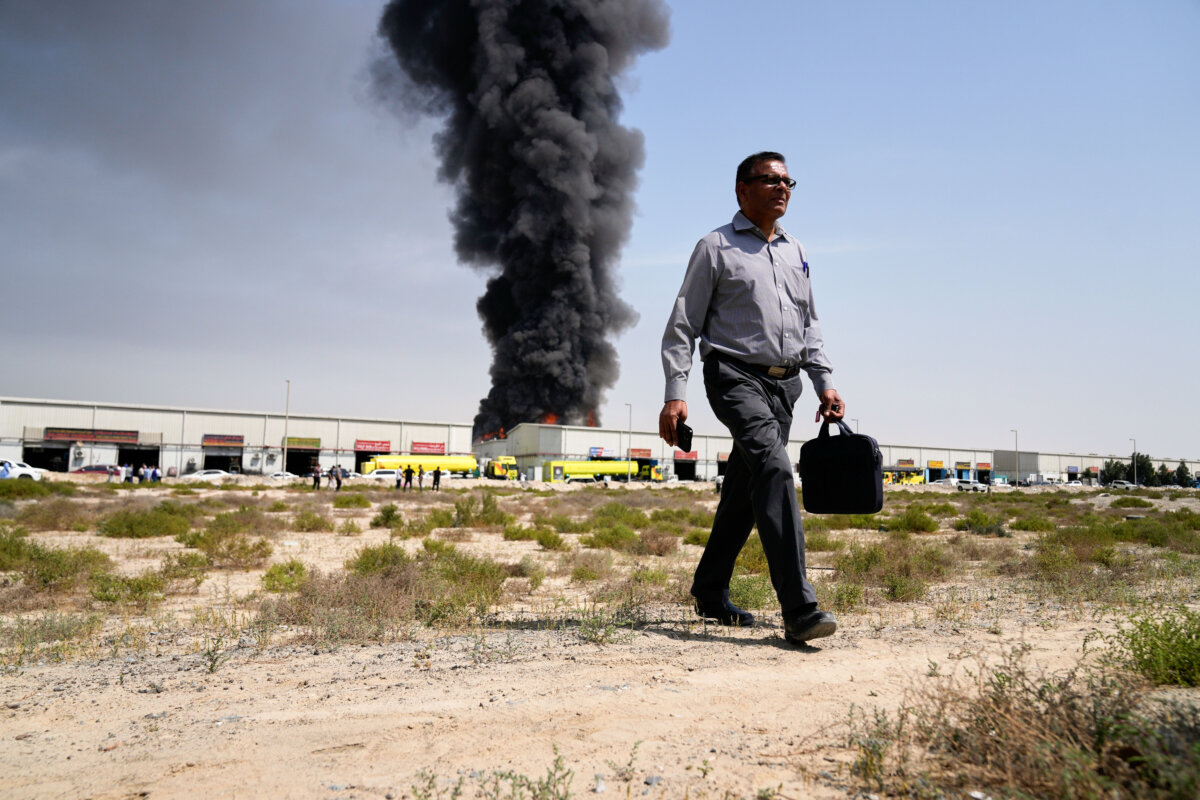
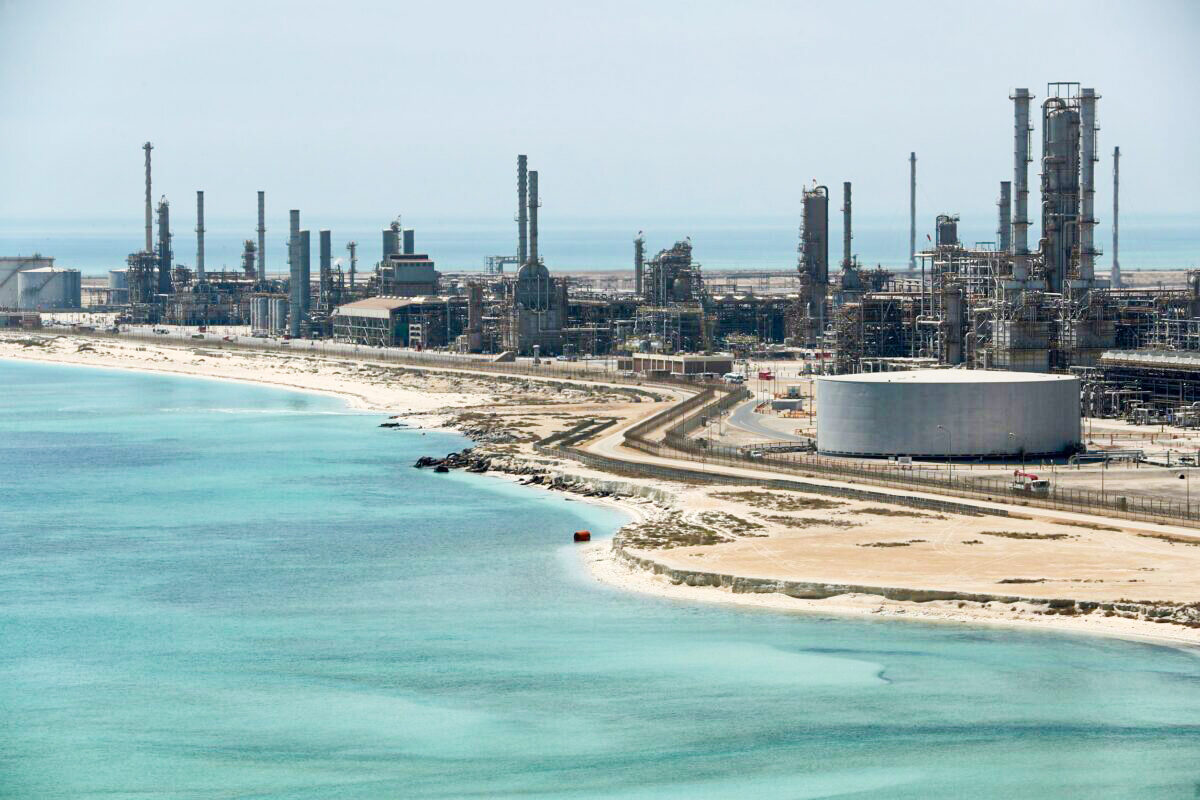
An oil refinery in Ras Tanura, one of Saudi Arabia’s most critical energy hubs, sustained limited damage after debris fell near the site following the interception of two drones, the Saudi Press Agency said in a March 2 post on X.
A small fire was quickly brought under control, no casualties were reported, and some operating units were shut as a precaution, although supplies of petroleum products to the local market were not affected, it said.
Analysts predicted that prices could climb as high as $100 per barrel.
Analyst Ajay Parmar, director of energy and refining at ICIS, said on March 2, “We expect prices to open (after the weekend) much closer to $100 per barrel and perhaps exceed that level if we see a prolonged outage of the Strait.”
OPEC, which coordinates petroleum policy among major producers, has a history of raising output to cushion supply disruptions.
On March 1, OPEC members Saudi Arabia, Russia, Iraq, the United Arab Emirates, Kuwait, Kazakhstan, Algeria, and Oman agreed on an oil output boost of 206,000 barrels per day for April.
“The countries will continue to closely monitor and assess market conditions, and in their continuous efforts to support market stability, they reaffirmed the importance of adopting a cautious approach and retaining full flexibility to increase, pause or reverse the phase out of the voluntary production adjustments,” OPEC said.
Jorge León, a former OPEC official who now works as head of geopolitical analysis at Rystad Energy, said on March 1 that the increase is unlikely to calm markets.
“Prices will respond to developments in the Gulf and the status of shipping flows, not to a relatively small increase in output,” he said.
Warren Patterson, head of commodities strategy at ING, said on March 1 that European gas and Asian LNG prices could make “more aggressive moves” than oil markets if risks to Qatari LNG exports materialize.
He said that if markets begin pricing in extended losses to LNG supply, European benchmark TTF prices could surge to between 80 and 100 euros ($95 and $120) per megawatt hour.
“While it is still very early days and the situation is developing at a fast pace, it does not appear that this military action will be quick and short-lived, like seen in June 2025,” Patterson said. “Israel has said that action will take as long as needed.”
Aldgra Fredly and Reuters contributed to this report.
 Friends Read Free
Copy
Facebook
Tweet
Friends Read Free
Copy
Facebook
Tweet