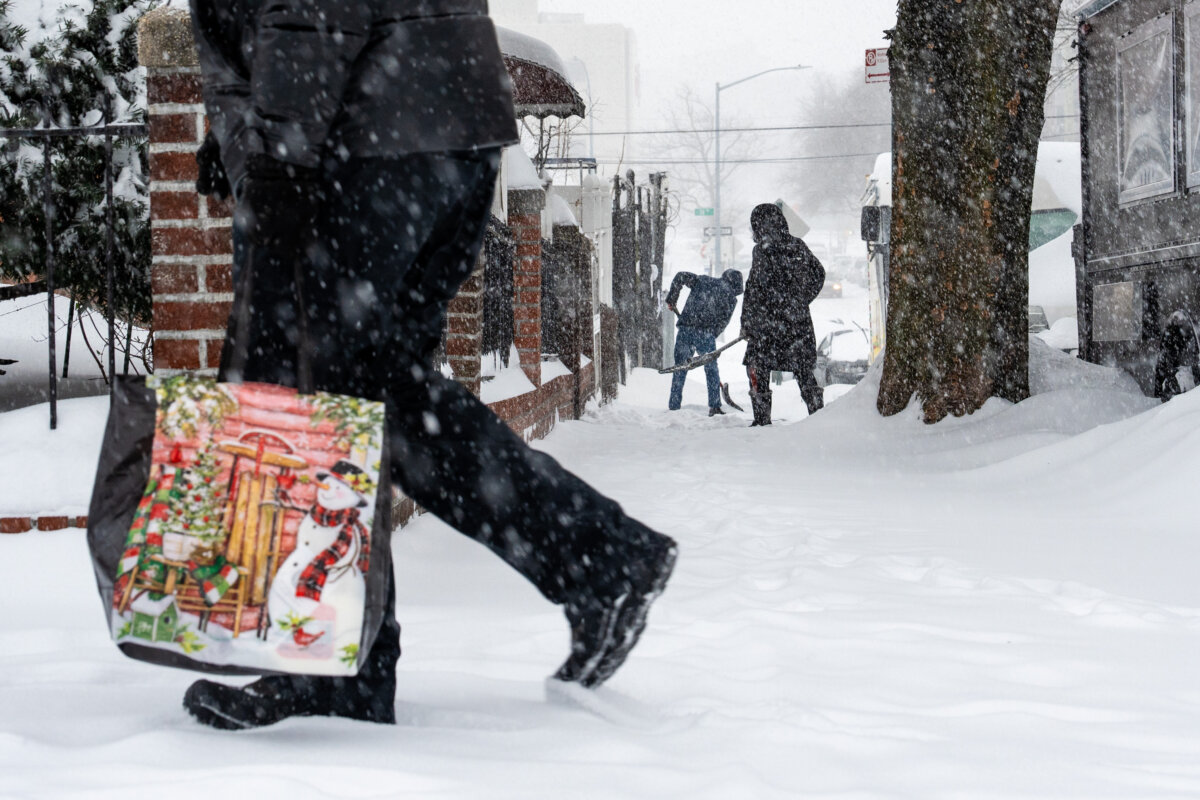

Retail sales declined to kick off 2026 as U.S. shoppers remained indoors and stayed away from shopping malls during January’s severe winter storm.
January’s retail sales fell by 0.2 percent, the first drop since October 2025, according to new Census Bureau data released on March 6. This is down from the previous month’s zero percent reading.
Economists had penciled in a 0.3 percent drop.
The decline in transactions was driven by a 2.9 percent slump at gasoline stations and a 1.7 percent slide at apparel stores. Sales also fell by 0.9 percent at motor vehicle and parts dealers and 0.6 percent at appliances and electronics outlets.
Conversely, retail volumes jumped 1.9 percent at digital retailers, 0.7 percent at furniture vendors, and 2 percent at miscellaneous stores.
Spending may have been hampered by the severe winter storm that blanketed much of the United States in January, according to internal Bank of America data.
“While spending was solid throughout the month, winter storms toward the end of January led to significant declines in spending in affected regions,” strategists at the financial institution said in a Feb. 11 report.
Meanwhile, retail sales excluding automobiles and gasoline advanced 0.3 percent following an upwardly adjusted 0.1 percent in December.
The retail sales control group—a steadier measure that strips out volatile components such as autos, gasoline, office supplies, and tobacco—climbed 0.3 percent. Economists watch this category closely because it feeds directly into the goods‑spending component of the gross domestic product (GDP).
The U.S. economy is expected to grow 3 percent in the first quarter, according to the Federal Reserve Bank of Atlanta’s widely watched GDPNow Model. So far, January–March growth has been fueled by consumer spending and private-sector nonresidential investment.
Weaker consumer spending would be hazardous since two-thirds of national economic activity is driven by consumption.
Reading the Spending Tea Leaves
Looking ahead, consumer spending will remain robust, but could slow from previous years.
Market watchers are optimistic that shoppers will reopen their wallets in the coming months as they are expected to receive a tax windfall from the One Big Beautiful Bill Act.
“Households remain adaptive and financially stable overall in the face of significant affordability challenges, supported by trading‑down behaviors, elevated savings and ‘dry powder’ to borrow,” Bank of America strategists stated.
“Moreover, we think higher tax refunds may provide a significant support for consumers.”
The bank’s latest Consumer Checkpoint report says total credit and debit card spending per household rose 2.6 percent year over year in January—the largest increase since February 2024.
Still, wealthier households account for a large share of spending, in line with the K-shaped pattern seen over the past year.
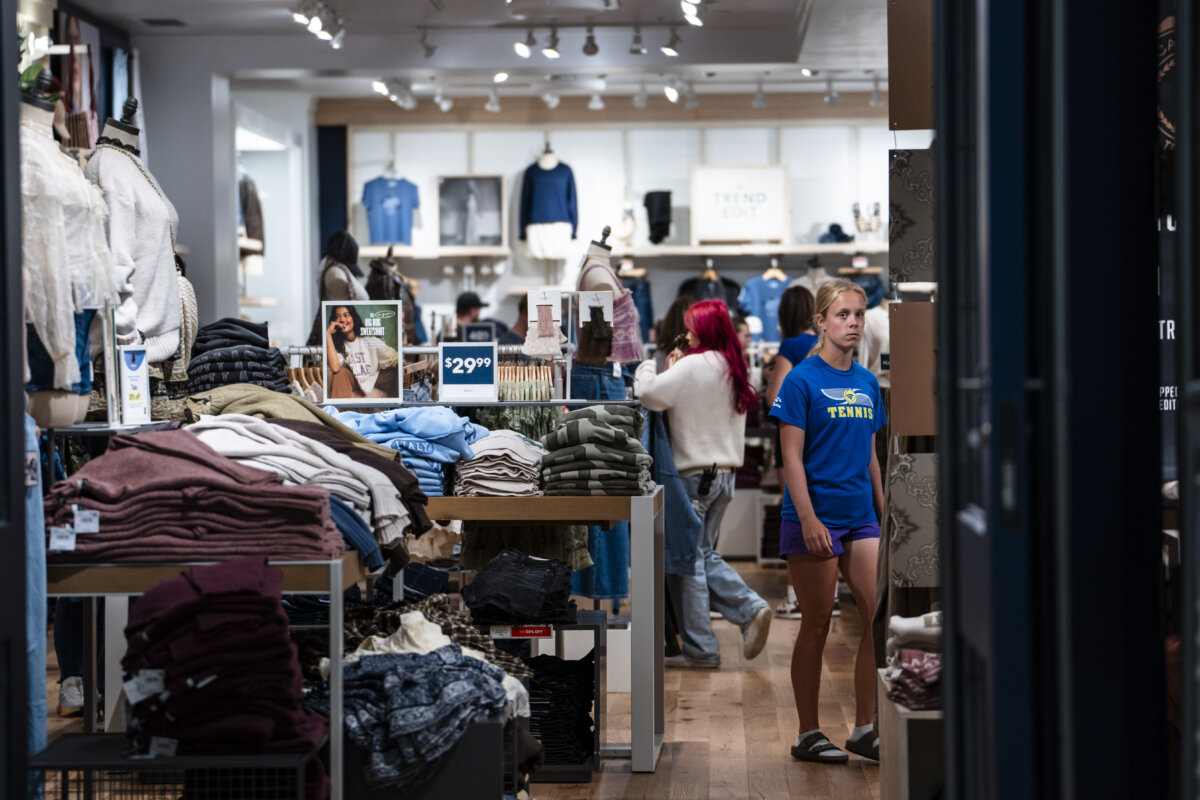
High-income household spending was stable at 2.5 percent year over year. Low- and middle-income household spending growth slipped to 0.3 percent and 1 percent year over year, respectively.
But with new developments across the economy—the U.S. Supreme Court’s decision on President Donald Trump’s tariffs and the war in Iran driving up oil prices—economic observers will have to wait to see how they influence business and consumer data.
‘Disappointing’
The retail sales data coincided with the February jobs report.
Last month, the U.S. economy lost 92,000 jobs, down from the 126,000 gains in December. The unemployment rate also edged up to 4.4 percent from 4.3 percent in the previous month.
Beth Ann Bovino, chief economist at U.S. Bank, called the numbers “disappointing.”
“It’s hard to find a positive read in these numbers. We saw the jobs numbers, and the change was pretty dramatic,” Bovino said during an American Bankers Association virtual event on March 6.
How much the worse-than-expected nonfarm payrolls and Middle East tensions impact consumer sentiment may be seen in the upcoming University of Michigan and Conference Board surveys.
Lackluster employment and retail sales data are unlikely to persuade the Federal Reserve to lower interest rates when they meet later this month, according to futures market data.
Investors still anticipate policymakers will leave the benchmark federal funds rate unchanged at 3.5–3.75 percent.
But it will be a balancing act because the Fed’s dual mandate of price stability and maximum employment is under threat simultaneously. Officials have expressed divergent views in recent months, and the Iranian conflict and weak jobs report add new layers to the conversation.
“I don’t expect the Fed to act sooner than June, but if the labor market deteriorates faster than expected, officials could cut rates on April 29,” Jeffrey Roach, LPL Financial’s chief economist, said in a note emailed to The Epoch Times.
 Friends Read Free
Copy
Facebook
Tweet
Friends Read Free
Copy
Facebook
Tweet