

U.S. private sector employment increased in December, with small business payrolls rebounding from the previous month’s sharp decline, new ADP data released on Jan. 7 show.
Private companies added 41,000 new jobs last month after a downwardly revised 29,000 loss in November, according to the payroll processor’s National Employment Report.
December’s reading came in below the market consensus of 47,000.
Hiring was led by education and health services (39,000), leisure and hospitality (24,000), and trade, transportation, and utilities (11,000).
Conversely, jobs in professional and business services fell by 29,000. Employment levels in information services and manufacturing also fell by 12,000 and 5,000, respectively.
Job gains were concentrated almost entirely at companies with fewer than 500 employees, ADP Chief Economist Nela Richardson said.
“Small establishments recovered from November job losses with positive end-of-year hiring, even as large employers pulled back,” Richardson said in a statement.
Small businesses—those with fewer than 50 employees—added 9,000 jobs. By comparison, smaller firms lost 120,000 jobs in November. Mid-sized businesses—those with 50 to 499 employees—increased payroll by 34,000.
Employment at large companies with more than 500 workers rose by 2,000. In total, based on ADP payroll data, the private sector added more than 600,000 jobs last year.
Wages were mixed to finish 2025.
Year-over-year pay for job stayers was unchanged at 4.4 percent. Pay growth for job changers climbed to 6.6 percent from 6.3 percent.
All Eyes on the Main Event
This ADP data was published two days before the Bureau of Labor Statistics releases the December jobs report. The final nonfarm payrolls report for 2025 will be the first on-time report since before the government shutdown.
Economists expect the U.S. economy to create 60,000 new jobs, and the unemployment rate to tick lower to 4.5 percent.
The data could be noisy due to the spending impasse and seasonal hiring, Bankrate’s senior economic analyst, Mark Hamrick, told The Epoch Times.
“The December employment report, due Friday, is expected to show generally constrained hiring, a facet of the job market for all of 2025,” Hamrick said. “Total hiring for the year is set to be the weakest since the pandemic shutdown year of 2020, including three months of contraction in payrolls. 2025 was the year of the hiring chill.”
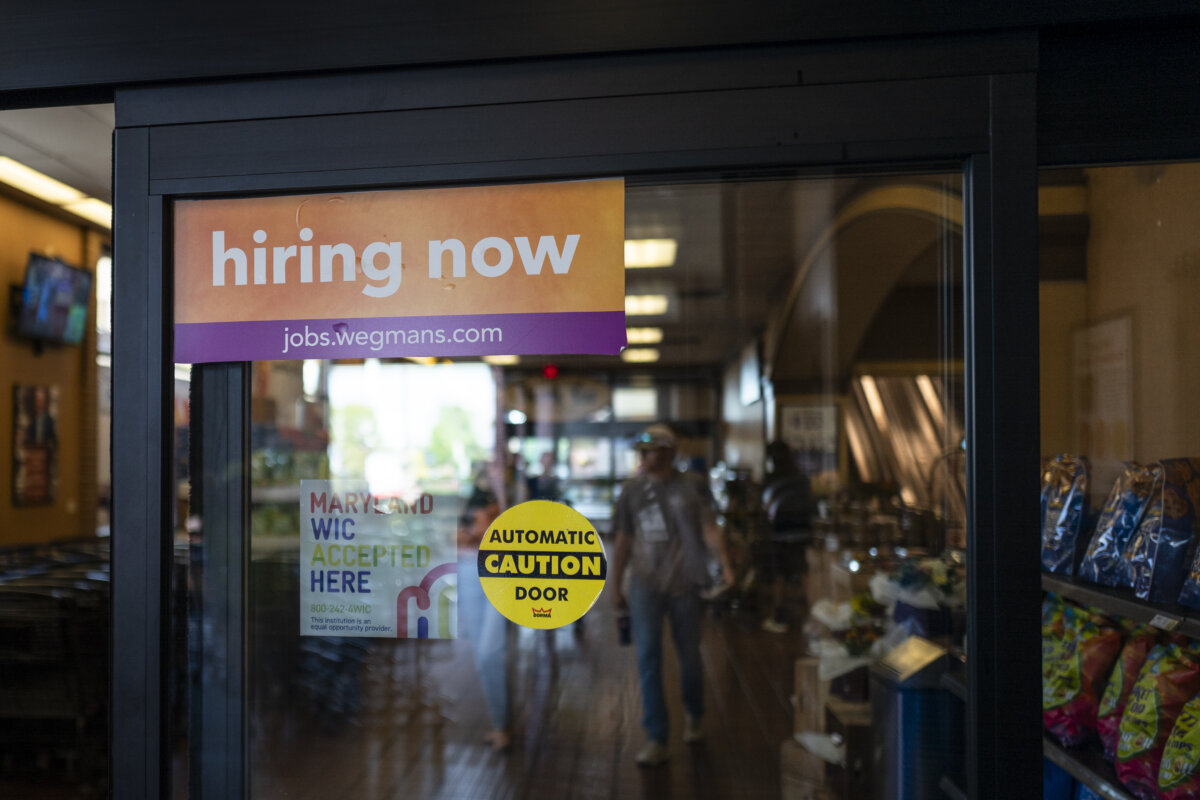
While unemployment remains historically low, the jobless rate rose from 4 percent in January 2025 to 4.6 percent in November 2025.
The December jobs report could bring more clarity surrounding national employment conditions for the Federal Reserve ahead of this month’s policy meeting.
Investors overwhelmingly expect the Fed to leave interest rates unchanged when officials convene their Jan. 28–29 Federal Open Market Committee meeting, according to the CME FedWatch Tool.
Monetary policymakers have had divergent views on both policy and the broader economy. One side supports lowering interest rates to prevent further deterioration in the labor market, while the other advocates keeping rates unchanged since inflation remains elevated.
The central bank lowered the benchmark federal funds rate by a quarter point last month, although there were three dissenting votes.
The December consumer price index report will be published on Jan. 13.
November’s annual inflation rate declined to 2.7 percent, and further easing of inflationary pressures could be ahead.
The annual inflation rate is expected to ease to 2.6 percent, according to the Cleveland Federal Reserve’s Inflation Nowcasting model. The January 12-month inflation rate is also expected to slow to 2.3 percent.
“A weakening labour market has been a key factor behind the Fed’s willingness to look past inflation risks and refocus on employment,” Ipek Ozkardeskaya, senior analyst at Swissquote Bank, said in a note emailed to The Epoch Times.
“The fact that inflation is easing elsewhere has given investors some reassurance that US price pressures are also likely under control, allowing the Fed to focus on jobs. However, should inflation unexpectedly re-accelerate, rate-cut expectations could be rapidly repriced.”
Other upcoming employment indicators this week will be the Job Openings and Labor Turnover Survey (JOLTS), planned layoffs, and weekly jobless claims.
Labor statistics were volatile in the second half of 2025, but Hamrick said 2026 could bring stability, citing federal income tax cuts and lower interest rates.
“Washington remains a wildcard, and global geopolitical risks are running high,” Hamrick said. “Business and consumer sentiment don’t operate in a vacuum. When uncertainty is elevated, hiring plans tend to cool.”
 Friends Read Free
Copy
Facebook
Tweet
Friends Read Free
Copy
Facebook
Tweet