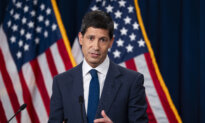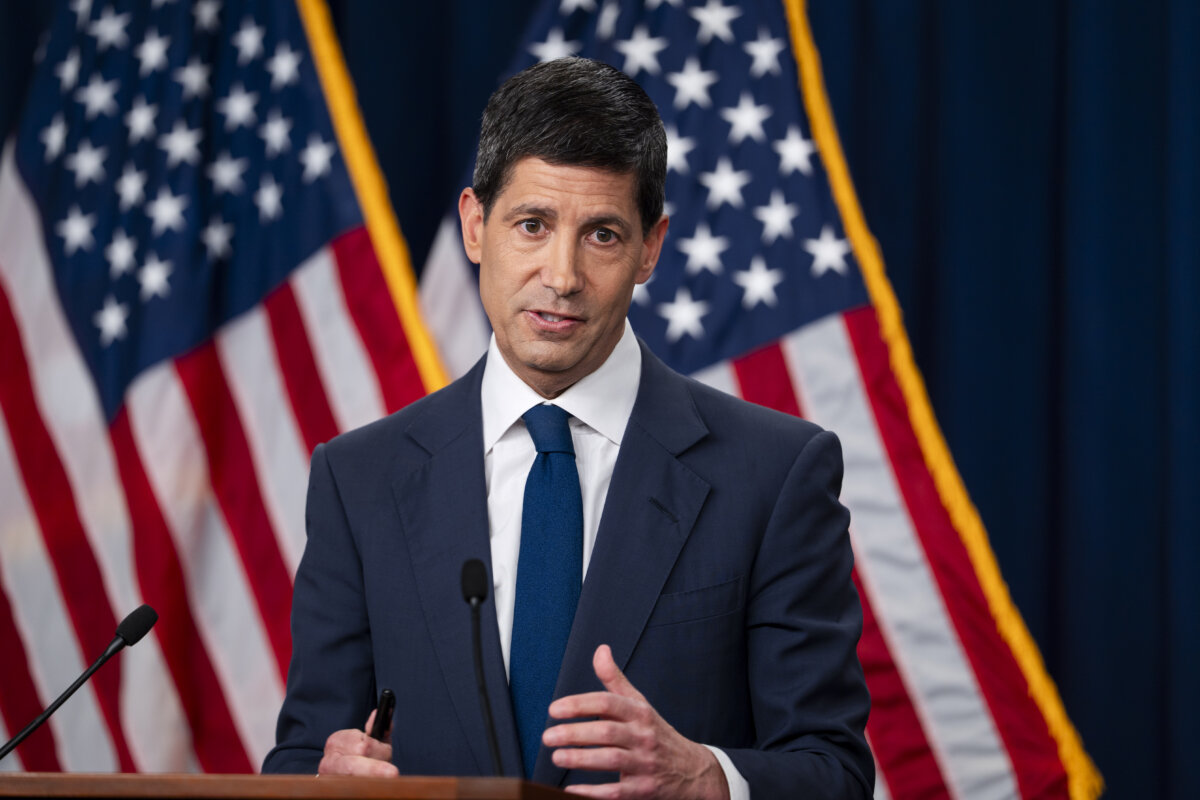

Federal Reserve Chairman Kevin Warsh acknowledged “synchronous tightening” by the world’s major inflation-fighting central banks in an overseas discussion.
Warsh took part in a fireside chat with International Monetary Fund Director Kristalina Georgieva on Oct. 16 as part of the week-long IMF–World Bank annual meetings in Bangkok, Thailand.
His talk comes as the Fed wrestles with inflation above the institution’s 2 percent target for 67 straight months and surging Treasury bond yields.
The central bank chief avoided details ahead of this month’s Federal Open Market Committee policy meeting, continuing his goal of not giving forward guidance.
Here are key takeaways from the Fed chair’s remarks.
‘Synchronous Tightening’
The Fed followed through on its first interest rate hike in more than three years last month. But it was not the only major central bank to do so.
The European Central Bank and the Bank of Japan were among the major institutions that hiked rates by a quarter point as they grapple with war-driven inflation.
“At the Federal Reserve, we made very clear that we would deliver price stability,” Warsh said.
“If I look back over the last few months, while each did the right thing by our own judgment, by our agreement, it was a synchronous tightening in monetary policy in most places around the world, and that means there’s no free riders.”
Economists expect the Bank of England to raise rates by 25 basis points next month. Investors are split on whether the Bank of Canada will hike or pause later this month, as officials must balance weaker economic conditions against elevated inflation.
In the United States, traders overwhelmingly bet that the Fed will keep its key policy rate—the federal funds rate—unchanged in its current target range of 3.75 percent to 4 percent. But futures markets point to December for another rate hike.
“I don’t prejudge meetings,” Warsh said. “I don’t believe in saying now what I might do at the meetings that we have in the balance of this year.”
Economic Resilience
Warsh expressed his surprise at the resilience of the U.S. and global economies, which he said he would not “have predicted five or six months ago.”
“I’m not sure I would have found that so many members of the G20 were hanging in there, whose economies were doing well,” he added. “I might have said about the United States. I don’t think I would have said that about so many.”
According to the Atlanta Fed, America’s third-quarter growth is expected to be 3.6 percent, driven by consumer spending, business investment, and changes in private inventories.
The IMF, meanwhile, echoed Warsh’s description in its latest global economic outlook.
While economic activity has endured higher inflation and “narrowing buffers,” the IMF warned that the “risks are skewed to the downside.” Economists cited conflicts, fiscal vulnerabilities, reassessments of artificial intelligence (AI) expectations, and renewed trade tensions as threats to the global economy.
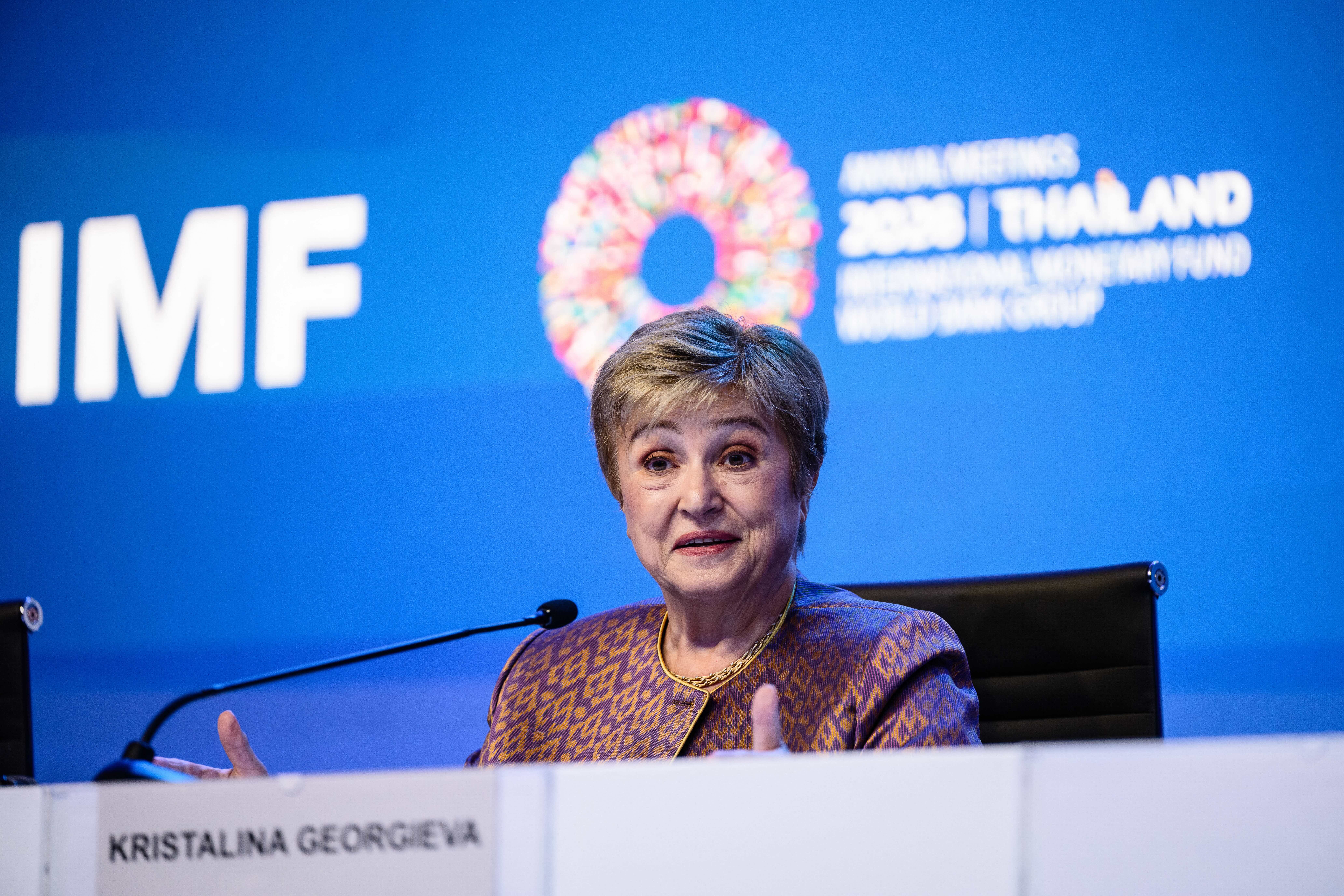 IMF Managing Director Kristalina Georgieva speaks during the Managing Director briefing on the Global Policy Agenda at the 2026 IMF-World Bank Group Annual Meetings at the Queen Sirikit National Convention Center (QSNCC) in Bangkok, Thailand, on Oct. 14, 2026. (Anthony Wallace/AFP)
Looking ahead, the IMF expects the global economy to slow to 3.1 percent this year but then rebound to 3.4 percent in 2027.
AI Productivity Boom
Warsh reiterated his expectation that artificial intelligence will bolster productivity—at home and abroad—and make countries wealthier.
He did, however, say caution is warranted, as the path may be “very bumpy,” especially for the labor market.
“I want you to hear from me optimism, but optimism leavened by the seriousness of purpose,” Warsh said, adding that people will look back at this period in a decade and “say this was consequential.”
The Fed’s Beige Book—a periodic summary of economic conditions across the central bank’s 12 districts—found that some firms trimmed payrolls, delayed hiring, or expected slower job creation “after increasing productivity by investing in AI.”
Others have made bullish forecasts of the new technology’s impact on productivity and the broader economy.
The Penn Wharton Budget Model, for example, estimates that AI will boost GDP by 1.5 percent by 2035 and almost 3 percent by 2055.
New Analytical Tools
Early in his tenure as Fed chief, Warsh introduced five monetary task forces that could bring reforms to the more-than-a-century-old central bank.
For years, Warsh said, monetary policymakers “torture[d] data with old-fashioned models to try to find out the underlying inflation trends.”
“Not so long from now, it won’t be torture,” he stated. “We will have access at the fingertips of central banks to all the information in the world, and we’ll be able to use new analytical tools to distill that data.”
With new information sources, officials can be more confident in what is happening now than in what happened months ago, Warsh said.
One area where the central bank is already making adjustments is bank supervision.
Michelle Bowman, the Fed’s vice chair for supervision, revealed earlier this month that the central bank will shift to five regional hubs to coordinate oversight with state regulators.
The move replaces the previous structure, in which all 12 Reserve Banks handled those relationships, something she says led to slow enforcement, a lack of accountability, and complex internal committees.
“In practice, these committees became a source for plausible deniability and a disincentive for examiners to take prompt and decisive action to address identified risks,” Bowman said in an Oct. 6 speech at a Fed-sponsored event.
“Improving the use of committees is an important first step, but broader changes are needed.”
Evgenia Filimianova contributed to this report.
 Friends Read Free
Copy
Facebook
Tweet
Friends Read Free
Copy
Facebook
Tweet