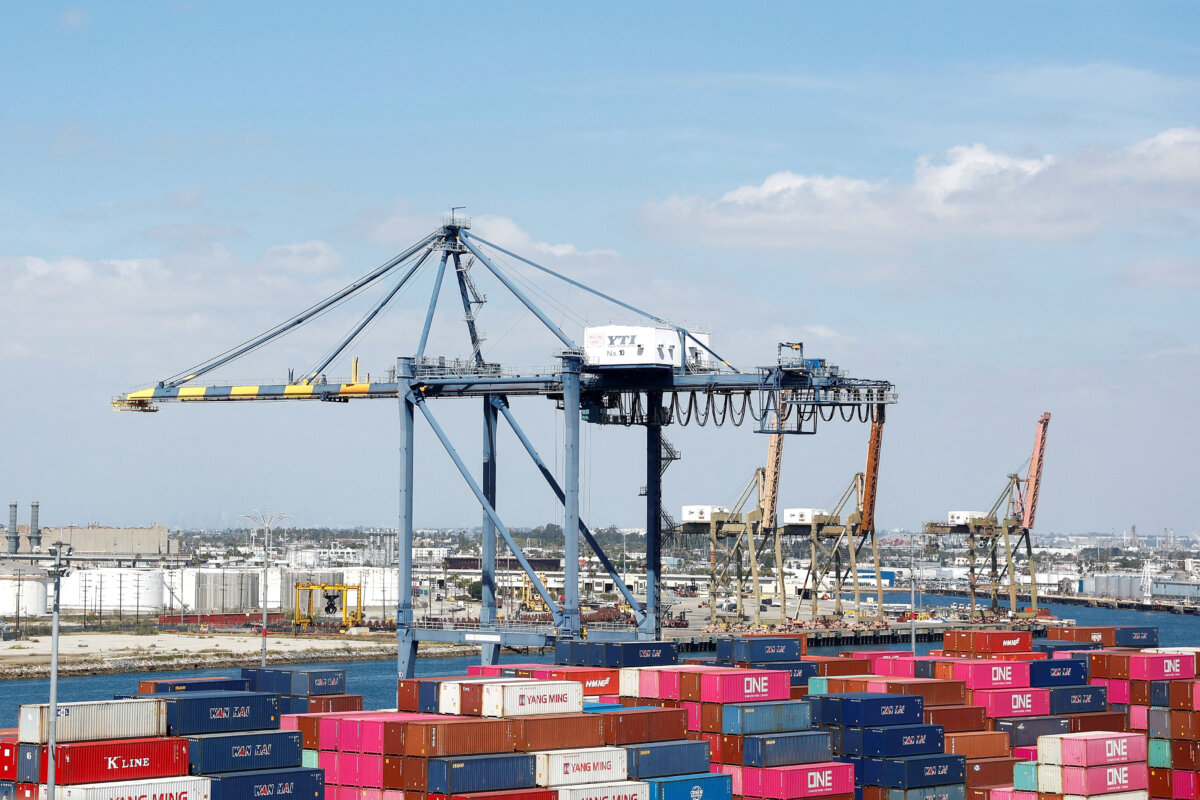

President Donald Trump said he retains the “absolute right” to impose tariffs through certain legal mechanisms despite a Supreme Court ruling that struck down a major portion of his administration’s tariff program, signaling that the White House plans to continue pursuing new trade penalties against foreign partners.
In a March 15 post on Truth Social, Trump criticized the court’s decision invalidating tariffs imposed under emergency powers but said the ruling left open other avenues for imposing duties.
“The Court knew where I stood, how badly I wanted this Victory for our Country, and instead decided to, potentially, give away Trillions of Dollars to Countries and Companies who have been taking advantage of the United States for decades,” Trump wrote.
Trump was referring to the Supreme Court’s Feb. 20 landmark 6–3 finding that the global tariffs violated an emergency powers law that he invoked in 2025. The high court’s decision was followed by a March 4 federal court ruling that importers are owed refunds for the overturned tariffs.
In his social media message, Trump said that the Supreme Court’s decision made a number of countries “very happy.”
He also wrote, “The Court pointed out, I have the absolute right to charge TARIFFS in another form, and have already started to do so.”
One day after the Supreme Court ruled against Trump’s global tariffs imposed under the International Emergency Economic Powers Act (IEEPA), the president raised tariffs on all countries to 15 percent under alternative legal authority.
At the time, Treasury Secretary Scott Bessent said that the Supreme Court ruled that the IEEPA cannot be used to raise revenue from other countries but that other legal avenues remained open.
“We will be leveraging Section 232 and Section 301 tariff authorities that have been validated through thousands of legal challenges,” Bessent said. “Treasury’s estimates show that the use of Section 122 authority, combined with potentially enhanced Section 232 and Section 301 tariffs, will result in virtually unchanged tariff revenue in 2026.”
Section 122 of the Trade Act of 1974 allows the president to impose tariffs of up to 15 percent to address trade imbalances, but the duties can last only 150 days without congressional approval.
Separately, the United States recently started new trade probes into 60 countries to determine whether their trade practices have enabled imports made with forced labor. The probes are being conducted under Section 301 of the Trade Act of 1974, which addresses potential unfair trade practices by trading partners.
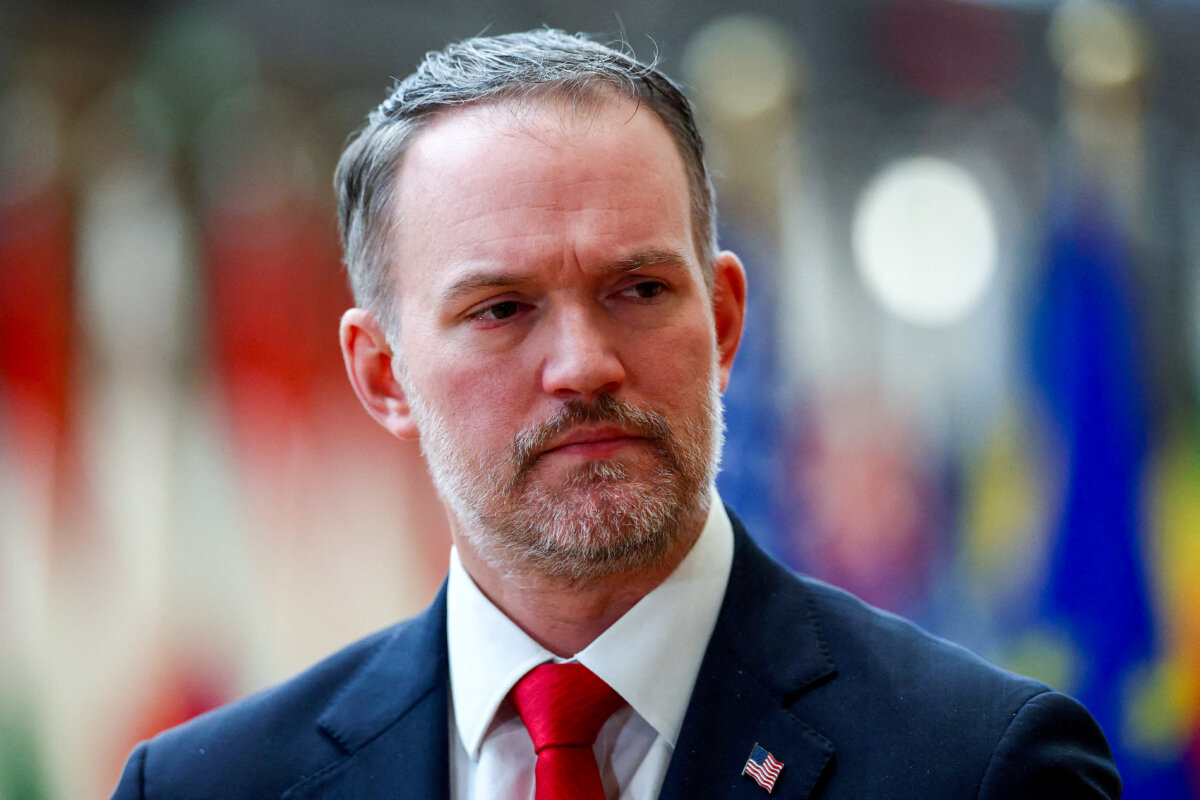
U.S. Trade Representative Jamieson Greer said on March 12 that the 60 economies targeted by the probe include Australia, China, Canada, India, Israel, Mexico, Japan, the European Union, Russia, South Korea, and Vietnam.
Court Ruling Limits Emergency Tariff Powers
The Supreme Court’s Feb. 20 decision found that Trump lacked authority under the IEEPA to impose sweeping tariffs on dozens of trading partners. The administration had invoked the law in 2025 to justify the duties, saying they were necessary to respond to what it described as an “unusual and extraordinary threat” to national security.
Writing for the majority, Chief Justice John Roberts said the law’s wording did not clearly authorize tariffs, rejecting the administration’s argument that the statute’s language allowing the president to “regulate” imports included the power to impose duties.
“The President asserts the independent power to impose tariffs on imports from any country, of any product, at any rate, for any amount of time,” Roberts wrote. “Those words cannot bear such weight.”
The ruling focused specifically on the emergency powers statute and did not address tariffs imposed under other laws.
In a dissent joined by Justices Samuel Alito and Clarence Thomas, Justice Brett Kavanaugh suggested that the decision may not substantially limit a president’s ability to impose tariffs through other statutory authorities.
“The decision might not substantially constrain a President’s ability to order tariffs going forward,” the dissenting justices wrote. “Numerous other federal statutes authorize the President to impose tariffs and might justify most (if not all) of the tariffs at issue in this case—albeit perhaps with a few additional procedural steps that [the International Emergency Economic Powers Act], as an emergency statute, does not require.”
In his March 15 post on Truth Social, Trump praised the dissenting justices for their “wisdom and courage” regarding the tariff case, and he said that their dissent reflects an understanding that the United States’ “‘Unfriendly Competitors’ should not be reimbursed and rewarded for the decades of Damage that they have caused” to the United States.
Trump said that his administration would “fight hard” to ensure that tariff reimbursements—which the president said could run into the trillions of dollars—do not occur.
 Friends Read Free
Copy
Facebook
Tweet
Friends Read Free
Copy
Facebook
Tweet