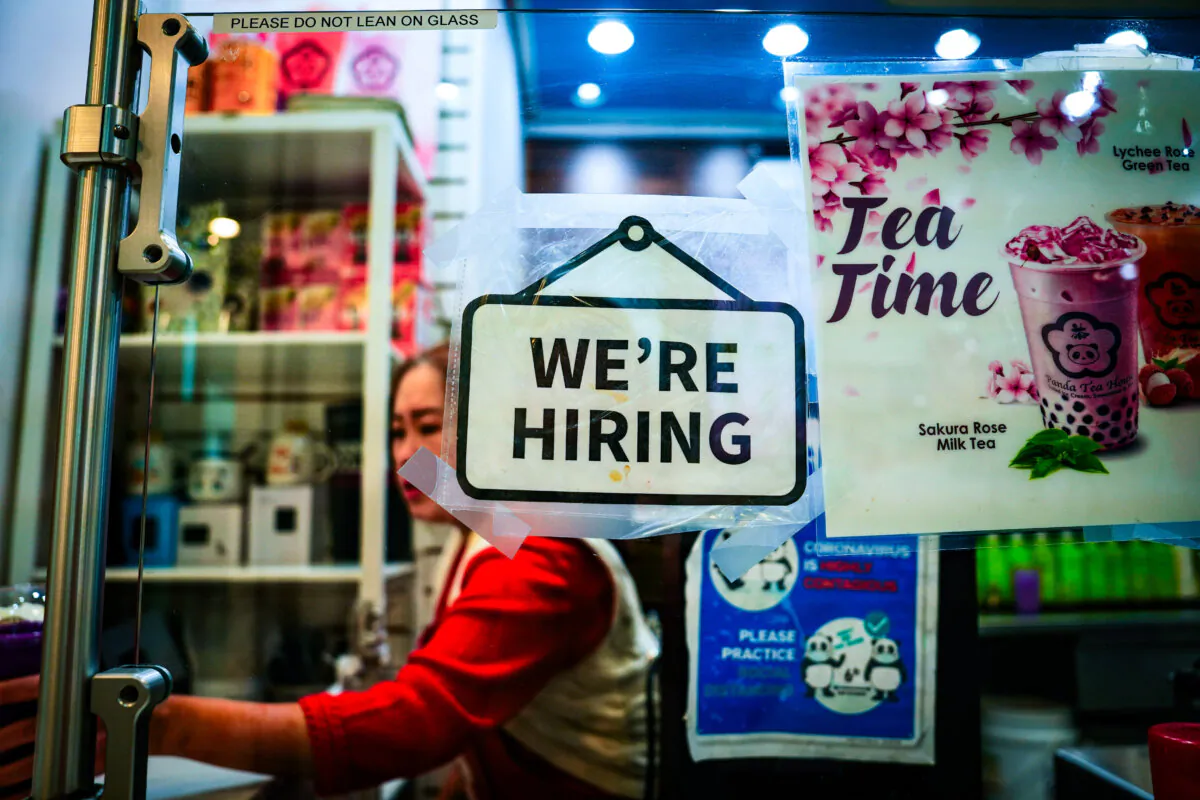

The number of Americans filing for unemployment benefits fell last week, indicating the persistence of low layoff levels in the U.S. economy.
For the week that ended on Jan. 10, initial jobless claims declined by 9,000 to 198,000, according to Department of Labor data released on Jan. 15. The previous week’s reading was revised slightly lower, to 207,000.
The market consensus was 215,000. Any reading below 200,000 is considered historically low.
The four-week average, which strips out week-to-week volatility, also dropped to 205,000 from 211,500.
New employment data continue to show that companies in the U.S. labor market are at a standstill, with employers refraining from mass layoffs as they navigate economic uncertainty.
But although low fire, low hire has been the dominant theme for the past several months, other figures suggest that jobless individuals are gradually finding employment.
Continuing jobless claims—a measure of the number of out-of-work people currently receiving unemployment benefits—declined to a lower-than-expected 1.88 million from a downwardly adjusted 1.9 million.
Economists use this statistic to assess the challenges unemployed individuals may face in finding work under current labor market conditions.
Employment was mostly unchanged in the U.S. economy, according to the Federal Reserve’s Beige Book, a periodic report that summarizes the economic conditions across the central bank’s 12 districts.
Many companies reported either relying on temporary workers “to stay flexible in uncertain times” or hiring workers to “backfill vacancies rather than create new positions.”
As for artificial intelligence implementation, the new technology has still had only a limited impact on the labor market, the Beige Book found.
“Multiple contacts reported exploring AI implementation primarily for productivity enhancement and potential future workforce management,” the report reads. “AI’s current impact on employment was limited, with more significant effects anticipated in the coming years rather than immediately.”
Stay Cool
In December 2025, the U.S. economy created a smaller-than-expected 50,000 new jobs and the unemployment rate dipped to 4.4 percent. In total, employers created 584,000 jobs in 2025, representing a monthly average gain of 49,000.
Private sector hiring could be gaining some momentum, according to payroll processor ADP.
U.S. private employers added an average of 11,750 jobs per week in the four weeks that ended on Dec. 20, up from an average increase of 11,000 in the previous period. This represented the fifth consecutive span of job growth and the best performance since late November.
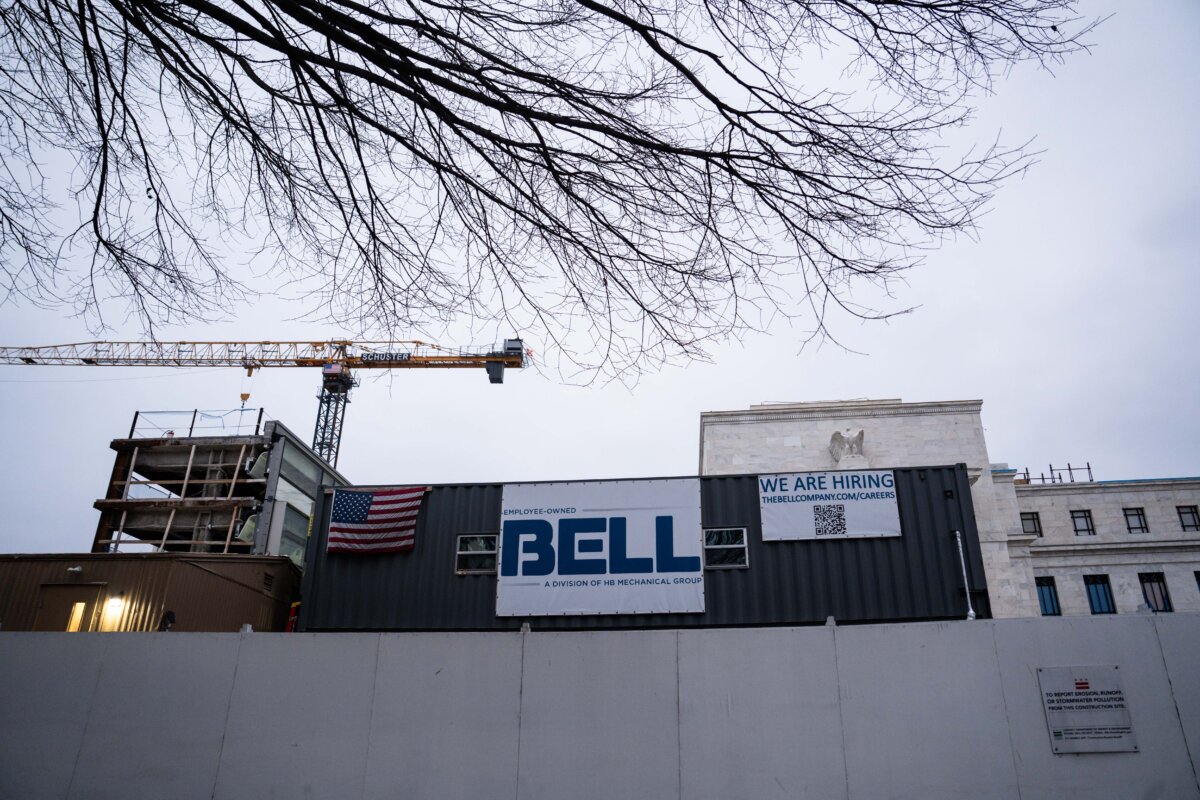
Market watchers have diverging opinions on whether the U.S. labor market will remain frozen this year or thaw and accelerate.
Jeffrey Roach, chief economist for LPL Financial, said markets “should brace for weaker payrolls and rising unemployment,” forecasting a 4.6 percent jobless rate by the end of the quarter.
“The balance of risks tilts toward the weakening labor market,” Roach said in a note emailed to The Epoch Times.
With economic policies turning more expansionary this year, job growth will likely broaden throughout 2026, according to Bill Adams, chief economist at Comerica Bank. But labor force growth will slow in 2026 amid immigration restrictions.
“The unemployment rate will likely close 2026 down from late 2025’s level,” Adams said in a note emailed to The Epoch Times.
For now, the payroll data indicate that the economy is in a no fire, no hire stage, which will require the Federal Reserve to prevent further deterioration by cutting interest rates.
“I think that this last jobs print gives the Fed more cover to ‘wait and see’ and, barring any other changes, will not cut until late spring, early summer,” Mark Malek, chief investment officer at Siebert Financial, said in a note to The Epoch Times.
“Inflation is not likely to be a problem—though it is still in the policy equation. It is the labor market that will determine the tempo of rate cuts.”
Later in January, monetary policymakers will convene their two-day meeting. Investors widely anticipate that the central bank will leave interest rates unchanged in a target range of 3.5 percent to 3.75 percent.
Traders are not penciling in the next quarter-point rate cut until sometime in the spring, according to futures market data from the CME FedWatch Tool.
 Friends Read Free
Copy
Facebook
Tweet
Friends Read Free
Copy
Facebook
Tweet