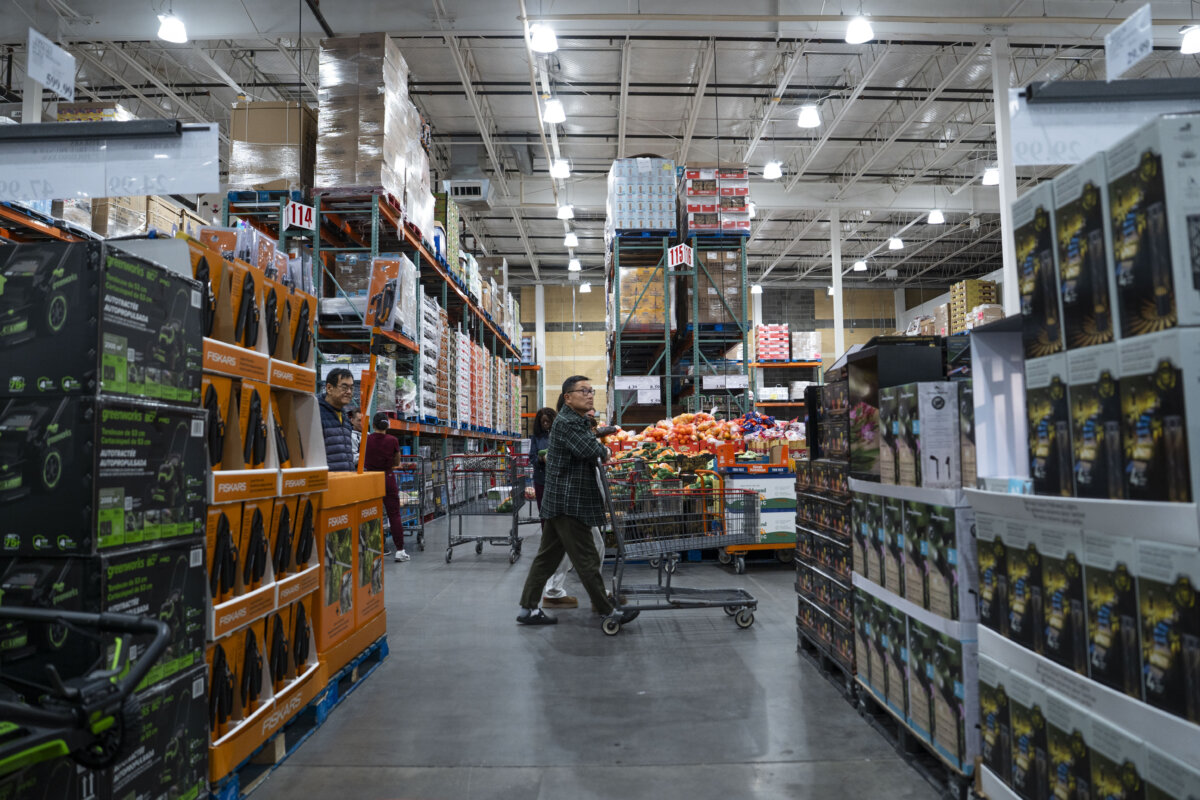

Many U.S. firms remain reluctant to pass their tariff-related costs to customers, according to the Federal Reserve’s latest Beige Book report released on March 4.
The Beige Book—a periodic summary of economic conditions across the central bank’s 12 districts—showed moderate price hikes, “with eight Districts reporting moderate price growth and four seeing slight or modest increases.”
Scores of firms reported price increases across several nonlabor inputs, including insurance, energy, metals, raw materials, and utilities. In nine districts, businesses attributed higher costs to tariffs.
While some firms have passed these tariff-related costs to customers after previously absorbing them, others say they have refrained from doing so.
“Still, most Districts received reports of some firms holding selling prices stable despite higher costs because their customers were increasingly price sensitive,” the report reads.
“On balance, firms expected prices to rise at a somewhat slower pace in the near term.”
Updates to the Beige Book come weeks after New York Federal Reserve economists published a paper noting that the majority of the tariff burden is being shouldered domestically.
The Feb. 12 report determined that 86 percent of the tariff incidence was borne by the United States. Fourteen percent of the tariff costs were absorbed by foreign exporters.
“In sum, U.S. firms and consumers continue to bear the bulk of the economic burden of the high tariffs imposed in 2025,” the report reads.
New York Fed President John Williams, speaking at an event on March 3, said that higher import duties have “meaningfully increased U.S. prices on imported goods,” saying that “the full effects have likely not yet been felt.”
The levies might be preventing the U.S. central bank from restoring its 2 percent target, he said.
“Owing to the effects of tariffs, progress toward that goal has temporarily stalled,” Williams said.
Still, he anticipates that the effects will be temporary and that the Fed will reach its target next year.
This is similar to remarks made by Fed Chair Jerome Powell, who projected in December 2025 that goods inflation should peak in the “first quarter or so” if there are no new tariffs.
During a Feb. 18 interview with CNBC’s “Squawk Box,” National Economic Council Director Kevin Hassett dismissed the New York Fed’s research.
“I mean, the paper is an embarrassment,” Hassett said. “It’s, I think, the worst paper I’ve ever seen in the history of the Federal Reserve system.
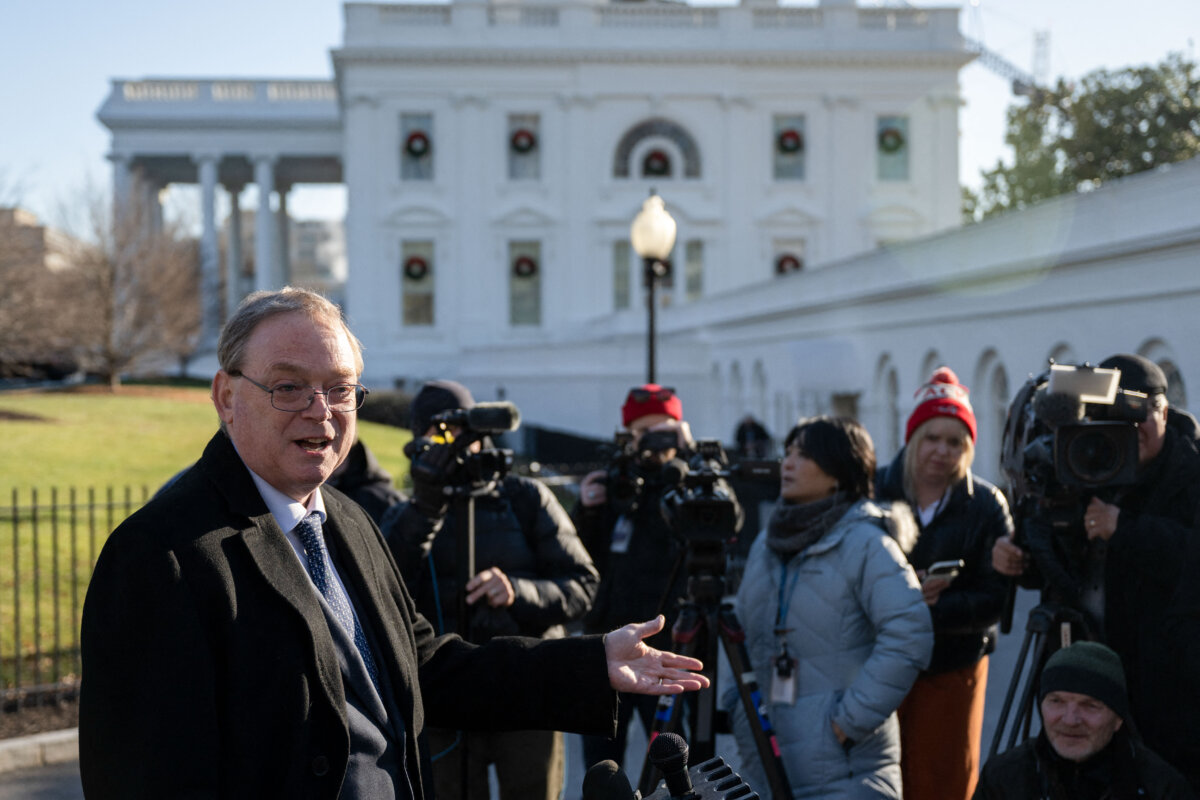
“Because what they’ve done is they’ve put out a conclusion which has created a lot of news that’s highly partisan based on analysis that wouldn’t be accepted in a first-semester econ class.”
Hassett later walked back his remarks in a statement posted to economist Laurence Kotlikoff’s Substack.
“I regret suggesting the authors should be disciplined for their research. Indeed, I retract that suggestion,” Hassett’s statement reads.
“I was upset at what I felt and feel was the Fed’s dissemination of politically sensitive research on an issue that goes beyond its primary focus. This said, the Fed’s independence extends to its research. It and it alone must decide what research to conduct to further its mission.”
Treasury Secretary Scott Bessent revealed on March 4 that President Donald Trump’s 15 percent global tariff rate will take effect sometime this week.
State of Inflation
A broad array of recent indicators suggests mixed inflationary pressures.
Headline consumer inflation eased to 2.4 percent in January. Core inflation, which strips out the volatile energy and food categories, edged down to a five-year low of 2.5 percent.
February’s consumer price index report is expected to show the 12-month inflation rate holding steady.
But a key pipeline inflation indicator unexpectedly surged last month.
The producer price index—a measure of the prices paid for goods and services by businesses at the wholesale level—climbed by 0.5 percent. Core wholesale inflation also advanced by 0.8 percent.
Manufacturing prices in the Institute for Supply Management’s purchasing managers’ index for February registered its sharpest increase since June 2022.
The alternative services survey found prices slowing to their lowest levels since March 2025.
Renewed tensions in the Middle East could be another tailwind for inflation. The joint U.S.–Israeli operations in Iran sent crude oil prices surging, and market watchers are concerned that this could resurrect price pressures.
A common rule of thumb among economists is that every $10 jump in oil prices slows U.S. gross domestic product growth by about 0.1 percentage points and pushes inflation up by about 0.2 points.
“Inflation and energy prices are probably going to be higher, and some earnings are going to be lower because of a strong dollar,” Nancy Tengler, CEO and CIO of Laffer Tengler Investments, said in a note emailed to The Epoch Times.
The greenback has strengthened considerably this week. The U.S. Dollar Index, a measure of the buck against a weighted basket of currencies, rallied to a two-month high and is now positive on the year.
How the situation in Iran unfolds and how it influences monetary policy and inflation are unpredictable, according to Minneapolis Fed President Neel Kashkari.
“If headline inflation is going to be elevated for an extended period of time, coming off of five years of elevated inflation, boy, that’s a scenario that we need to pay close attention to,” Kashkari said at a March 4 event.
Traders widely expect the central bank to keep interest rates—currently in a range between 3.5 percent and 3.75 percent—on hold until the summer.
 Friends Read Free
Copy
Facebook
Tweet
Friends Read Free
Copy
Facebook
Tweet