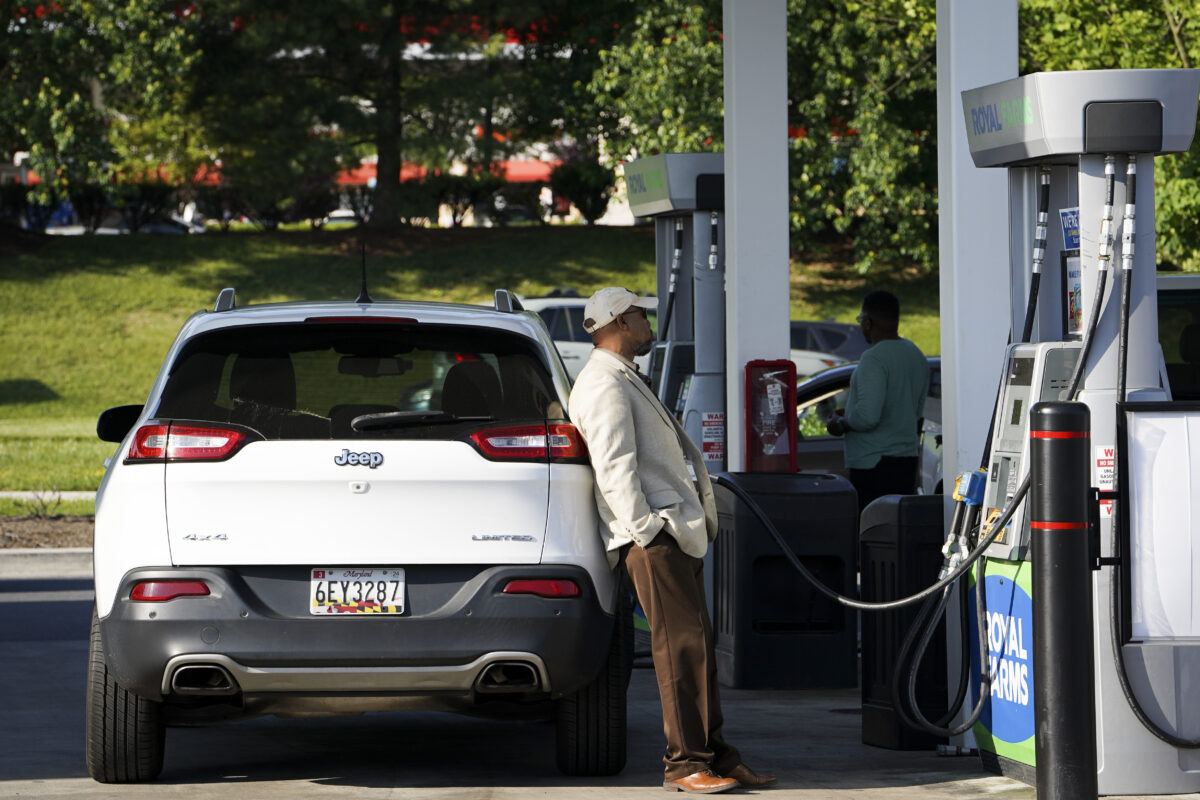

Rising energy prices from the three-month-old war in Iran lifted inflation in May to its highest level in three years.
The U.S. annual inflation rate surged to 4.2 percent last month from 3.8 percent in April, according to new Bureau of Labor Statistics data released on June 10.
This is the highest 12-month inflation reading since April 2023.
Core inflation, which strips out the volatile energy and food categories, ticked up to 2.9 percent year over year from 2.8 percent in the previous month.
Both readings were in line with economists’ expectations.
On a month-over-month basis, May’s consumer price index (CPI) rose by 0.5 percent, while core edged up by a smaller-than-expected pace of 0.2 percent.
Energy accounted for 60 percent of the monthly increase, unsurprising as the war in Iran—now in its fourth month—continues to affect global oil markets.
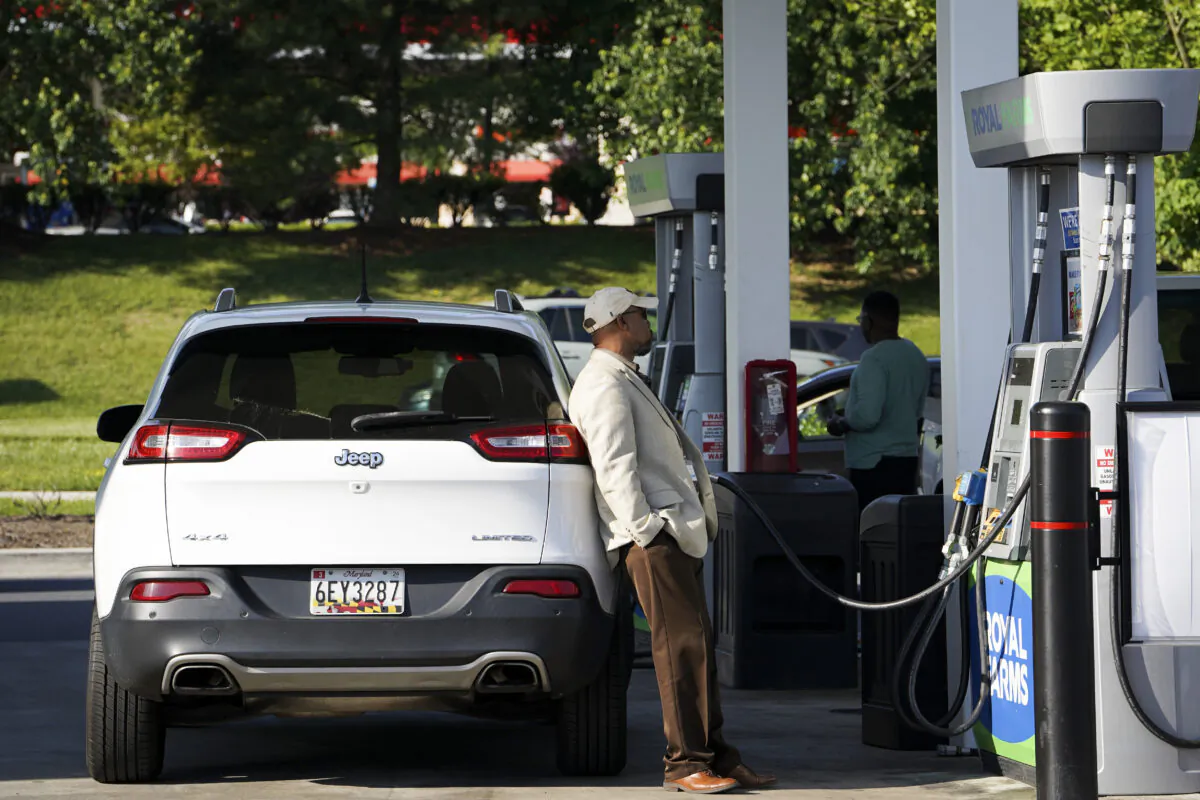
The index for energy climbed by 3.9 percent from April to May and is up by almost 24 percent over the past 12 months. Gasoline jumped by 7 percent last month, while fuel oil increased by nearly 4 percent. Electricity costs also rose by 0.6 percent.
Businesses and consumers dealing with rising energy prices in recent months could see relief.
A barrel of West Texas Intermediate—the U.S. benchmark for oil prices—has stabilized, trading at about $90 on the New York Mercantile Exchange.
Gasoline prices have eased in the past month, with the national average falling by almost 40 cents to $4.15 per gallon.
“Pump prices are cooling off as the price of crude oil remains below $100 per barrel,” the American Automobile Association said in a June 4 report. “Drivers will take all the relief they can get as they embark on summer road trips.
“But uncertainty lingers over when the Strait of Hormuz will fully reopen and resume traffic. That unknown means oil prices will likely not decrease dramatically as summertime gasoline demand starts going up.”
Food prices were little changed in May, rising by just 0.2 percent. Supermarket costs ticked up by 0.1 percent, and food-away-from-home prices advanced by 0.3 percent.
Protein-rich foods eased modestly as the category for meats, poultry, fish, and eggs fell by 0.2 percent. This included a 1.6 percent drop for beef and veal, as well as a 0.1 percent dip for chicken.
But egg prices rose for the second consecutive month, surging by 4 percent in May.
As President Donald Trump’s trade agenda continues to make its way through the U.S. marketplace, tariff-sensitive items posted mixed data.
The index for new vehicles declined by 0.3 percent, but apparel prices increased by 0.3 percent. The information technology commodities category—smartphones, computers and peripherals, and software—slid by 0.1 percent. Televisions declined by 1.5 percent, appliances advanced by 0.5 percent, and canned fruits and vegetables were flat.
Transportation services, a potential indicator for economists to determine whether inflationary pressures are widening throughout the economic landscape, fell by 0.6 percent.
Inflation Watch
Concerns that inflation is broadening out and filtering through the U.S. economy have risen in recent weeks.
Although much of the acceleration in price pressures emanates from higher oil and gasoline prices, various business surveys show that U.S. firms are contending with surging input costs.
The Institute for Supply Management’s prices index for manufacturing firms is hovering at about its highest level in four years in May. The group’s price index for the services industry registered its highest reading since August 2022 last month.
“Districts noted that energy-related costs tied to the conflict in the Middle East were the primary driver of inflationary pressures, with spillovers into shipping, packaging, groceries, and fertilizer,” the Federal Reserve said in its latest Beige Book, a periodic report that summarizes economic conditions across the central bank’s 12 districts.
But inflation trends could be improving.
The June CPI is expected to show annual inflation stabilizing at about 4 percent. On a monthly basis, inflation could rise by just 0.1 percent.
A popular private sector metric suggests that inflation remains below the Fed’s 2 percent target.
The Truflation U.S. CPI inflation index—a measure that uses a treasure trove of market data—sits at 1.85 percent.
What This Means for the Fed
Still, the data could have implications for monetary policy.
Investors have been pricing in a more hawkish Federal Reserve, with traders expecting an interest rate hike at the December 2026 or January 2027 policy meeting, according to CME FedWatch data.
“The Fed’s next move may need to be a hike, and not a cut as many had expected coming into this year,” Chris Zaccarelli, chief investment officer for Northlight Asset Management, said in an emailed note to The Epoch Times.
“The stock market has been climbing a wall of worry and has been able to rally on stronger earnings and stable interest rates, but a rising rate environment is another thing altogether.”
U.S. stocks extended their losses and were in the red following the May CPI report, with the leading benchmark averages down by about 0.5 percent.
The central bank will hold its next Federal Open Market Committee meeting on June 16 and June 17—Chairman Kevin Warsh’s first meeting as head of the Fed.
An increasing chorus of Fed officials thinks that it would be appropriate to raise rates or, at the very least, leave the benchmark federal funds rate higher for longer.
“The Fed and its new Chair, Kevin Warsh, are in a difficult spot,” Josh Rubin, client portfolio manager at Thornburg Investment Management, said in a note emailed to The Epoch Times.
“Presumably, Trump nominated him on the assumption that Warsh could lower rates while maintaining credibility. It’s going to be tough to argue for rate cuts with a straight face in the current environment.”
Next week’s policy meeting will also feature updates to the Summary of Economic Projections, a quarterly outlook for policy and the wider economy.
 Friends Read Free
Copy
Facebook
Tweet
Friends Read Free
Copy
Facebook
Tweet