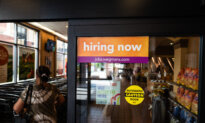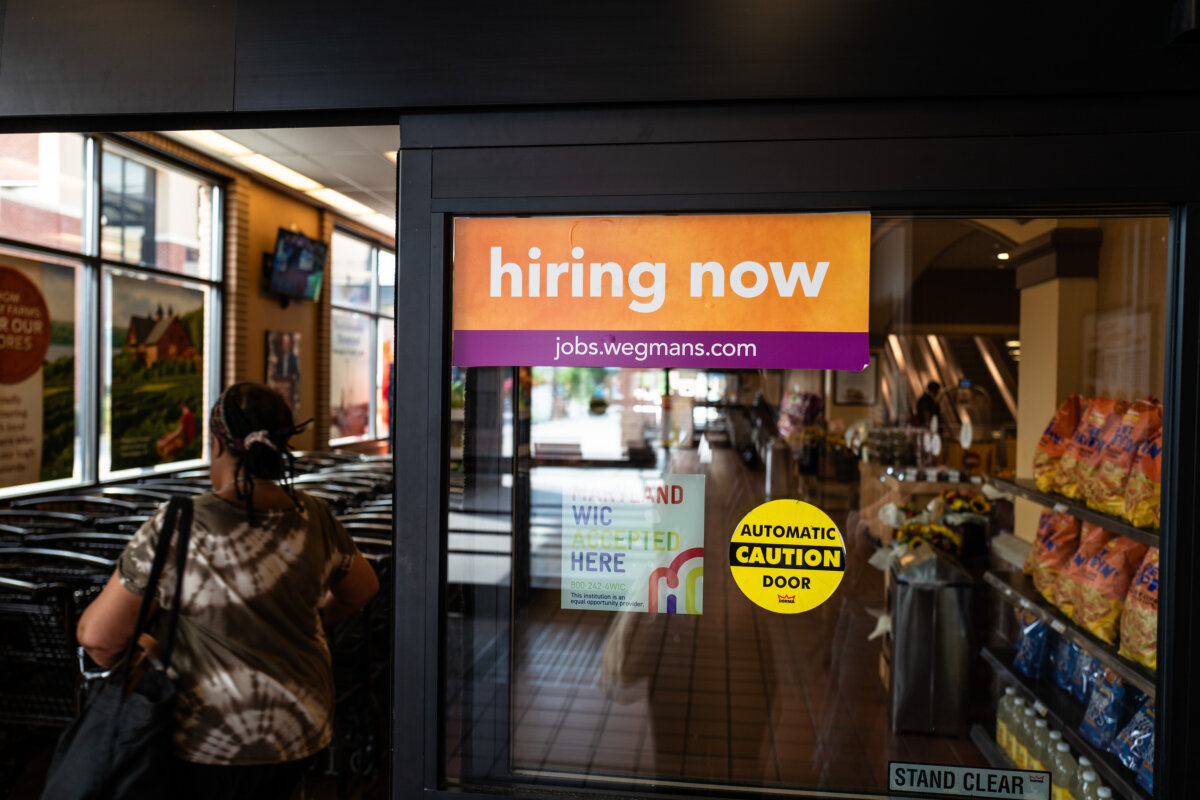

U.S. job openings slipped below seven million in February as labor demand slightly cooled.
The number of job vacancies declined by 358,000 to 6.882 million, from an upwardly revised 7.24 million in January, according to new data released on March 31 by the Bureau of Labor Statistics.
Economists penciled in a reading of 6.92 million.
Last month’s decline was concentrated in accommodation and food services (211,000) and mining and logging (12,000). Vacancies in manufacturing also fell by 71,000.
Jeffrey Roach, chief economist at LPL Financial, observed a modest drop in health care services, which fell by 51,000.
“This is important given the driving force in payrolls recently,” Roach said to The Epoch Times in a note. “Expect weakness in Friday’s non-farm payrolls for health care.”
Health care and social assistance have accounted for a substantial share of employment growth over the past several months.
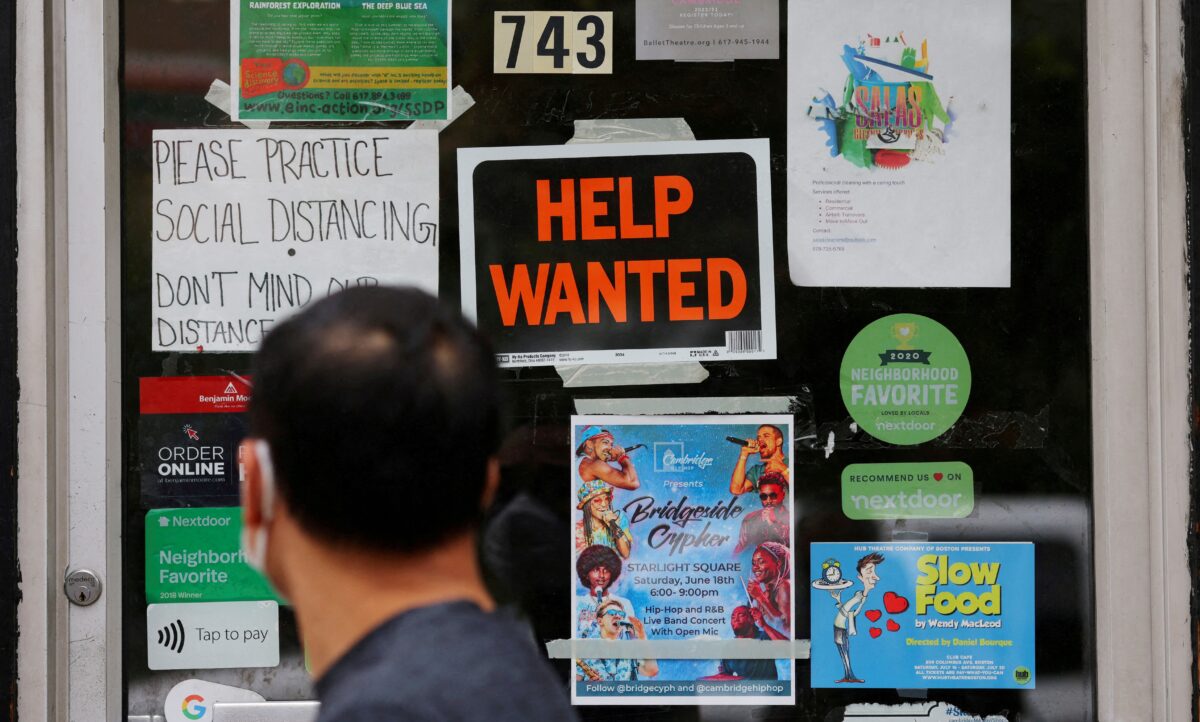
Employment conditions have been sluggish over the past year, driven by economic uncertainty, the impact of artificial intelligence, and the Federal Reserve keeping interest rates higher for longer.
The number of new hires declined by 498,000 to 4.8 million, and the hire rate dipped to 3.1 percent—the lowest level since April 2020.
Hiring has come to a standstill, with employers adding fewer than 10,000 jobs per month last year.
While the January jobs report suggested the labor market could be turning a corner, the U.S. economy unexpectedly lost 92,000 jobs a month later.
The March nonfarm payrolls report, scheduled for release on April 3, is projected to show employers adding almost 60,000 jobs.
At the same time, businesses are not laying off workers at worrisome levels. The bureau reported total separations, including layoffs and discharges, were flat at 5 million.
Global outplacement firm Challenger, Gray and Christmas will release March figures showing U.S. firms’ planned job cuts on April 2.
‘Great Opportunities’ Ahead
Monetary policymakers have stated that current conditions reflect lower workforce participation and immigration, as well as softer demand for labor.
Federal Reserve Chair Jerome Powell acknowledged the downside risks to the labor market. At the same time, he argued that the U.S. economy will provide younger workers “great opportunities.”
“The U.S. economy, compared to other major, big, market-based economies around the world, is just incredibly dynamic and productive,” Powell said at a Harvard University talk on March 30.
For now, workers may not share the central bank chief’s view.
The number of job quits slipped to 2.974 million in February, from a downwardly revised 3.131 million in the previous month. This represented the lowest reading since August 2020.
The quits rate—a gauge of voluntary job leavers as a share of total employment—slowed to 1.9 percent from 2 percent in January.
Economists use quits as a proxy to determine how workers feel about the job market.
“For most workers, the uncertainty within the job market has suppressed the desire to move from one job to another,” Roach said.
At the same time, consumers appear more confident about today’s economic conditions, even during tariff uncertainty and the war in Iran, according to The Conference Board.
The group’s March Consumer Confidence Index edged higher from the previous month. But there was a divergence between the present and the expectations assessments of business and labor market conditions.
“Consumer confidence ticked up again in March, as a modest improvement in consumers’ views of current conditions outweighed a slight downshift in expectations for the future,” said Dana Peterson, Chief Economist, The Conference Board, in a news release.
Almost 30 percent of consumers say the United States will slip into a recession over the next 12 months—a sizable jump from February.
Market watchers have debated whether the economy faces intensifying recession risks.
A recession is defined as back-to-back quarters of negative gross domestic product.
“So far we are not seeing the kind of labor destruction that would trigger a recession,” Nancy Tengler, CEO and CIO at Laffer Tengler Investments, said in a note emailed to The Epoch Times.
“Initial jobless claims remain firmly at the low end of the range for the last three years.”
Initial jobless claims—the number of individuals filing new applications for unemployment benefits—have hovered around historically low levels of 200,000 this month.
Mark Zandi, Chief Economist at Moody’s, believes the odds of a downturn are growing.
“With tenuous prospects for resolving the conflict with Iran, and financial markets under pressure, recession probabilities are high and rising,” Zandi said in a March 25 post on X.
“We don’t yet anticipate an outright downturn in our baseline (most likely) outlook for the economy, but we’ve been aggressively marking down our forecast.”
The Atlanta Fed’s GDPNow Model estimates first-quarter growth at 2 percent, down from the forecast high of 3.2 percent.
 Friends Read Free
Copy
Facebook
Tweet
Friends Read Free
Copy
Facebook
Tweet