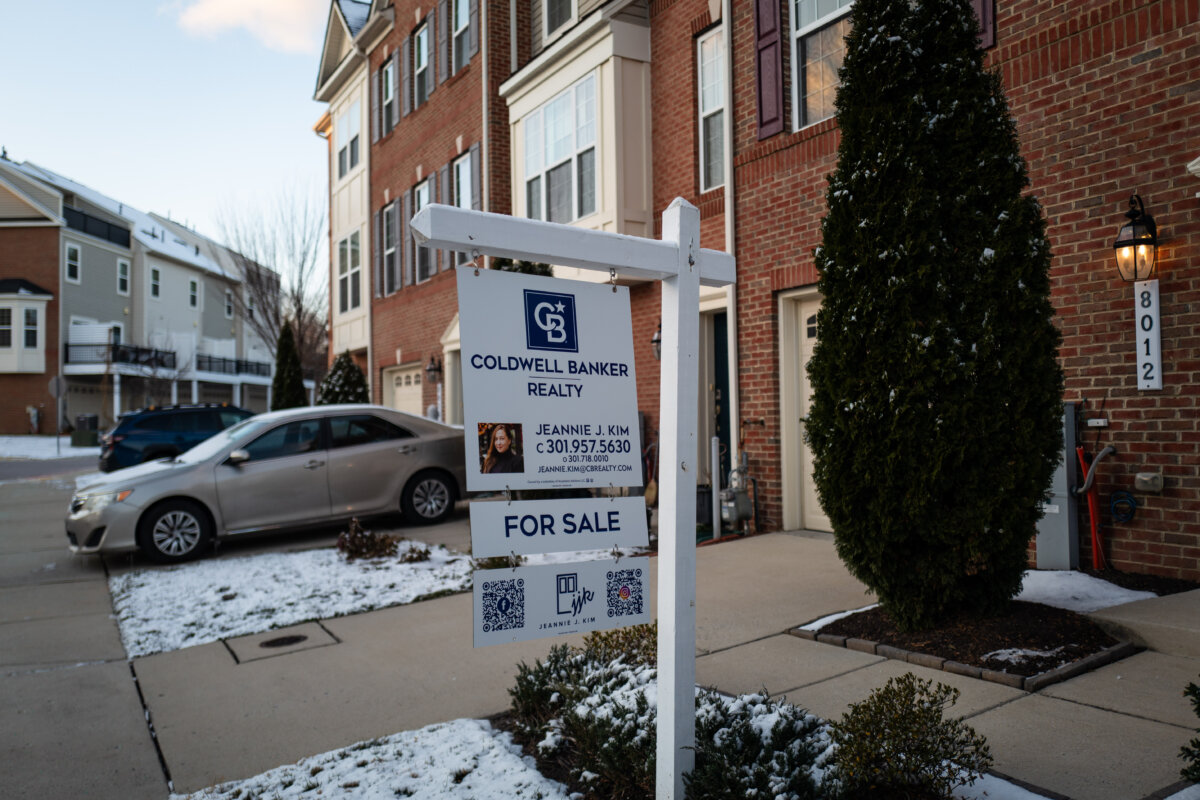

U.S. mortgage rates crossed the 7 percent mark for the first time since January 2025 this week, a key psychological level for prospective homebuyers and homeowners alike.
The average rate on a 30-year fixed mortgage reached almost 7.5 percent on Sept. 25—the highest in nearly three years—according to Mortgage News Daily’s tracker.
A year ago, long-term home loans averaged approximately 6.4 percent.
Today’s mortgage market conditions could test demand as buyers either wait out the current environment or seek borrowing alternatives.
Here is what to know now that mortgage rates are above 7 percent again.
Why Mortgage Rates Have Been Climbing
A key factor behind the rise in rates has been the surge in U.S. Treasury bond yields, which the mortgage market tracks.
Across the entire Treasury market—short- and long-dated government bonds—yields have swelled to levels unseen in years.
The primary 10-year Treasury yield hit 5.2 percent this week for the first time in 19 years. The 30-year yield reached 5.4 percent, the highest level since 2004.
Market watchers attribute the recent jump to a broad array of factors, including persistent war-driven inflation and strong economic conditions.
Yields could keep inching higher now that the Federal Reserve is expected to tighten monetary policy by raising interest rates. The Fed pulled the trigger on a quarter-point hike this month, and investors anticipate the U.S. central bank will do it again in late October.
“In daily terms, 7 percent was first broken back on Sept. 10 following inflation reports that raised the risk of the Fed rate hike seen last week,” Matthew Graham, chief operating officer at Mortgage News Daily, said in a note. “A combination of Fed comments, higher oil prices, and stronger economic data have added to the pain since then.”
How Much Homebuyers Are Paying
At current interest rates, monthly mortgage payments will be about $700 for every $100,000 borrowed.
Assuming a $393,000 loan at a 7.49 percent 30-year fixed rate, today’s homebuyers can expect to pay $2,750 per month.
By comparison, the pandemic era’s 3.5 percent mortgage rate would result in a monthly payment of $1,765.
This means a family would be spending almost $1,000 more each month for a new home.
“Expect 7 percent as the new normal,” Lawrence Yun, chief economist at the National Association of Realtors, recently said in a report.
Buying Demand
It will be several weeks before it can be determined whether a 7 percent mortgage rate will weigh on homebuying demand.
“The housing market remains supported by a solid labor market and an economy that is growing at a healthy rate,” Sam Khater, Freddie Mac’s chief economist, said in the latest Primary Mortgage Market Survey released on Sept. 24.
Various indicators suggest the economy is growing at a healthy pace—the Atlanta Fed projects 5 percent growth in the third quarter—and the labor market is still facing a low level of layoffs.
For now, based on late-summer figures, households have been coming off the sidelines.
New home sales unexpectedly surged 6.4 percent in August to a seasonally adjusted annualized rate of 684,000 units, the Census Bureau reported.
Builders have been using incentives to stimulate demand, including lower prices on new homes and mortgage rates sharply below market levels.
Still, the recent spike in mortgage rates comes at a bad time for the housing market, said Anthony Smith, senior economist at Realtor.com.
“For buyers and sellers, the highest mortgage rates in more than a year and a half are landing on a market that is in the midst of a slowdown,” Smith said.
But the existing homes corner of the real estate market could remain a drag.
Lock-in Effect
Today’s housing market is still feeling the effects of pandemic-era, ultra-low interest rates.
To cushion the economic blows of the public health crisis in 2020 and 2021, the Fed slashed interest rates to near zero, bringing mortgage rates down to rock-bottom levels.
Homebuyers and homeowners took advantage of the situation by either purchasing a new home or refinancing current mortgages at these record-low rates.
This has created what economists call a lock-in effect, preventing owners from listing their properties. If they did, they would have to purchase at a higher price or borrow at 7 percent rates.
New Realtor.com research suggests the lock-in effect “remains the dominant force” in the current housing market.
Almost one-third of current mortgages have rates between 3 and 4 percent. Twenty percent have rates below 3 percent. Nearly one-quarter (22 percent) sit above the 6 percent threshold.
“Together, these dynamics paint a picture of a mortgage market caught in a bottleneck,” the report stated.
“The Covid cohort is holding steady as their rates are too low to motivate a move, and new entrants are trickling in slowly. Until rate relief is sufficient to unlock meaningful seller activity, this tenure distribution will continue to concentrate in the five-to-seven-year range.”
 Friends Read Free
Copy
Facebook
Tweet
Friends Read Free
Copy
Facebook
Tweet