
Job-cut announcements by U.S.-based employers declined in November from the previous month, suggesting a positive sign for the labor market, according to a Dec. 4 report by global outplacement firm Challenger, Gray and Christmas.
Planned layoffs totaled 71,321 last month, down by 53 percent from the 153,074 announced job cuts in October, the report said. But it is also up by 24 percent from a year ago, when U.S. companies announced 57,727 job cuts.
“Layoff plans fell last month, certainly a positive sign. That said, job cuts in November have risen above 70,000 only twice since 2008: in 2022 and in 2008,” Andy Challenger, the firm’s chief revenue officer, said in a statement.
The telecommunications sector accounted for a large share of last month’s final reading. This was driven by wireless carrier Verizon’s announcement to slash more than 13,000 jobs.
Tech firms also unveiled 12,377 planned job cuts. Food companies, particularly in the beef industry, said they will fire more than 6,700 workers.
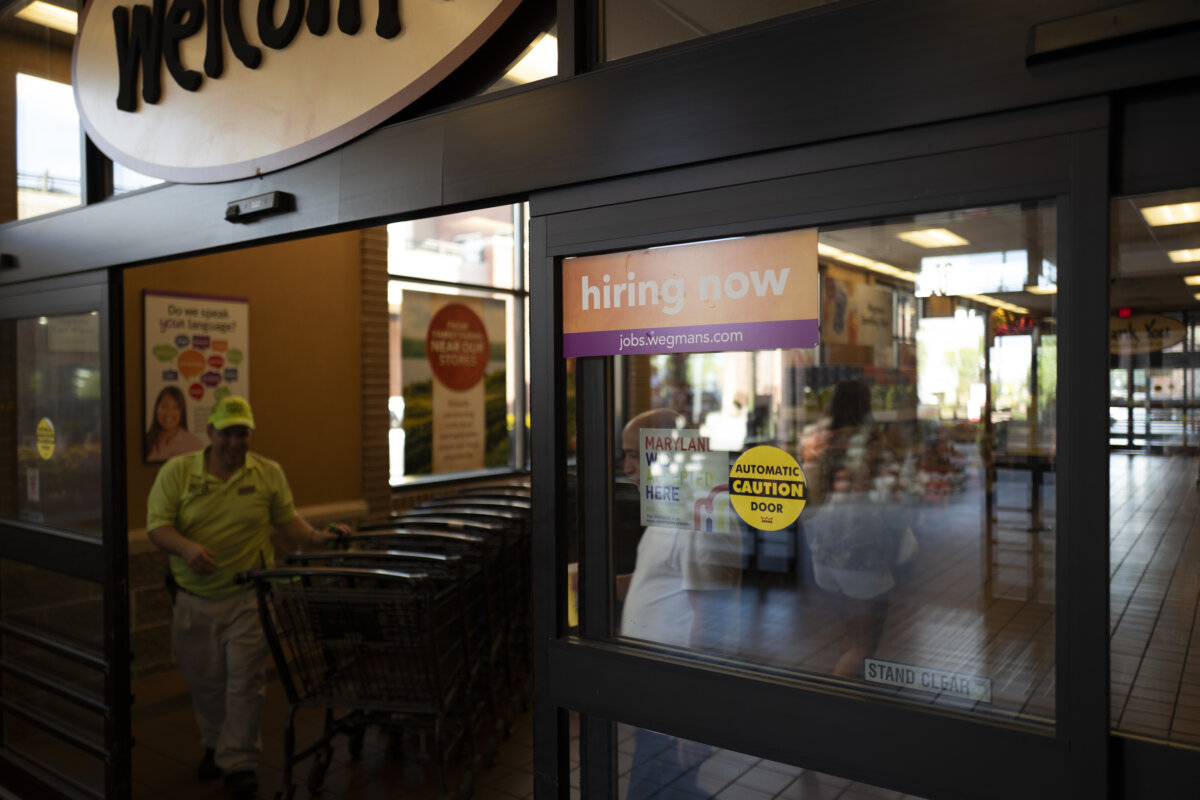
Retail shed nearly 3,300 positions, despite the holiday shopping season—one of the busiest times of the year for the sector. This year, job-cut announcements by retail companies have surged 139 percent year over year to nearly 92,000, with businesses citing tariff uncertainty, softer demand, and changing consumer preferences.
Overall, in the first 11 months of 2025, employers announced 1,170,821 layoffs, a 54 percent increase from 761,385 planned job cuts in the same period last year.
This is the highest year-to-date total since 2020 and the sixth time since 1993 that job cuts through November have exceeded 1.1 million.
“It was the trend to announce layoff plans toward the end of the year, to align with most companies’ fiscal year-ends. It became unpopular after the Great Recession especially, and best practice dictated layoff plans would occur at times other than the holidays,” Challenger said.
Restructuring has been the top reason for this year’s layoffs, followed by market and economic conditions. Artificial intelligence has been responsible for only a fraction of the planned job cuts in 2025.
Year-End Hiring Outlook
Hiring momentum in the U.S. economy has cooled over the past several months. Year-to-date, employers have reported just more than 497,000 planned hires—down by 35 percent from the previous year’s 11‑month tally.
Even as consumers plan to hit the malls for Christmas shopping, seasonal hiring is at its lowest since the organization started tracking it in 2012.
“The increased spending over the Black Friday and the Thanksgiving weekend may give rise to hires in December right before the holiday. It’s unclear, however, if those positions will last into the New Year,” Challenger said.
Over the crucial five-day Thanksgiving weekend, nearly 130 million consumers shopped in stores, 3 percent higher than a year ago, according to the National Retail Federation.
Last week, Indeed Hiring Lab data showed that seasonal hiring is outpacing last year’s levels. The share of job postings listed as seasonal rose to 2.6 percent from 1 percent in November 2024, effectively brushing off the slow start.
Cory Stahle, economist at Indeed Hiring Lab, says retail has not been the leading sector for holiday hiring.

Seasonal retail postings were little changed from last year, and seasonal sales roles declined 10 percent year over year. Instead, positions in the logistics industry—such as stocking, driving, and loading—rocketed from the mid-November 2024 level.
“While some of this shift is likely attributable to the continued growth of e-commerce, some of it also appears to be driven by a focus on flexible staffing in an uncertain economic environment heading into 2026,” Stahle said.
Mixed Data Trickling In
Due to the government shutdown, key economic metrics have been delayed, forcing economic observers to rely on alternative private-sector measurements.
Payroll processor ADP reported that private businesses eliminated 32,000 jobs in November—far worse than expected. The private sector has shed payrolls in three of the past four months.
“The economy looks to have hit an air pocket in the fourth quarter,” Bill Adams, chief economist at Comerica Bank, said in a note emailed to The Epoch Times.
However, some of these numbers could be lagging indicators, as the latest weekly jobless claims data indicate low layoffs.
For the week ending Nov. 29, initial jobless claims—a measure of the number of individuals filing for new unemployment benefits—retreated below 200,000 for the first time since January 2024, according to the Department of Labor.
Recurring jobless claims—a gauge of out-of-work individuals currently receiving unemployment benefits—declined for the second straight week to 1.939 million.
Despite the plethora of mixed employment figures, investors overwhelmingly expect the Federal Reserve to lower interest rates by a quarter point next week as policymakers focus on the maximum employment side of the central bank’s dual mandate.
But this does not mean the labor market is spiraling out of control, says Eric Teal, chief investment officer at Comerica Wealth Management.
“The payrolls data continues to show a wobbly jobs market that requires policy attention over inflation concerns,” Teal said in a note emailed to The Epoch Times. “There is little evidence of widescale disruption in the labor market.”
 Friends Read Free
Copy
Facebook
Tweet
Friends Read Free
Copy
Facebook
Tweet