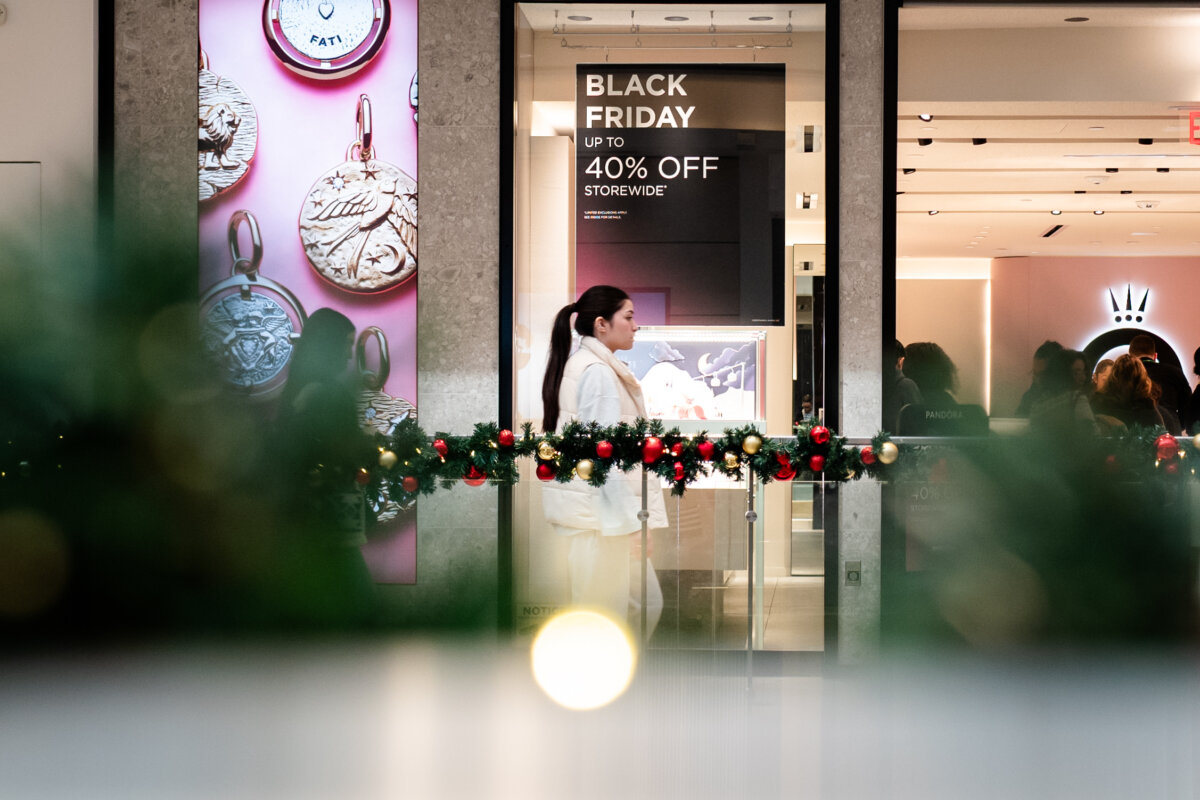

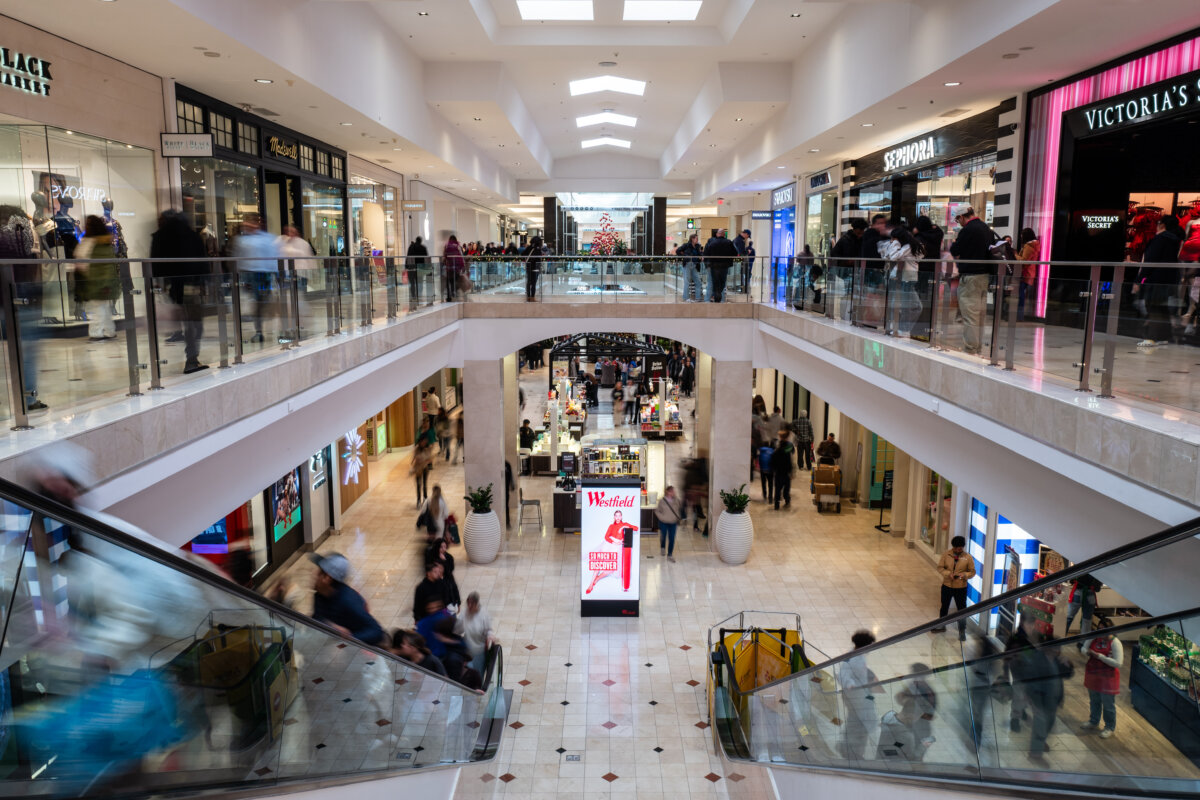
U.S. consumers were reluctant to open their wallets during the pivotal holiday shopping season, as retail sales unexpectedly stalled, according to new Census Bureau data released on Feb. 10.
December’s retail sales came in at zero percent following a 0.6 percent jump in November 2025—the best monthly gain since July.
This fell short of the consensus estimate of 0.4 percent.
On an annual basis, retail sales increased by 2.4 percent, cooling sizably from the 3.3 percent reading in November 2025.
The data close out a robust year for consumer spending—and a divergence among households, often described as a K-shape economy. Higher‑income households continued to spend comfortably through 2025, while those with tighter budgets pulled back more noticeably.
Year-end transactions were driven primarily by building material and garden equipment dealers, rising by 1.2 percent. Receipts at gasoline sales rose by 0.3 percent, while food and beverage stores ticked up by 0.2 percent. Sales at digital retailers rose by 0.1 percent.
Declines were registered at miscellaneous store retailers and furniture outlets, with each falling by 0.9 percent. Commerce at clothing outlets tumbled by 0.7 percent, and receipts at electronics and appliance stores dropped by 0.4 percent.
Excluding auto dealers and gasoline stations, retail sales were also flat, falling short of the market estimate of 0.3 percent.
The retail sales control group—omitting volatile categories such as car dealerships, gasoline, office supplies, and tobacco—slipped by 0.1 percent. This is a key measure used to calculate goods spending in gross domestic product.
As a result, a negative reading may weigh on fourth-quarter growth, which is expected to be above 4 percent, according to the Atlanta Federal Reserve’s widely watched GDPNow Model estimate.
Consumption accounts for about two-thirds of national economic activity.
It is unclear whether consumers have reached their spending limits, though concerns about the U.S. labor market and the high cost of living have adversely affected sentiment over the past year.
“Consumer spending has finally caught up with consumer sentiment, and not in a good way,” Chris Zaccarelli, chief investment officer at Northlight Asset Management, said in a note emailed to The Epoch Times.
“For months, consumer confidence numbers have been disappointing, and consumers have been complaining about the cost of everything—and yet they kept spending; however, this month’s data show that consumers are no longer relentlessly increasing their level of spending.”
But the outlook could be improving.
Short-term inflation expectations declined in January, with the one-year forecast slowing to 3.1 percent, the New York Fed reported in its monthly Survey of Consumer Expectations.
Additionally, the regional central bank found that employment and earnings growth expectations improved modestly last month. However, perceptions and expectations about households’ financial situations deteriorated.
Similar findings were observed in the University of Michigan’s preliminary February Consumer Sentiment Index.
“On net, modest increases in current personal finances and buying conditions for durables were offset by a small decline in long-run business conditions,” Joanne Hsu, director of consumer surveys at the university, said in the latest report.
“Concerns about the erosion of personal finances from high prices and elevated risk of job loss continue to be widespread.”
Still, sentiment gaps persist across households, supporting the narrative of a two-speed economy.
Feeling K-Shaped
Economists have referred to developing trends in the U.S. marketplace as K-shaped.
A K‑shaped economy is one in which economic outcomes diverge sharply across groups.
In December 2025, according to the Bank of America, overall card spending among high-income households rose by 2.4 percent year over year. Conversely, low-income households saw their outlays rise by 0.4 percent.
Consumers with tighter budgets were more price-conscious and purchased smaller-ticket items, the bank’s economists said.
“With cost-of-living issues still looming, in our view, it’s likely that consumers were able to stretch their dollars and shop smart by looking for deals,” they said in their latest findings.
“Lower-income households, in particular, made more frequent and smaller purchases in order to make the holiday season bright.”
Data gathered by the National Retail Federation spotlighted the two-speed trend.
Consumer discretionary spending fell by 3.8 percent for the bottom 10 percent of households last year. Conversely, it increased by 2.3 percent for the top 10 percent compared to 2024.
Still, looking ahead, some experts expect consumer spending to remain resilient in 2026.
Ksenia Bushmeneva, economist at TD, pointed to refunds and lower tax rates from the One Big Beautiful Bill Act trickling through the economy. Looser financial conditions from Federal Reserve interest rate cuts and a strengthening stock market should provide additional tailwinds for shoppers across the income spectrum.
“The fiscal boost will linger beyond the tax season,” Bushmeneva said in a Feb. 5 research note.
“About 85% of households are likely to get a tax cut this year, with [One Big Beautiful Bill Act] provisions expected to reduce taxes on average by $2,900.”
The next major batch of data to gauge the economy’s health will be the delayed January jobs report, scheduled for release on Feb. 11.
January’s payrolls report is projected to show the U.S. economy added 55,000 jobs, below the trailing 12-month average of 77,800.
 Friends Read Free
Copy
Facebook
Tweet
Friends Read Free
Copy
Facebook
Tweet