
The number of Americans filing applications for unemployment benefits remained stable at the start of August, pointing to a stable national labor market.
Initial jobless claims rose by 9,000 to a seasonally adjusted 209,000 for the week ending Aug. 8, according to new data released by the Department of Labor on Aug. 13. Economists had projected a reading of 202,000.
The four-week average, which strips out week-to-week volatility, was unchanged at 199,000.
Claims recently fell to their lowest level since 1969 for the second time this year, and they have ranged between 189,0000 to 230,000 this year.
A plethora of employment indicators suggest that labor conditions are stable, despite last month’s surprise job loss.
The economy unexpectedly lost 23,000 jobs last month, and the unemployment rate dipped to 4.1 percent. Typically, summertime employment snapshots are anemic as government economists adjust for seasonal factors, including schools’ summer break.
Chicago Federal Reserve President Austan Goolsbee said inflation, not the labor market, is the biggest challenge facing the U.S. economy.
“The biggest problem facing our economy right now is not the collapse of industry and the collapse of jobs; it’s that the prices have been rising too fast,” Goolsbee said in a video published by Wired on Aug. 11. “We got an inflation problem, and people hate inflation.”
Goolsbee—a non-voting member of the rate-setting Federal Open Market Committee— pointed to the unemployment rate, low layoffs, and the pace of hiring to support his view that the labor market was “stable, without being good.”
July’s annual consumer inflation decelerated to 3.4 percent from 3.5 percent. Core inflation, which omits the volatile energy and food prices and reflects underlying trends, also slowed to 2.5 percent from 2.6 percent.
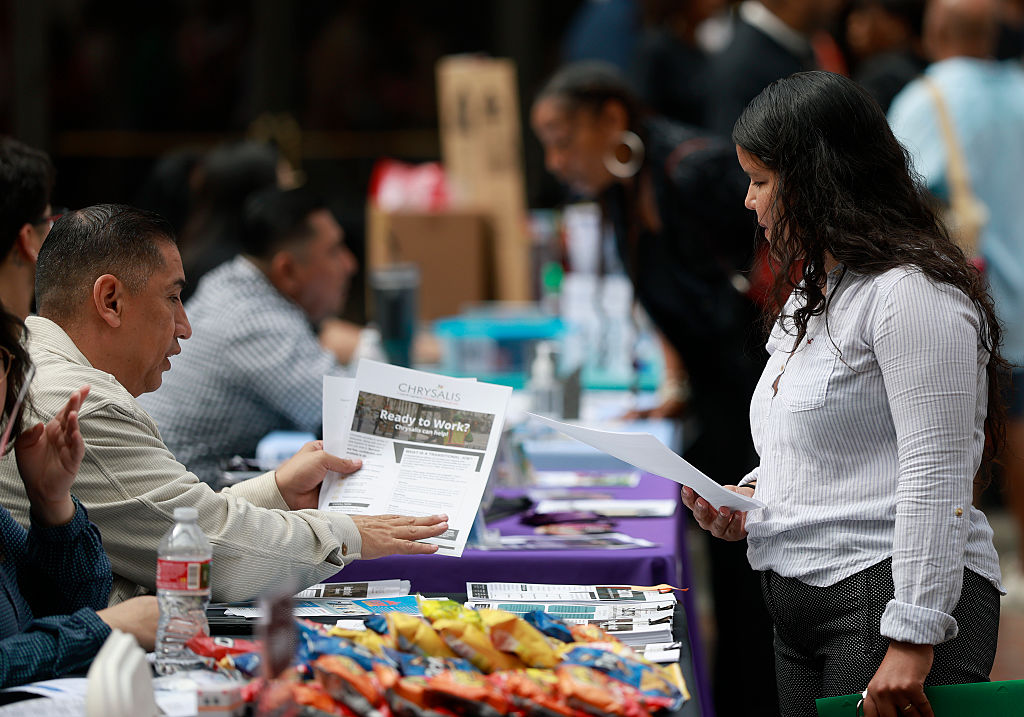 A job seeker meets with a recruiter during the HIRE360 Diversity Hiring Expo & Mega Career Expo at the Carson Event Center, in Carson, Calif., on June 30, 2026. (Justin Sullivan/Getty Images)
Employment Health
Economists are mixed on whether the U.S. labor market is showing signs of weakness.
“The loss of 23,000 jobs is another reason the Fed was right to hold off on raising rates in July,” Jamie Cox, managing partner for the Harris Financial Group, told The Epoch Times in an emailed note. “While I expect this weakness to be temporary, the softening labor market remains one of my biggest concerns for the economy.”
Investors now anticipate the Federal Reserve leaving interest rates unchanged in September. Policymakers will sift through another batch of inflation and employment data for August prior to their September 15-16 meeting.
Deborah Saneman, workforce expert and CEO at payroll and HR firm Würk, said, conversely, the data show that employers are planning on expanding payrolls in the second half of the year, “with technology, healthcare, and finance industries leading hiring demand.”
“At the same time, there are expectations of a hiring boom in the blue-collar workforce for trained electricians and construction laborers as tech companies continue to invest in data center infrastructure,” Saneman said in a statement to The Epoch Times.
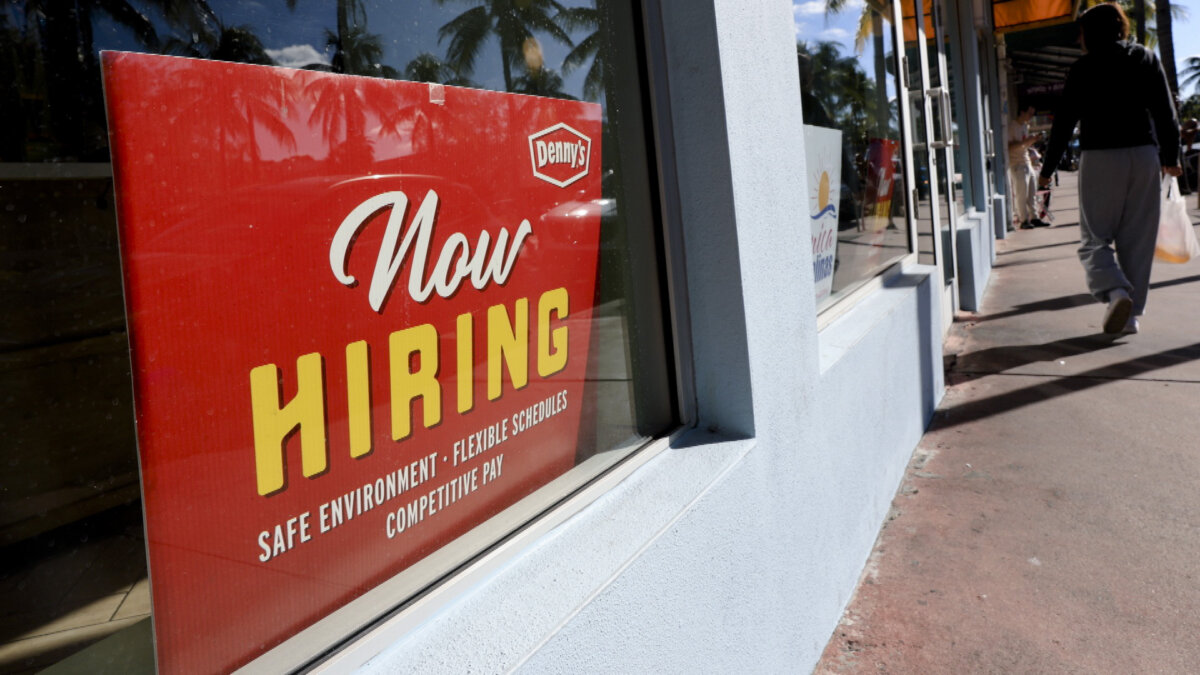
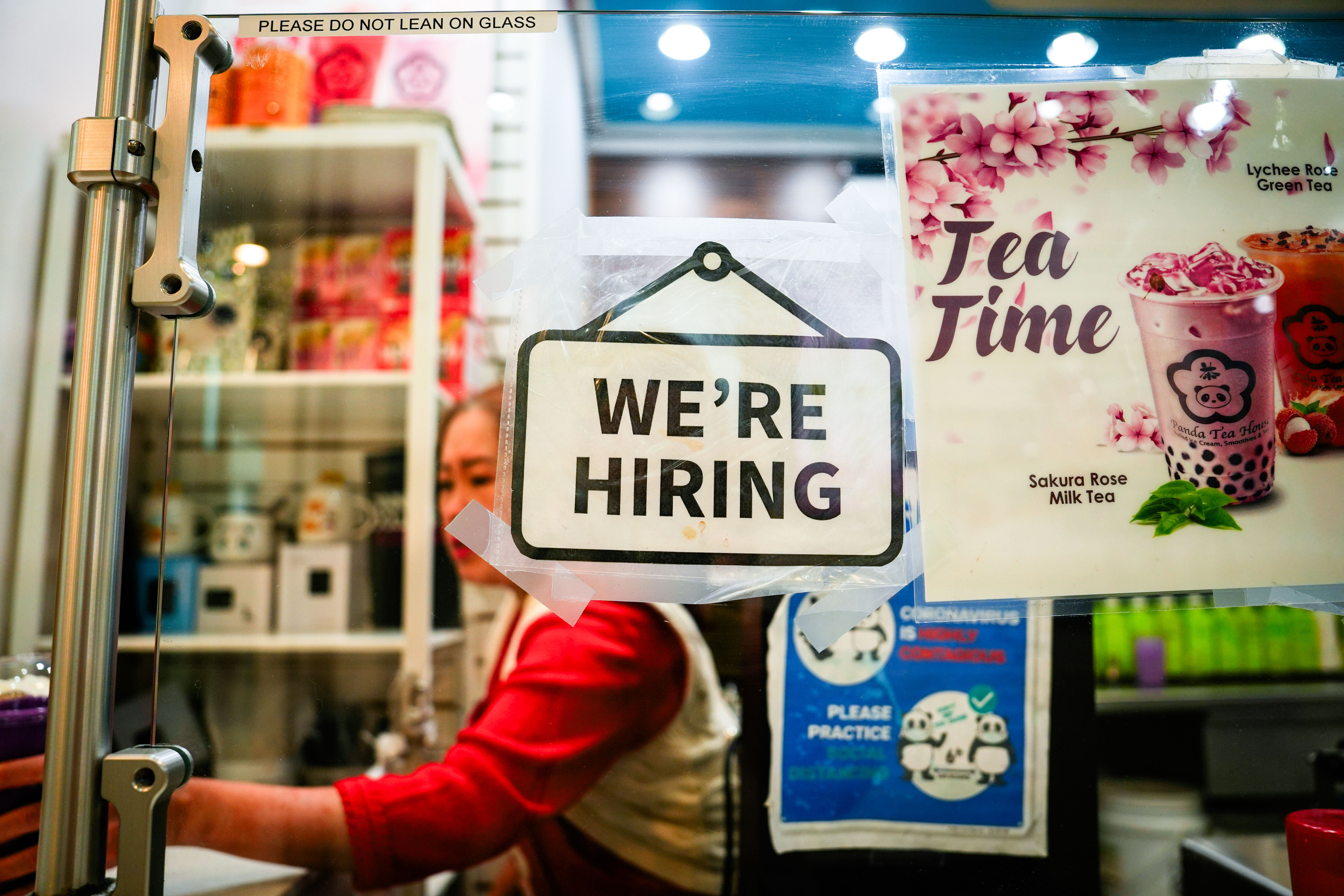 A hiring sign at the Fashion Center at Pentagon City shopping mall in Arlington, Va., on Jan. 3, 2024. (Madalina Vasiliu/The Epoch Times)
Excluding the COVID-19 pandemic years of 2020 and 2021, the labor force participation rate declined to its lowest level since 1976.
While prime-age participation (25 to 54) remained largely unchanged, two categories registered sizable declines: those under 24 and workers aged 55 and older.
“And interestingly, the number of persons out of the labor force who currently want a job declined which is suggestive that this could easily be a retirement story,” economists at RBC Economics said in an August 7 research note. “Looking at flows into unemployment, most folks who exited the labor force were previously employed. This is more consistent with retirements than layoffs.”
Small businesses want to hire more, but they cannot find workers to fill these vacancies.
Hiring plans are at a four-year high, but 27 percent of small business owners say “labor quality or availability” is their chief challenge, according to July’s Small Business Optimism Index, a monthly survey conducted by the National Federation of Independent Business.
 Friends Read Free
Copy
Facebook
Tweet
Friends Read Free
Copy
Facebook
Tweet