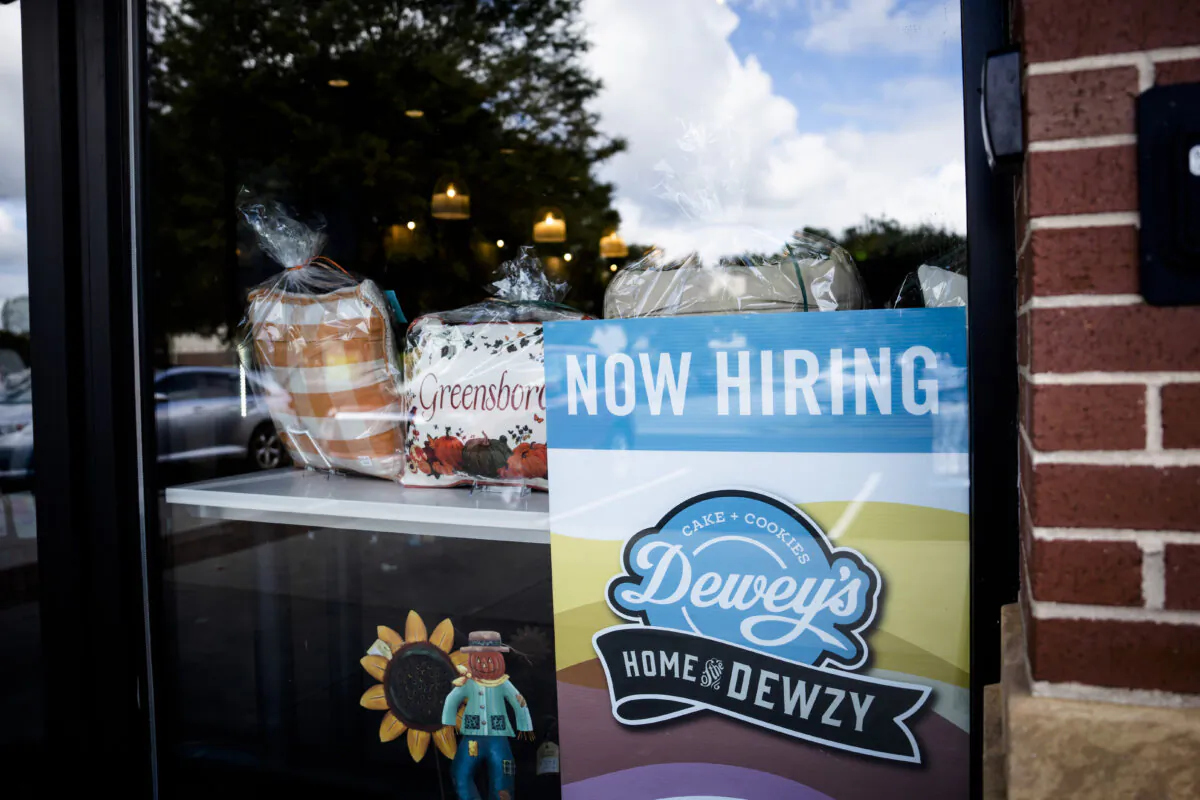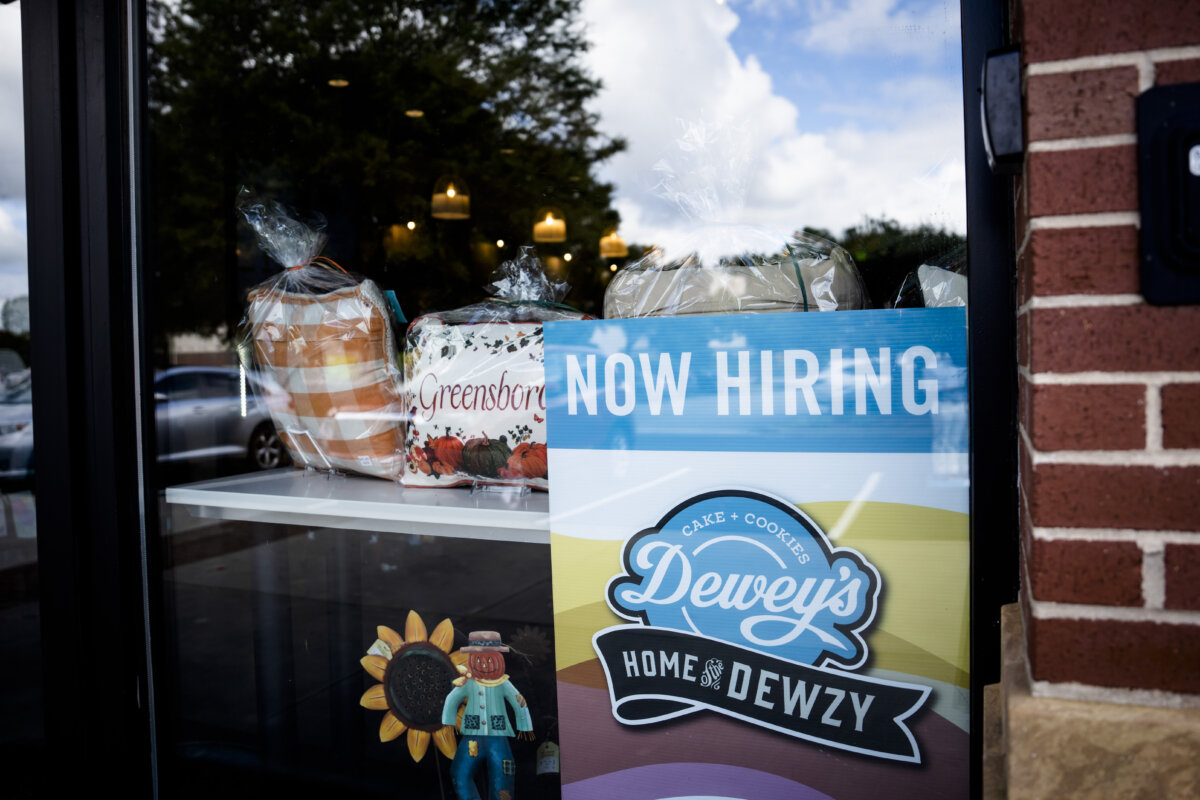

The U.S. labor market showed further signs of stability ahead of the July jobs report as layoffs fell and applications for unemployment benefits were little changed.
U.S.-based employers announced 33,429 job cuts in July, the smallest number in two years, according to an Aug. 6 report by global outplacement firm Challenger, Gray, and Christmas. This is down 27 percent from June and 46 percent from the same time last year.
Technology—driven by artificial intelligence (AI)—accounted for about 30 percent of last month’s planned layoffs, totaling nearly 10,000. In the first seven months of 2026, the tech industry eliminated more than 149,000 positions.
“The pace of layoffs fell dramatically this summer. Layoff plans continue to be announced primarily in Tech, and artificial intelligence is still the story, as investments in the technology reshape organizations,” Andy Challenger, the firm’s chief revenue officer, said in a news release.
“Tech remains the center of gravity for this year’s cuts, and AI is still the reason companies give.”
Financial firms also announced 3,157 cuts, followed by government (2,962), services (2,581), and healthcare (1,251).
On a year-to-date basis, transportation has registered the second-largest number of job cuts—41,748—due to changing global trade conditions and rising price pressures.
The lack of layoffs, a defining feature of current employment conditions in the United States, is also evident in the Department of Labor’s weekly initial jobless claims.
The number of Americans filing unemployment applications ticked up by just 1,000 to a lower-than-expected 199,000 for the week ending on Aug. 1.
This measure remains near the lowest level since 1969, which was recorded last month.
The four-week average, which strips out week-to-week volatility, fell below 199,000 for the first time since October 2022.
Jobseekers could be finding fresh challenges as recurring unemployment claims rose for the first time since June 2025.
Continuing jobless claims—a measure of individuals currently receiving benefits—climbed above 1.801, higher than anticipated. Despite the modest increase, recurring claims have been trending downward since late October 2025.
At the same time, hiring intentions have picked up this summer, according to Challenger, Gray, and Christmas.
U.S. companies announced plans to hire more than 16,000 workers in July, up 47 percent from the previous month. This also represents the highest July tally since 2022. Year-to-date, hiring plans have increased 25 percent year over year, totaling 107,500.
“Employers are hiring more than they were at this point last year, which bucks the trend we’ve seen since 2020. The demand is showing up in aerospace, energy, and manufacturing, work that happens on a floor rather than a screen,” Challenger said.
Despite the rosy outlook for the labor market, there have been signs of slowing momentum.
Private companies added just 44,000 jobs in July, far lower than the 95,000 registered in June, and below the consensus forecast of 70,000, according to payroll processor ADP.
Demand for labor has cooled slightly heading into the summer. June’s job vacancies fell by 178,000 to a lower-than-expected 7.359 million, the Bureau of Labor Statistics reported this week.
“While job growth was cooler in July, other data out this week mostly point to firm labor demand that can sustain decent payrolls growth in the second half of the year,” Bill Adams, chief U.S. economist at Fifth Third Commercial Bank, said in an emailed note to The Epoch Times.
July Jobs Report
The Bureau of Labor Statistics will release the widely anticipated July jobs report on Aug. 7. The consensus projections show 80,000 new jobs and a 4.2 percent unemployment rate.
It was a volatile start to the year for the job market. After almost zero growth in the first two months of the year, nonfarm payrolls accelerated from March to May. They then slowed in June, with only 57,000 new jobs.
In the first half of the year, the U.S. economy created 552,000 jobs.
Despite the volatility, the unemployment rate has been stable, hovering slightly above 4 percent—and this trend could continue for the rest of the year.
“If job growth continues at its recent pace, the unemployment rate will likely edge lower in coming months and close 2026 around 4%,” Adams wrote.
Hourly wage data will also be released and is projected to remain unchanged from June.
Real (inflation-adjusted) earnings have slumped since the start of the war in Iran in late February due to climbing price pressures.
“Although core inflation looks a bit more benign than topline inflation, we expect July’s data to reflect flat growth in real wages,” Joseph Brusuelas, chief economist at RSM, said in an Aug. 6 research note.
“This suggests that a substantial slowing of inflation in the latter half of this year would be required to quell the growing unrest around the cost of living and what can effectively be described as an affordability crisis following the pandemic-era shock.”
Reflecting the slowdown in the June consumer price index, real average hourly earnings jumped 0.8 percent monthly. Real average hourly earnings edged up just 0.1 percent from June 2025 to June 2026.
 Friends Read Free
Copy
Facebook
Tweet
Friends Read Free
Copy
Facebook
Tweet