
Private-sector hiring slowed in July, with most of the employment gains coming from education and health services, according to new data from payroll processor ADP.
Excluding government, employment grew by 44,000, sharply below June’s downwardly revised 95,000. The figures also fell short of the consensus estimate of 70,000.
Nela Richardson, chief economist at ADP, said in an Aug. 5 statement that “typical hiring patterns … are changing as employers react to shifting macro-economic conditions.”
All of the gains occurred in the services sector, adding 47,000 positions. Payrolls among goods-producing firms declined by 3,000.
A sizable share of last month’s nonfarm job growth came from small businesses (23,000). This was followed by large companies (13,000) and mid-sized companies (8,000).
Job growth in education and health services led the way, with 36,000 new jobs. This continues the employment trend of the past year, reflecting the nation’s aging population.
Other sectors registering gains were financial activities (10,000), professional and business services (9,000), and information (5,000).
Leisure and hospitality eliminated 11,000 positions, possibly reflecting the end of the FIFA World Cup 2026 festivities. Trade, transportation, and utilities also shrank payrolls by 8,000. Natural resources and mining jobs fell by 6,000.
While private-sector hiring was choppy, wage data sent a “clear signal,” Richardson noted. Pay gains held steady at 4.4 percent year-over-year for job stayers, but job changers enjoyed a 7 percent wage increase, the largest in almost a year.
“Job-changers are highly sensitive to real-time economic conditions, and their rapid pay growth implies supply constraints in parts of the labor market,” Richardson added.
Inside the Employment Arena
ADP’s numbers come two days ahead of the week’s main event: the July nonfarm payrolls report.
Market watchers expect the economy added 80,000 new jobs last month and the unemployment rate was unchanged at 4.2 percent.
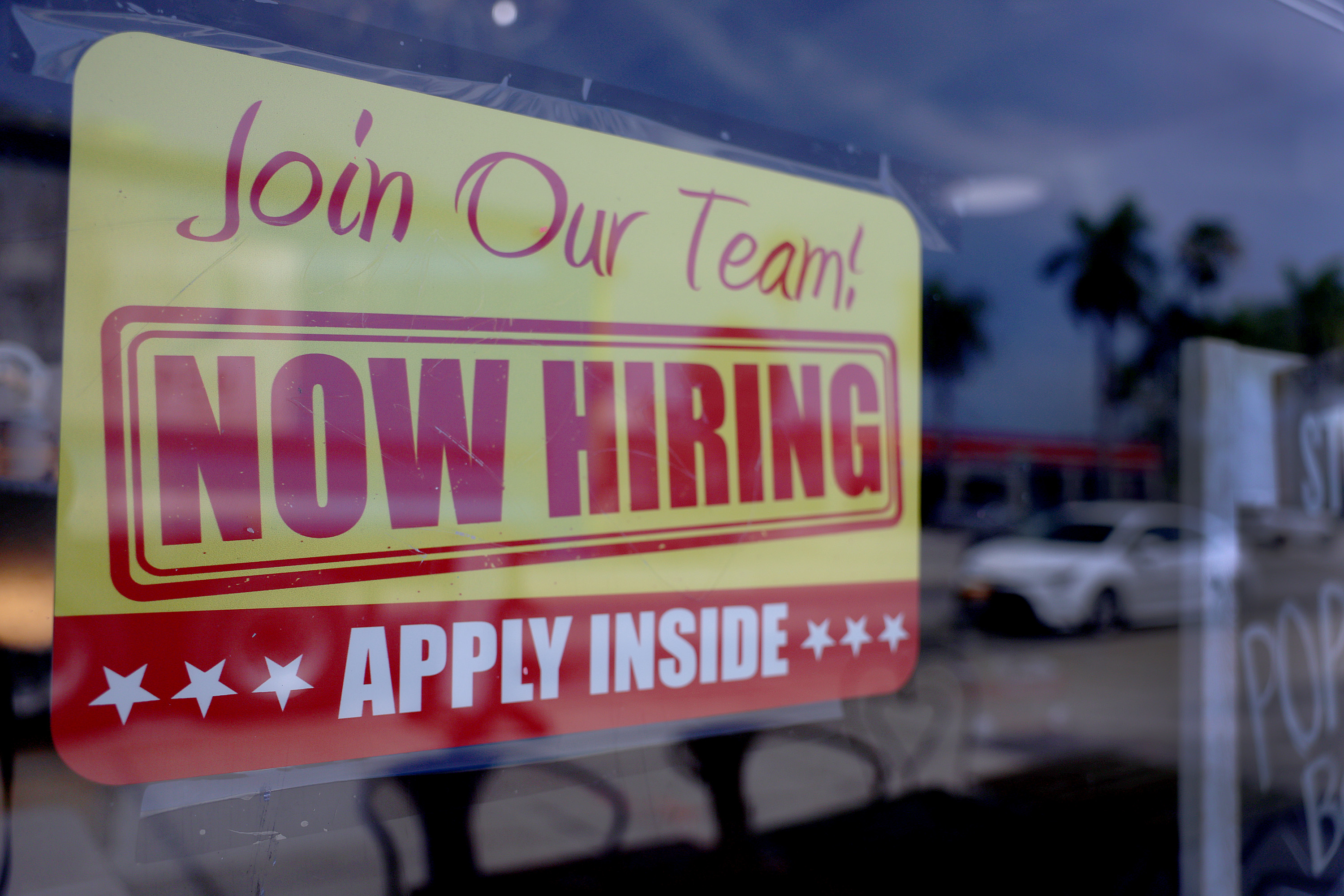 A “now hiring” sign posted in the window of a restaurant looking to hire workers in Miami, in this file photograph. (Joe Raedle/Getty Images)
Job vacancies fell below 7.4 million in June—less than the market forecast—for the first time since March, according to the Bureau of Labor Statistics.
“Labor turnover is lower than normal as firms slow the pace of hiring. One exception is the recovery of job openings in retail firms as they retool payroll after being overly cautious during last year’s shifting trade policy,” Jeffrey Roach, chief economist for LPL Financial, said in an emailed note to The Epoch Times.
The Federal Reserve is watching the labor market, but officials have prioritized combating inflation, based on remarks from Chairman Kevin Warsh and his colleagues.
Minneapolis Fed President Neel Kashkari, in an interview with CNBC’s “Squawk Box,” believes interest rates should be higher to lower inflation. This, he noted, could start happening at next month’s Federal Open Market Committee policy meeting.
 Federal Reserve chairman Kevin Warsh speaks during a press conference in Washington on July 29, 2026. (Madalina Kilroy/The Epoch Times)
“So, I argued now is the time to start slowly moving up as we get more data in.”
Kashkari was one of three dissenters at last month’s meeting—Cleveland Fed President Beth Hammack and Dallas Fed President Lorie Logan the other two—supporting a quarter-point rate increase.
Investors widely anticipate the central bank will pull the trigger on a rate hike in September, which would be the first in more than three years.
July’s annual consumer inflation rate is expected to further ease to 3.4 percent, according to the Cleveland Fed’s widely watched Nowcasting model. The August 12-month rate could edge back up to 3.5 percent.
Core inflation, which removes volatile energy and food prices and assesses underlying conditions, remains closer to the Fed’s 2 percent target.
The Fed will convene its next meeting on Sept. 15 and 16.
 Friends Read Free
Copy
Facebook
Tweet
Friends Read Free
Copy
Facebook
Tweet