



Rich was about 40 and feeling fine when his doctor suggested a heart scan. His father had died of a heart attack at 45, so he agreed. The scan found so much calcium in his arteries that his doctor nicknamed him “The Calcium King.”
A follow-up stress test came back normal. Over the years, so did another. When a third hinted at a slight blockage, doctors offered a catheterization, which threads a thin tube into the heart’s arteries. Rich declined, worried it might lead to a stent, then blood thinners. A cardiologist he consulted agreed and said he wouldn’t do it either.
More than 30 years after the first scan, Rich has never had a heart attack or needed a procedure to open his arteries.
The scan still cost him. For years, it limited his health-insurance options and pushed his and his wife’s premiums to $2,300 a month.
Medical tests can be lifesaving, but few patients are ever told how accurate they actually are, what unexpected scenarios commonly unfold, or how they can prepare themselves for the problems tests can bring. Here are nine things everyone should know about tests.
1. A Single Test Can Lead to 5 More
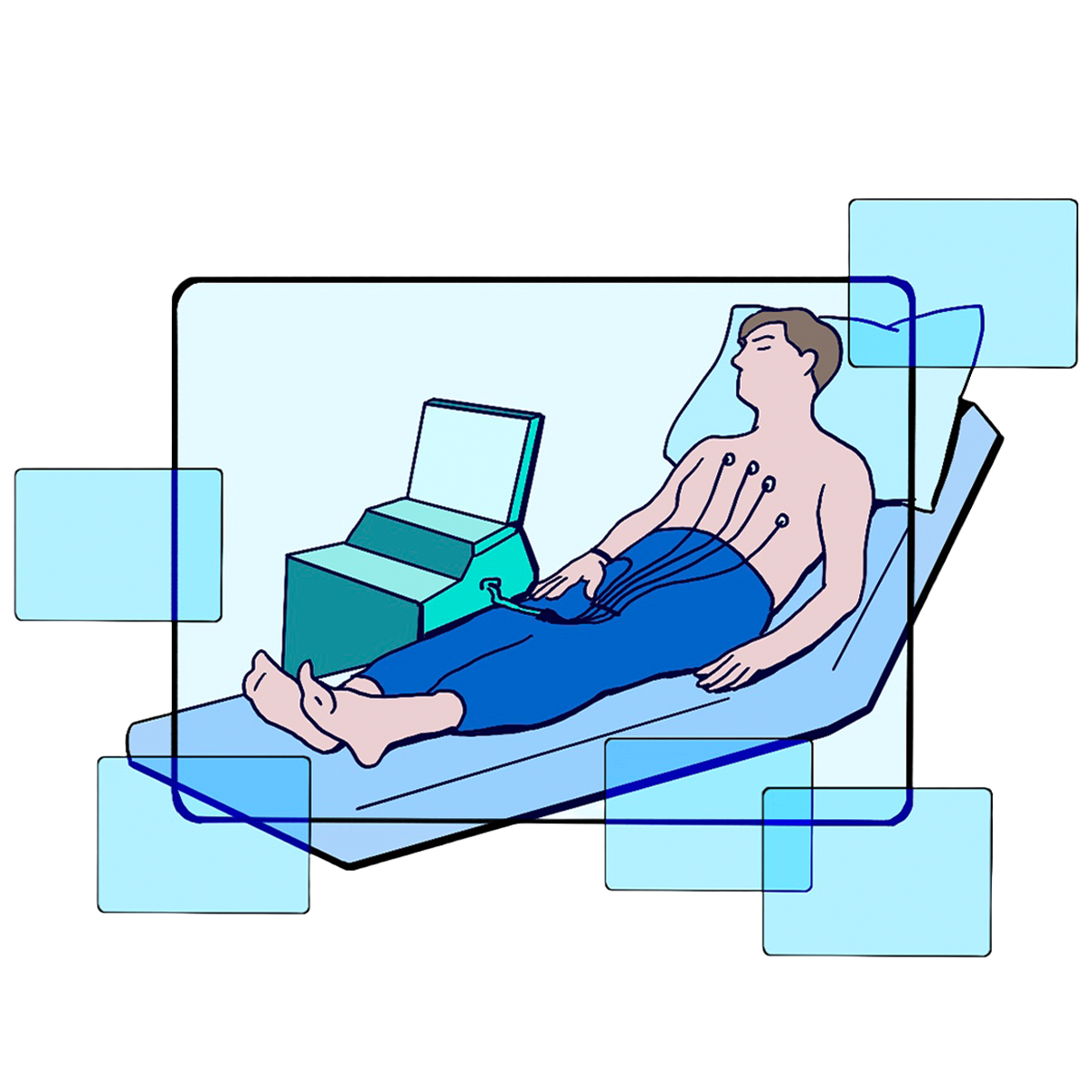
A routine test can seem harmless, even responsible. Your doctor recommends it, and your neighbor just had one. However, a test doesn’t always end with one clear answer. Sometimes the result leads to another test, then another, each with its own risk.
Dr. Ishani Ganguli, a primary care physician and researcher at Harvard Medical School, summed it up with a joke: “If you give a mouse an EKG …” It’s a riff on the children’s book “If You Give a Mouse a Cookie,” in which a cookie leads to a glass of milk, the milk leads to a straw, and on it goes. Doctors call it the cascade of care.
In a 2019 national survey of U.S. internists, 99 percent said they had spotted something while looking for something else—an incidental finding. These findings then triggered follow-up tests or procedures. More than 94 percent had seen a cascade that ultimately found nothing that needed treatment.
Ganguli studied one common example: routine EKGs before cataract surgery—a quick and low-risk eye operation. Guidelines say routine EKGs before this surgery don’t make it any safer. Many patients get one anyway.
Her team looked at more than 110,000 Medicare patients with no known heart disease. Of those who had an EKG, about one in six went on to see a heart doctor or have more tests in the next three months for symptoms like a slightly slow heartbeat.
EKGs cost Medicare about $3.3 million annually. The follow-up care cost an estimated $35 million. The researchers acknowledged that some of that care may have helped some people. On average, though, they said such cascades can cause worry and lead to care patients may not have needed.
If a test isn’t needed, why do doctors keep ordering it? “I think the answer is fear,” said Dr. H. Gilbert Welch, a general internist and co-author of “Overdiagnosed: Making People Sick in the Pursuit of Health.” Doctors don’t want to be sued, and they don’t want to be the one who missed something, he told The Epoch Times. Many patients also want a definite answer, even though no test can ever truly give one.
Fear can keep the cascade going, but you can stop it at any time, Ganguli told The Epoch Times. One way to do that is to ask your doctor what another test will tell you that you don’t already know, and what that will change about your treatment.

2. The Test Can Sound a False Alarm
The scan says you might have cancer. The next test says you don’t. That first test was a false positive—common in many routine screenings.
Most people getting screened feel fine and don’t have the disease in question. But every test occasionally flags a healthy person by mistake. Because healthy people far outnumber sick ones, those mistakes add up. So when a screening test comes back positive, it’s often a false alarm.
In the National Lung Screening Trial, about one in four low-dose CT scans came back positive. More than 96 percent of those results turned out not to be cancer.
Still, the screening reduced lung cancer deaths. Among the heavy smokers in the trial, low-dose CT prevented about three lung cancer deaths for every 1,000 people screened, compared with chest X-rays.
For those three people, the test may have been worth it. But over three years of screening, about four in 10 people had at least one positive scan. Most were sorted out with more scans, occasionally with a needle—but not without more appointments, more money, and more fear.
Knowing ahead of time that most positive scans aren’t cancer can make an abnormal result easier to face. Before your next test, ask your doctor: If it comes back abnormal, how often does that actually mean disease?
3. Tests Find Inconsequential Disease
Tests are good at finding things, even things that don’t matter. The problem is that it’s often unclear which findings matter, and sorting that out can mean a grueling round of more tests.
Unlike a false positive, the test didn’t make a mistake. The disease is real, but it never would have made you sick or shortened your life.
With prostate cancer, as with many cancers, doctors often can’t tell which cancer will stay quiet and which will turn dangerous. So a man may end up with repeated biopsies or surgery, or simply live knowing it’s there. Some will undergo treatment for a cancer that never would have harmed them because there’s no reliable way of knowing in advance which ones will stay quiet.
A test helps only if catching the disease early keeps you from getting sick or dying later. If it doesn’t, you take on the worry and the bills without the benefit. For someone who feels fine, tests must clear a high bar to be helpful.
“It is hard to make an asymptomatic person feel better,” Dr. Rita Redberg, a University of California, San Francisco cardiologist, told The Epoch Times in an email.
Ganguli pointed to prostate screening, which can turn up something that “may not have hurt you in the first place.” Some of those small cancers are ones men would die with, not from.
Before getting screened, ask your doctor whether close monitoring is an option if a small cancer turns up.

4. Tests Can Turn You Into a Patient
Your blood sugar is a couple of points too high. Your cholesterol is just outside the normal range. You feel the same as yesterday. But now your chart says “abnormal.” Medical tests make it easier than you might think to go from being a healthy adult to a patient.
Welch sees it on his own patient portal. Result after result carries a yellow “abnormal” tag. Even his HDL, the “good” cholesterol, is flagged for being too high. Welch, who understands the nuances of the biochemistry involved, finds it “laughable.” A patient may not, he said—especially when the result arrives with no doctor there to explain it.
He worries more when a number becomes a label, such as prediabetes. In older adults, he said, overreacting to that label can lead to medications that “do more harm than good.”
A 2021 study published in JAMA Internal Medicine followed more than 3,400 people in their 70s and 80s without diabetes. Some had blood sugar that was a bit high—what doctors would call prediabetes. Around five years later, less than one in 10 had diabetes. More returned to normal blood sugar or died first. In this age group, the researchers wrote, prediabetes may be a poor predictor of diabetes.
Isn’t it still better to know? The researchers noted that some people may have been encouraged to eat better or exercise after seeing their results, and they still recommend both. But for older adults, they said, drugs to prevent diabetes are unlikely to help much, and piling on more tests may do little good. Both can cause harm, from added worry to insurance problems.
Testing “can turn humans into patients,” Dr. Gregory Katz, a cardiologist at NYU Langone Health, told The Epoch Times. The test did not make you sick. But the results could change how you see yourself and what happens next.
“How medicalized do you want to be?” Katz asked. That’s worth answering before the test, along with a simpler question: If this finds a risk I can’t feel, what would I do differently?
5. A Test Can Plant an Unshakable Worry
A test can uncover something you were never looking for, and once you know it’s there, you can’t stop worrying about it.
A heart scan, for example, finds a spot on the lung. Is it cancer or just a scar from an old infection? Most spots like this turn out to be harmless, but it’s hard to say from a picture. Now you and your doctor need to decide what to do next, and the worry has just begun.
Radiologists call these “incidental findings,” and they are common. A 2018 review published in BMJ said they show up on about 45 percent of chest CTs.
Sometimes an incidental finding catches a disease early. But it is not always clear what the finding means. The report may read “probably benign” and recommend another scan in six months.
In a Danish study of lung-cancer screening, researchers surveyed people whose scans had found a suspicious nodule. Three months later, coming back for another look, they were more dejected and more focused on their breathing than before the scan—whether the nodule later proved harmless or turned out to be cancer.
Dr. John Brandt Brodersen, co-author of the study and a professor of general practice at the University of Copenhagen, told The Epoch Times that the psychological toll was similar “no matter if this abnormal result is later confirmed to be true or false.”
Imaging, such as with X-rays or scans, is especially persuasive, Ganguli said. Unlike a number on a lab report, it’s a picture from inside your body. Patients figure, “Why would there be any room for error there?” But a picture can mislead, and it sticks with you. “It’s really hard to unsee an abnormality once you see it,” she said.
6. The Test Itself Can Hurt You
It’s easy to look at a test as a simple way to look inside the body, and sometimes it is. However, every test, no matter how simple, carries physical risks.
A CT scan, for example, uses far more radiation than a standard X-ray. A 2025 study published in JAMA Internal Medicine found that CT scans conducted in the United States in 2023 were projected to result in about 103,000 cancers. If nothing changes, the researchers estimated, those cancers could account for 5 percent of new diagnoses each year.
“Families should have no fear about a needed CT scan but should have concern about an avoidable CT scan,” Madan Rehani, a radiation-protection expert at Massachusetts General Hospital, told The Epoch Times in an email.
Procedures carry their own dangers. For every 10,000 screening colonoscopies, nearly 15 cause major bleeding and 3 tear the bowel. The risk rises with age. A prostate biopsy, the usual next step after a high prostate-specific antigen-based screening, sends about one in 100 men to the hospital, usually with an infection.
For someone with symptoms, those risks may be worth taking to get an answer. For someone who feels well, the risks are the same, but the odds of a useful answer are lower. So before the test, ask your doctor what it could do to your body, and what the next test could do.

7. The Test Can Cost More Than Money
Many screening tests are free. What follows often isn’t, and the bill is only part of the cost.
Under the Affordable Care Act, most plans cover a screening mammogram at no cost, but not necessarily the extra imaging or biopsy after an abnormal result. In a 2025 analysis by the American Cancer Society Cancer Action Network, more than 70 percent of insured women who needed follow-up imaging paid out of pocket.
Medicare works much the same way with a colonoscopy. The screening is free until the doctor finds and removes a polyp. After that, the patient owes 15 percent of the cost, a share set to drop to 10 percent in 2027 and to zero by 2030.
Then there is the cost that never shows up on a bill: time. In one study, Ganguli and colleagues found that older adults in traditional Medicare spent an average of 5.3 days a year on lab tests and 2.6 days on scans. Nearly half of those days involved no doctor’s visit, just a trip for the test. Altogether, they spent about 21 days a year getting care outside the home.
A result that needs follow-up can mean another morning off work or a ride to arrange. None of that is in the price of the first test. It’s worth considering what a test’s follow-up could cost in dollars and days.

8. The Test Result Can Follow You
Once a diagnosis lands in your chart, it tends to stay. The next doctor may read your chart before meeting you. An old or uncertain label can shape how the next doctor sees a new symptom—and what gets tested next.
Welch used to tell young doctors that removing an old diagnosis was as important as adding a new one. In practice, he said, doctors add far more readily than they subtract. “It tends to be a one-way valve.”
A label that stays in your chart doesn’t just stay at the doctor’s office.
While people may not see their insurance rates go up like Rich “The Calcium King” did under new Affordable Care Act rules, new coverage may be affected.
New rules prevent health insurers from denying coverage or charging more because of a preexisting condition, but insurers have taken notice of heart scans. Swiss Re, one of the world’s largest reinsurers, added calcium scores to an underwriting tool it provides to insurance companies worldwide.
Life insurance is different altogether, as are disability and long-term-care coverage. Depending on the policy, insurers may consider health information when deciding whether to cover you and what to charge.
Dr. Randolph Pearson, a physician at Michigan State University, learned this firsthand after a heart workup left him with a mildly elevated calcium score of 22. It didn’t change his care, since he was already on a statin, but his life-insurance premium quadrupled.
“I was shocked at the amount of the increase,” he told The Epoch Times in an email. No doctor had told him an insurer might use the result.
Some people pay for tests themselves, hoping to keep the results away from insurers. Pearson said that wouldn’t have helped him. The result was part of his medical record. He now warns patients considering self-pay tests that the result could still affect a future insurance application.

9. A Normal Test Result Can Mislead You
A normal result often offers immediate relief, but it only means the test didn’t find what it was looking for. It doesn’t mean that nothing is wrong.
Less than a week before Rich’s father died, he had a physical and an EKG. His doctor told him everything looked fine. The tracing could not see the disease building in his arteries.
Katz sees the same blind spot with coronary calcium heart scans. A calcium score of zero means no detectable calcium was found in the coronary arteries. A younger person can score zero and still have soft plaque that hasn’t hardened yet. The scan can’t see it, and it can still cause a heart attack.
A zero also does not erase other risks, such as smoking or high blood pressure. Katz has seen people use a reassuring result to brush off risks they already know about. A smoker with a calcium score of zero, for example, may see less reason to quit.
Dr. David Rakel, chair of family medicine and community health at the University of Wisconsin, Madison, sees the same false comfort with cholesterol. A statin brings the number into range, and suddenly the fries don’t seem quite so consequential.
Doctors can be falsely reassured, too. Someone feels unwell, but test after test comes back normal. Eventually, the results can drown out what the patient is saying.
“Treat the human and not just the human’s labs,” Rakel said.
How to Pass the Test
Rich and his doctor agreed to that first scan because they “figured there was nothing to lose,” he told The Epoch Times in an email. It “turned out to be a big mistake, at least for me.”
A test is rarely a choice with nothing to lose. It can also be the right choice. The challenge for many patients is figuring out whether it’s the right choice for them, and how to prepare themselves for what a test might trigger.
In a healthcare system geared to chase down symptoms and eliminate potential risks, a test can trigger a series of problems few patients are prepared to handle.
The key is to know what can happen and weigh the risks and benefits before you say yes. A couple of questions can help: What will this test tell us that we don’t already know? What will we do differently with the answer?
The answers may point towards a test, or away from it. Sometimes, Rakel said, the most useful information does not come from a test at all, but rather from our own bodies.
“A symptom is a beautiful teacher if we listen.”