



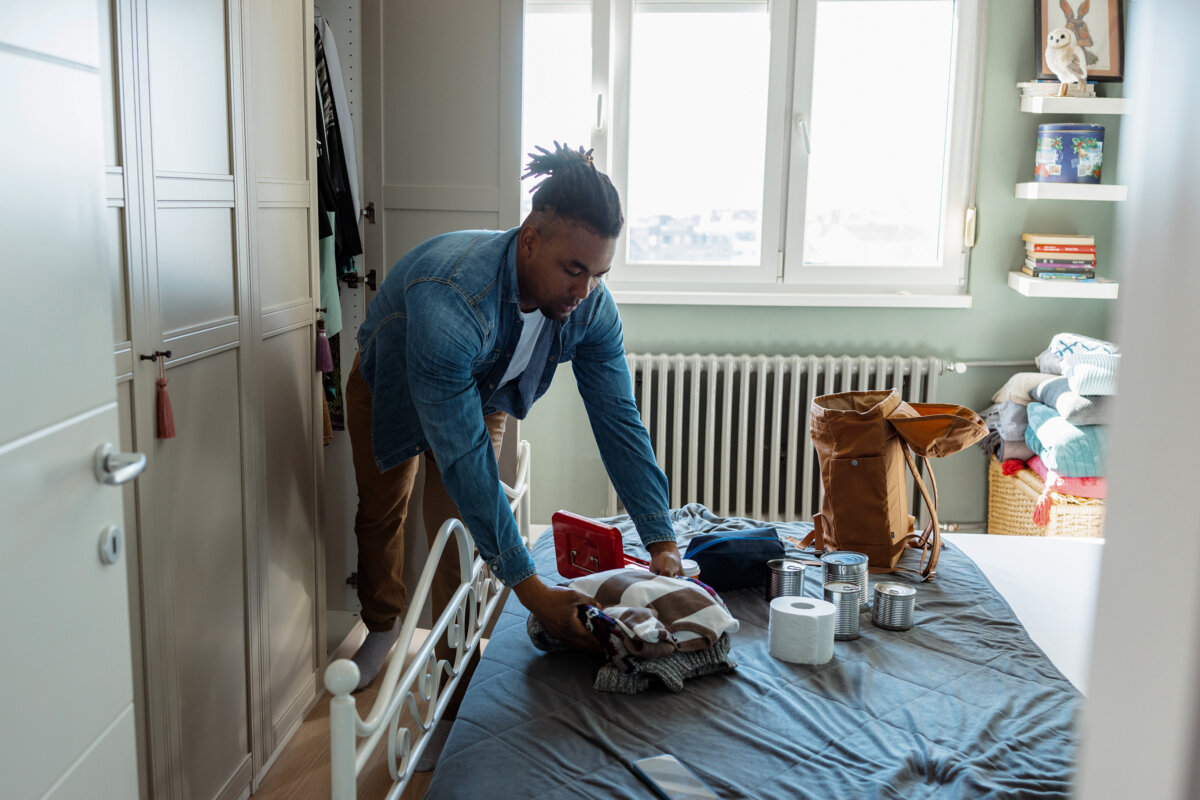
If a hurricane is heading your way, pack a carry-on-size suitcase with enough essential clothing and hygiene products to survive three days, and keep it ready just in case.
It’s one of several easy tasks you can check off your list—even if you might end up unpacking that emergency suitcase tomorrow, according to Lisa Bedford, founder of the blog The Survivor Mom.
“The worst thing to do is to freeze in place and not do anything,” she told The Epoch Times. “Focusing on those small things really does help your brain avoid going into a panic mode.”
The point is this: Don’t just make a to-do list; follow through. Hurricane plans are useless if you don’t take action. A big part of weathering the storm is calmly moving from one step to the next to care for your house, your family, and yourself.
Batten Down the Hatches
Eight years ago, when Scott Meredith and his wife moved from Illinois to Apollo Beach, Florida, he didn’t understand the benefit of hurricane-rated windows while house hunting. Two years ago, he spent eight hours hanging hurricane shutters on three separate occasions to prepare for hurricanes threatening his community.
One hit directly, and the roof was torn off his home. After that, he decided to invest in new windows and ditch the shutters.
“We didn’t understand the value of that,” Meredith told The Epoch Times. “We were completely clueless, like anybody who comes from an area where there aren’t hurricanes.”
He also upgraded his garage doors and installed a storage area with hurricane-rated doors on his lanai. Now his prep time is minutes, not half a day.
Inside the house, simple preparations can help you be ready for the most common storm risk—power outages.
Do the laundry, wash the dishes, and prepare a few meals that are easy to reheat on an emergency stove. “That helps a lot because you may not have a chance to do that for a number of days,” Bedford said.
If you have a gas-powered camping stove, a teapot can be handy. In addition to making oatmeal, coffee, and soup, the teapot lets you boil water if municipal water lines break and the water becomes contaminated with bacteria.
Gather all of your electronics in one place and make sure they are charged. Have plenty of lanterns with LED bulbs and extra batteries on hand, too.
Power Up What You Can
Meredith’s first generator could only run the lights and a refrigerator. He learned that Florida’s heat and humidity—with hurricane shutters blocking airflow—made the inside of the house unbearable.
“If your electricity goes out, it’s really black and hot, and there’s no air movement because everything’s shut off, so that’s horrible,” he said.
His new generator runs on natural gas and can keep his house running like any other day. He also has two smaller backup generators and propane tanks.
Bedford said to pull out your generator as soon as possible, top off the fuel, check that it’s working, and get extra spark plugs and propane. Her family had an experience during a hurricane when their generator wasn’t properly vented and leaked carbon monoxide into their attic.
You can often find used generators at a steep discount. They often haven’t been used much, but gas-powered units typically need the carburetor cleaned because old gas can leave deposits. Fresh gas, especially if it includes ethanol, may need a fuel stabilizer if you plan to store it for any length of time.
Keep extra extension cords and a power bank on hand—a battery- or solar-powered portable station for plugging in electronics.
“A good-sized power bank can charge up a laptop or keep it running for a time, then at least you have a way of maintaining contact, getting updates…and news and so on,” Bedford said, noting that some people also still need to log in to work computers during storms.
Have an Evacuation Plan
Your evacuation plan could be as simple as calling friends or family and asking if you can stay if you have to leave your home. However, it also means staying mindful of potential dangers that even the news can’t tell you about. Roll out a map, Bedford said, and see what water surrounds your community.
Though the rain was devastating when Hurricane Harvey hit, many homes around her were flooded to the rooftops because a dam at a lake north of them was opened.
“It wouldn’t hurt for someone to find out, ‘Is there anything like that upstream of me that might impact me even if the rain isn’t bad, even if the wind isn’t bad, that still could be devastating?’” she said. “You might not even know about it until it’s too late.”
You may want to evacuate even if you’re outside of an evacuation zone if your family has babies, older people, pregnant women, or anyone who’s chronically ill.
Look at a map and find hotels on your evacuation route, Bedford said. If you have animals, don’t leave them at home. Even hotels that aren’t traditionally pet-friendly might allow pets during an evacuation.
Keep all important documents and identification in one binder for the whole family and pack small heirlooms and photo albums in the car in case you have to evacuate.
While people are the priority, you may want to try to salvage your belongings. One strategy if you’re in a flood zone is to remove your home’s interior doors, stack them on top of furniture, and store valuables on them.
“It wouldn’t hurt to go from room to room and just ask yourself, ‘If this room is going to be filled with three feet of water by tomorrow morning, what would I want to get out of here and get to a safe place?’” Bedford said.
Prepare Your Mindset
A big part of storm survival, she said, is not to worry about anything except what you are focused on right now and to do what you can as soon as you can.
“That actually is going to build a whole lot more confidence and help you make better decisions than if you wait until the last minute,” Bedford said.
If you have children, frame the storm as a fun opportunity to do screen-free activities. Make sure everyone has their own flashlight, and invite them to gather games, books, and activities to do during and after the storm, she said.
Another thing you’ll find in storm preparation if you’re looking for it, Meredith added, is community.
“There’s really no egos,” he said. “All the neighbors help the other neighbors. Nobody charges anything for it. We understand and help each other.”