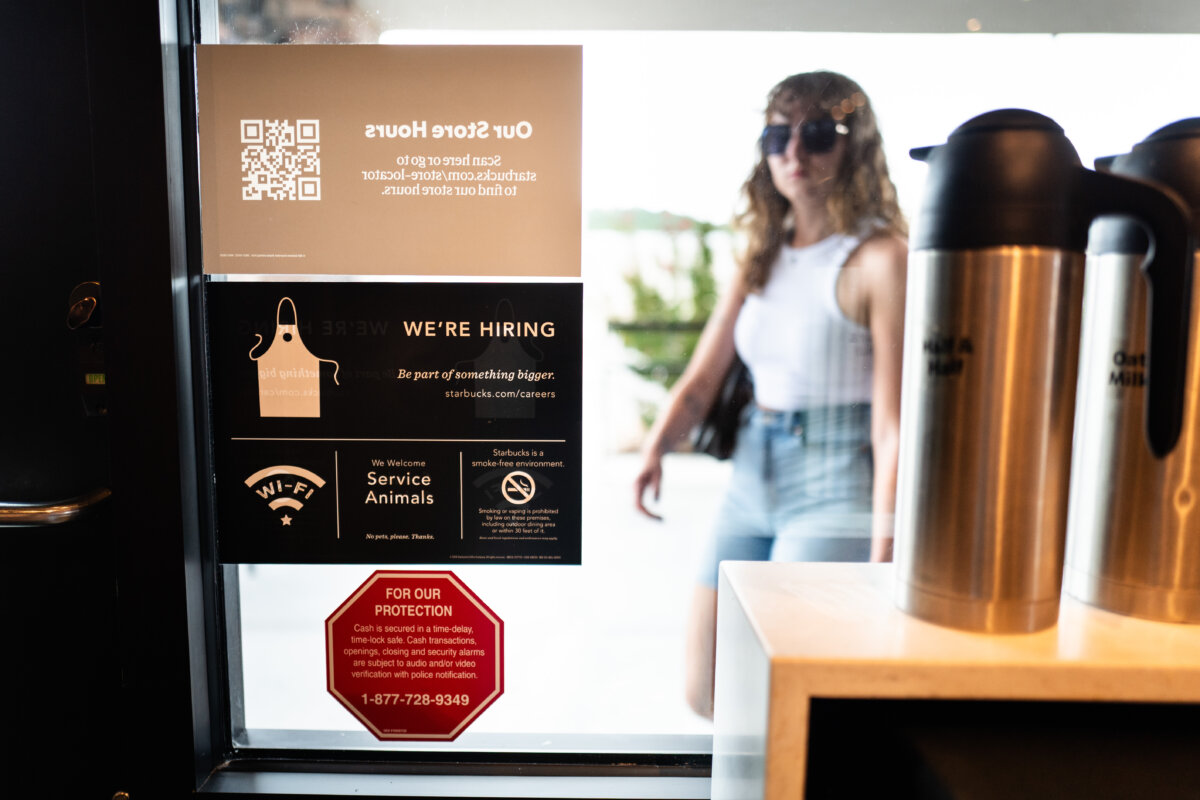

The number of Americans applying for first-time unemployment benefits climbed to a two‑month high, pointing to a pickup in layoffs.
For the week ending Jan. 31, initial jobless claims jumped by 22,000 to 231,000, from the previous week’s reading of 209,000, according to new Department of Labor data released on Feb. 5.
This is the highest level since the first week of December. Economists had also penciled in a reading of 212,000.
Weekly claims have hovered around the historically low level of 200,000 over the past several weeks, highlighting ongoing low-fire, low-hire conditions in the U.S. labor market.
The 4-week average, which strips out week-to-week volatility, ticked up by 6,000 to 212,250.
Continuing jobless claims—a measure of the number of individuals currently receiving unemployment benefits—increased to a lower-than-expected 1.844 million, from last week’s downwardly adjusted 16-month low of 1.819 million.
This was the fourth consecutive week in which recurring claims remained below 1.9 million.
Market watchers monitor this gauge because it reflects the challenge that out-of-work Americans might face in finding new employment. It could also indicate that recipients’ benefits are exhausted, as many states cap eligibility at 26 weeks.
To start 2026, data suggest employment conditions have come to a screeching halt.
Rough Start to the Year
Private businesses added 22,000 jobs last month, from the previous month’s downwardly revised 37,000 boost, according to payroll processor ADP. Health care accounted for most of the private-sector job creation, adding 74,000 jobs. Professional and business services erased 57,000 positions.
At the same time, U.S.-based employers announced more than 108,000 planned job cuts in January, the highest level since October and the biggest January tally since 2009, according to global outplacement firm Challenger, Gray and Christmas.
A sizable share of January’s layoffs was attributed to United Parcel Service (UPS), which announced more than 31,000 job cuts after unwinding its partnership with Amazon. Additionally, the online retail juggernaut confirmed a 16,000-person headcount reduction as it restructures its management layers.
While it is not unusual to see a notable increase in layoffs at the start of a year, it may not bode well for 2026, according to Andy Challenger, the firm’s chief revenue officer.
“Generally, we see a high number of job cuts in Q1, but this is a high total for January,” he said.
“It means most of these plans were set at the end of 2025, signaling employers are less-than-optimistic about the outlook for 2026.”
The report also found that January hiring levels were the lowest on record.
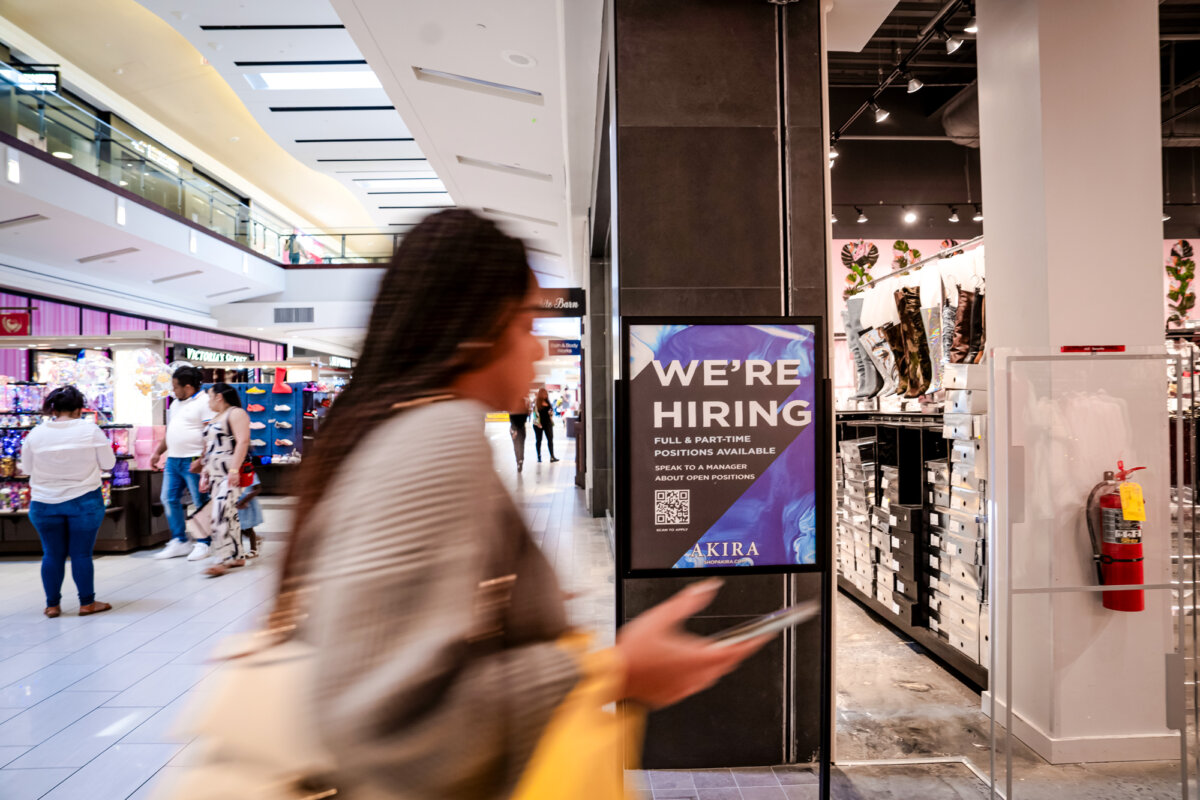
Economic observers will have to wait another week before seeing the delayed January nonfarm payrolls report.
The Bureau of Labor Statistics confirmed that the jobs report and the annual benchmark revisions will be released on Feb. 11.
Early estimates suggest lackluster hiring and a slight uptick in the unemployment rate. Additionally, the revisions are expected show substantial downward revisions in the monthly estimates of employment gains.
Federal Reserve Chair Jerome Powell recently warned that there had been a “systemic overcount” of job growth of up to 60,000 per month, which could indicate weaker employment data.
“Gradual cooling in the labor market has continued,” Powell told reporters at the December post-meeting press conference.
“Surveys of households and businesses both show declining supply and demand for workers. So, I think you can say that the labor market has continued to cool gradually, just a touch more gradually than we thought.”
This past fall, the bureau noted in its preliminary benchmark that payroll growth was overstated by 911,000 in the 12-month period preceding March 2025.
Despite concerns about rapid cooling in the U.S. labor market, the Fed left interest rates unchanged last month, keeping them in the 3.5 percent to 3.75 percent range.
Federal Reserve Governor Christopher Waller believes this is a mistake, arguing that rate cuts are necessary to prevent further deterioration in employment conditions.
“I favored reducing the policy rate to strengthen the labor market and guard against a deterioration that would be harder to address once it has begun,” Waller said in a Jan. 30 statement.
The Fed will hold its next two-day policy meeting on March 17 and 18, giving officials ample time to comb through two job reports and a basket of inflation data.
Investors overwhelmingly expect the central bank to leave rates unchanged at its second consecutive meeting.
 Friends Read Free
Copy
Facebook
Tweet
Friends Read Free
Copy
Facebook
Tweet