
Asia-Pacific trade ministers convened a two-day meeting in the Chinese city of Suzhou on May 22 and 23 as governments across the region grapple with trade imbalances, supply chain risks, and economic uncertainty.
The gathering of the Asia-Pacific Economic Cooperation (APEC) Ministers Responsible for Trade is a key preparatory ministerial meeting ahead of the main APEC Economic Leaders’ Summit in November at Shenzhen. It allows senior officials to narrow differences on contentious topics such as trade imbalances and emerging technologies, setting the stage for decisions at the leaders’ level.
The event brought together officials from the group’s 21 member economies, which collectively account for nearly half of all global trade. Discussions focused on advancing regional economic integration, supporting the World Trade Organisation (WTO), and newer industries such as artificial intelligence.
Among those who attended the Suzhou talks were U.S. Deputy Trade Representative Rick Switzer, Australian Trade Minister Don Farrell, and Japanese Trade Minister Ryosei Akazawa.
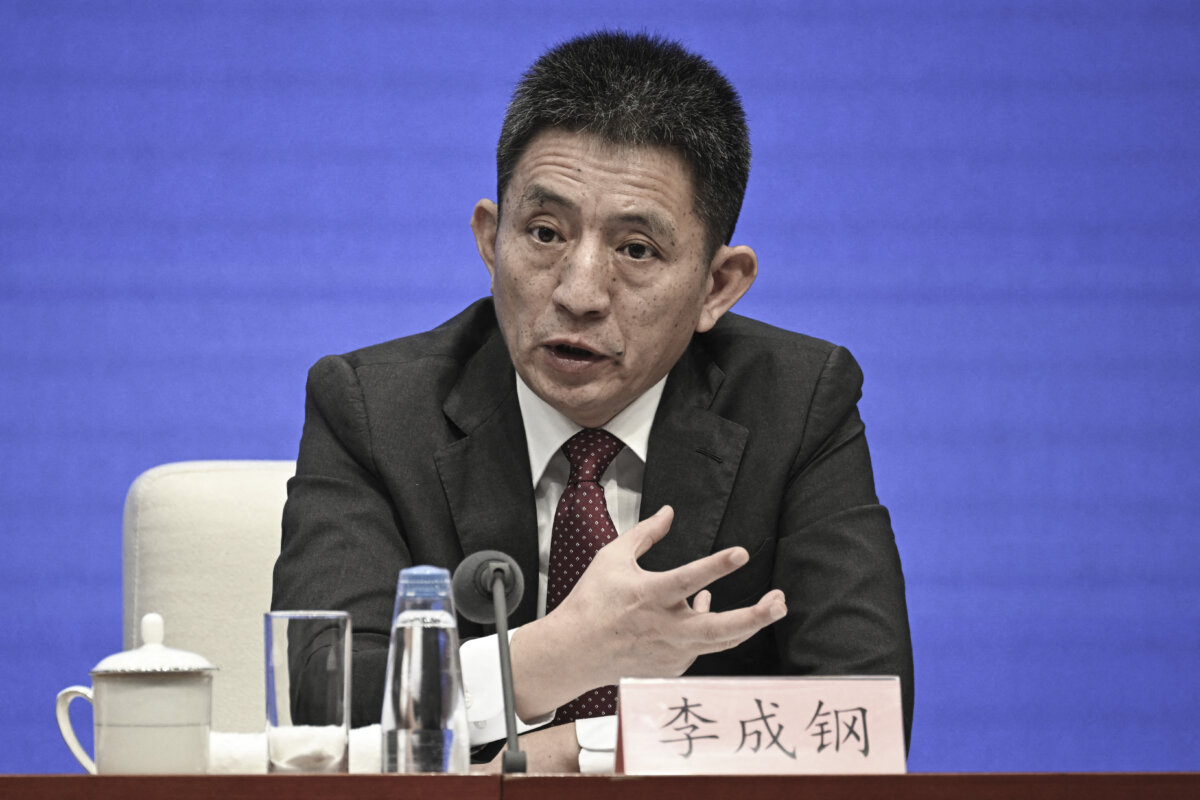
China’s international trade representative, Li Chenggang, opened the gathering in lieu of Commerce Minister Wang Wentao, who was unable to attend due to “urgent official business.”
Li urged delegates to avoid deepening political divisions at a time of economic uncertainty. He said countries should continue working together despite their differences.
The meeting took place against a backdrop of growing international scrutiny of China’s large trade surplus, which reached nearly $1.2 trillion last year, according to Chinese customs data. This has raised concerns among trading partners about manufacturing dependence and market access.
Akazawa’s visit also carried additional diplomatic weight, as the highest-level Japanese trip to China since relations between the two countries soured late last year over Japanese Prime Minister Sanae Takaichi’s remarks about Taiwan.
Tensions between Tokyo and Beijing escalated after Japanese Prime Minister Sanae Takaichi stated in parliament, in response to lawmakers’ questions, that Chinese military action against Taiwan would constitute a “survival-threatening” situation for Japan, potentially triggering Japanese self-defense measures. China responded to her statement with diplomatic and economic pressure against Japan.
Delegates from the APEC Business Advisory Council, who participated in the meeting, warned that further restrictions and tariff measures could weaken investment confidence due to unpredictability. This would in turn increase pressure on jobs and consumer prices across the region.
This appeal comes as trade ministers prepare the ground for the main APEC Economic Leaders’ Summit in November, themed “Building an Asia-Pacific Community to Prosper Together.”
The Business Advisory Council is pressing participants to use both the Suzhou meeting and the upcoming leaders’ summit to push for concrete steps toward an open, rules-based trading environment.
The Suzhou meetings concluded with a joint ministerial statement.
 Friends Read Free
Copy
Facebook
Tweet
Friends Read Free
Copy
Facebook
Tweet