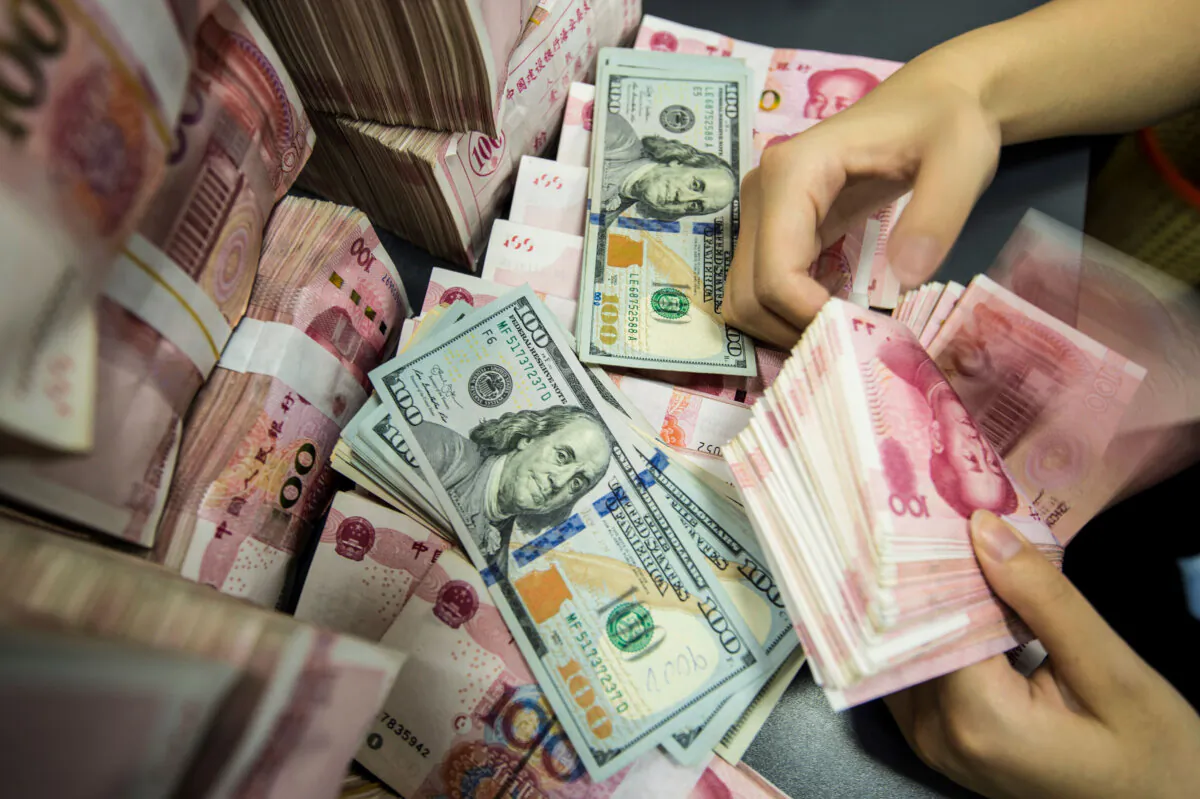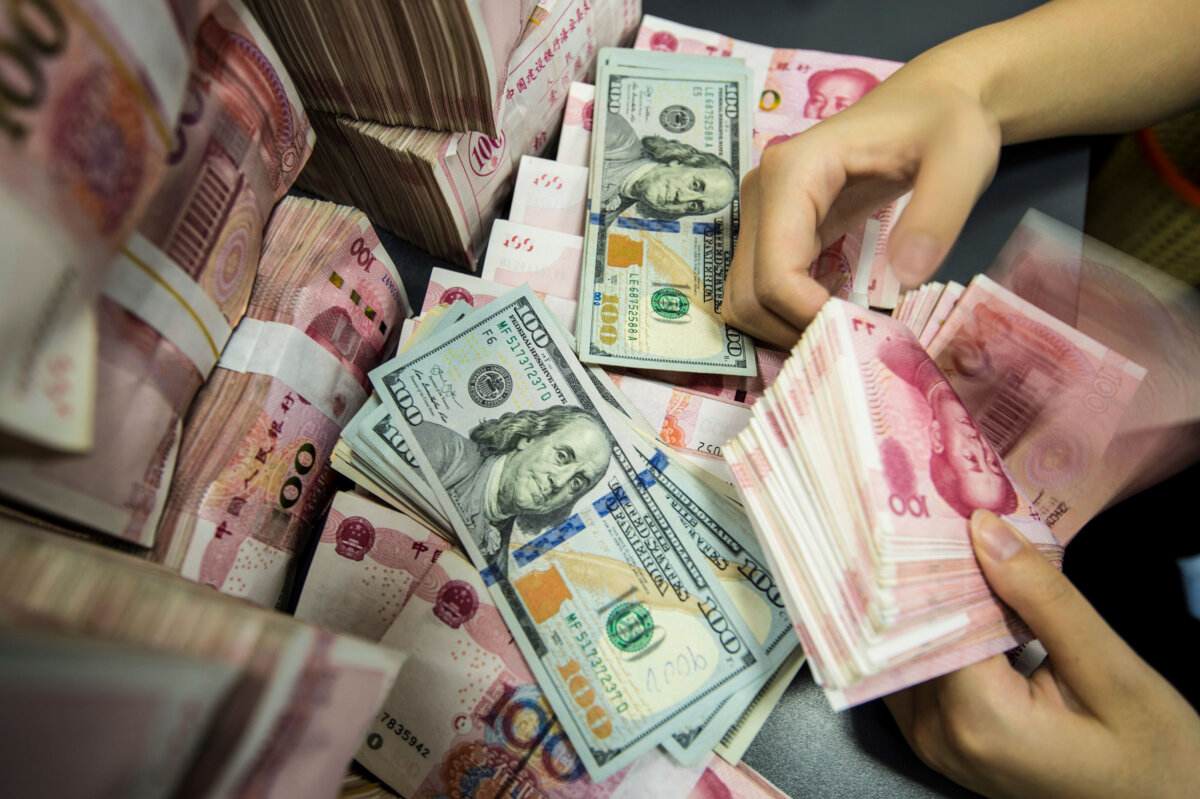

The Chinese regime is tightening restrictions on offshore investing channels and stepping up scrutiny of Hong Kong-linked brokerage and banking pathways, as concerns mount over capital flight through financial markets and cross-border structures.
Chinese regulators have recently targeted several overseas online brokers popular with Chinese investors. According to industry insiders who spoke to The Epoch Times, Chinese investors with existing accounts on these platforms have been instructed, in some cases, to switch to “sell-only” mode, effectively preventing new purchases while allowing the liquidation of holdings.
The insiders spoke on condition of anonymity or only publishing their surnames out of fear of reprisal.
Tune in to China Watch, a podcast on Chinese politics, technology, and business.
One industry insider familiar with regulatory discussions told The Epoch Times that the Chinese regime believes large volumes of funds have been shifting offshore through financial products and brokerage accounts over the past several months.
Focus on Hong Kong as a Financial Exit Channel
At the center of the tightening campaign is Hong Kong’s role as a conduit between mainland Chinese savings and global markets.
A Chinese financial system insider told The Epoch Times that internal investigations into suspected corruption cases have repeatedly identified similar patterns of asset movement—primarily involving the transfer of Chinese yuan into Hong Kong, conversion into foreign currencies such as U.S. dollars and euros, and subsequent investment through overseas brokerage accounts.
In some cases, the insider said, relatives or associates of officials under investigation were found to have accounts on major offshore trading platforms.
“The common pattern is moving Chinese yuan into Hong Kong first, then converting it into foreign currency, and investing in stocks abroad,” the insider said, adding that tracing indirect ownership structures—where funds pass through multiple intermediaries—has proven difficult for investigators.
On May 22, the China Securities Regulatory Commission (CSRC) announced penalties against several offshore brokerage firms—including Tiger Brokers, Futu Holdings, and Longbridge Securities—alleging they had conducted securities-related services in China without proper authorization.
According to the CSRC, the firms had engaged in marketing and transaction-related services for Chinese clients without the required licenses, constituting illegal securities business activity.
Another insider familiar with the matter told The Epoch Times the crackdown is not limited to brokerages. Regulators have also instructed some foreign financial institutions operating in China to tighten controls on Chinese clients who open accounts in Hong Kong or transfer funds offshore.
A source from within the Chinese Communist Party (CCP) said that recent anti-corruption investigations uncovered large sums of money linked to Hong Kong, with estimates reaching tens of billions of dollars.
The CCP insider told The Epoch Times that investigators had traced funds moving through Hong Kong financial channels, including brokerage-linked transfers.
The same insider said internal probes had identified complex routing mechanisms involving banks, relatives, and layered investment accounts, making it difficult to establish direct links between funds and specific officials.
The insiders’ claims could not be independently verified by The Epoch Times.

Hong Kong Banks Tighten Account Rules
On May 27, several Hong Kong banks, including HSBC, Hang Seng Bank, and Bank of China (Hong Kong), tightened onboarding requirements for mainland clients opening investment accounts.
A Hong Kong-based banking security manager told The Epoch Times these measures reflect heightened compliance pressure in Hong Kong’s role as a major offshore Chinese yuan hub and international financial gateway.
The manager said the city’s financial system allows mainland Chinese investors to access global markets in ways that are more restricted in China.
“Hong Kong connects China to the global financial system,” the manager said. “Once mainland Chinese residents open accounts there, it becomes much easier to move funds abroad through investment channels.”
The CCP’s broader tightening comes amid ongoing pressure on cross-border capital flows.
Data from China’s State Administration of Foreign Exchange on May 29 show that in the first quarter of 2026, China recorded a current account surplus of $184.1 billion, largely driven by a $247.4 billion goods trade surplus. However, this was offset by an equally large deficit in the capital and financial account.
A Chinese financial scholar told The Epoch Times the offset highlights persistent capital outflow pressures even as trade surpluses remain strong. She argued that the latest enforcement actions reflect Beijing’s attempt to close what it views as leaks through Hong Kong’s financial system.
The scholar said regulators appear to be building a dual-layer control system—first within Chinese financial institutions, and then through stricter compliance requirements in Hong Kong.
“If money reaches Hong Kong, the second line of defense is the banks there,” she said. “They now require customers to explain the source of funds. If they cannot, accounts may be closed.”
The scholar added that Chinese regulators view capital flight not only as an economic issue but also as a political concern.
“When both ordinary investors and officials move money abroad, it signals a lack of confidence,” she said. “That turns it into both a financial and political risk.”
Sun Cheng contributed to this report.
 Friends Read Free
Copy
Facebook
Tweet
Friends Read Free
Copy
Facebook
Tweet