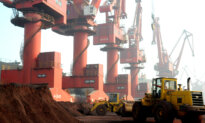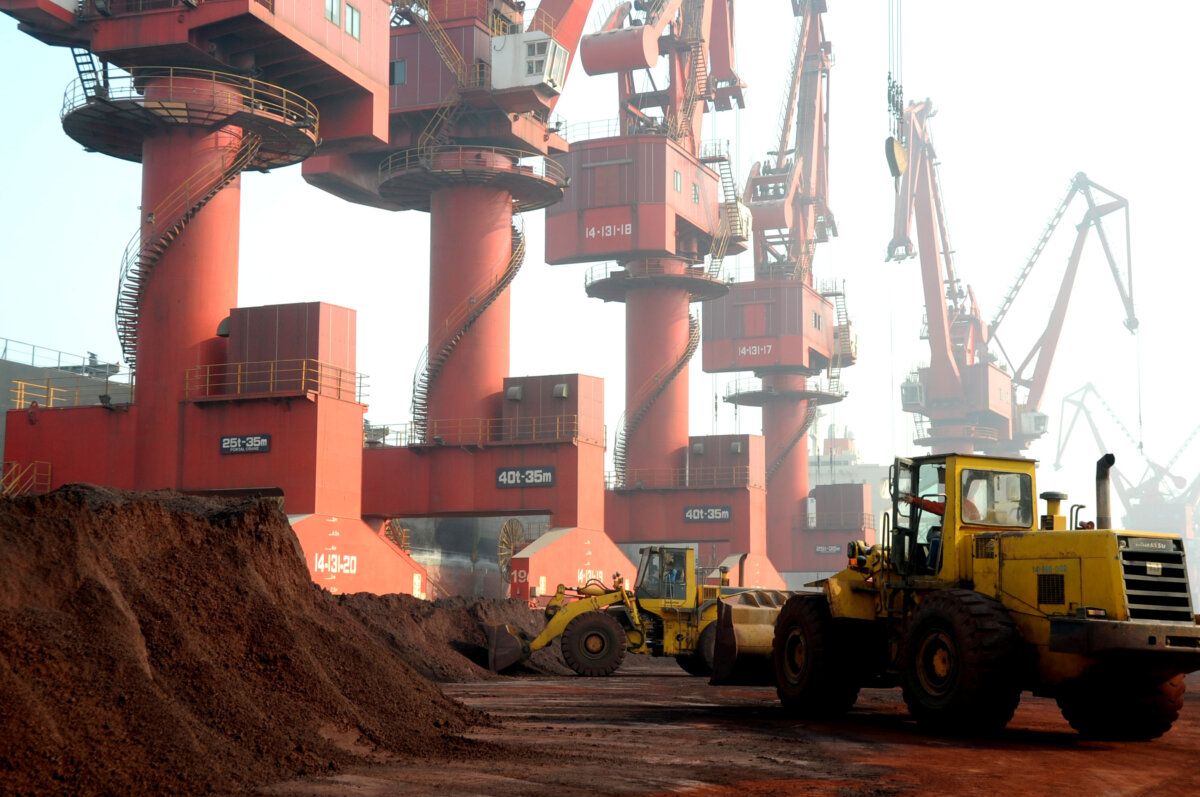


The Chinese regime has temporarily lifted a ban on exports of several minerals needed for producing advanced semiconductors and military equipment to the United States, and suspended its latest export curbs on rare earth materials, as part of a tentative trade truce reached last month.
Beijing paused restrictions on the sale of gallium, germanium, antimony, and so-called superhard materials to the United States, according to a statement released by the regime’s Ministry of Commerce on Nov. 9. The suspension took effect immediately and will run through Nov. 27, 2026, the ministry said.
The ministry also halted the strict review process for exporting graphite to the United States, as well as a ban on transferring items with both civilian and military applications to U.S. entities, rules that were introduced alongside the export ban last December, according to the statement.
Tune in to China Watch, a podcast on Chinese politics, technology, and business.
The regime had implemented these restrictions in a tit-for-tat move after the Biden administration tightened controls on the export of advanced semiconductors and related technologies to China.
While the Chinese ministry’s announcement lifts the ban that specifically targeted U.S.-bound shipments, it doesn’t cover the export restrictions on these metals that have been enforced over the last two years.
Exporters still need to apply for licenses from the regime’s commerce ministry to ship these restricted metals out of the country. Under Beijing’s regulations, companies are required to disclose details of overseas buyers and their ultimate purpose of use in order to obtain a license.
Rare Earths, Soybeans, and Others
On Nov. 7, the MOC and China’s customs agency stated that they are suspending all export restrictions announced on Oct. 9, affecting man-made diamonds; rare earth metals including holmium, erbium, thulium, europium, ytterbium; certain lithium-ion batteries; and rare earth technologies including mining, smelting and separation, magnet material manufacturing, and recycling of secondary resources.
However, Beijing has not mentioned the export restrictions it imposed on April 4 on heavy rare-earths, including samarium, gadolinium, terbium, dysprosium, lutetium, scandium, and yttrium.
The restrictions, most of which were set to take effect on Nov. 8, will be suspended until Nov. 10, 2026.
Separately, China’s customs agency reversed the suspension of soybean import licenses for Minnesota-based farmer-owned cooperative CHS, Washington-based export grain terminal operator EGT, and Dutch-headquartered Louis Dreyfus Co. Merchandising, which operates globally, including in a number of states in the United States. The licenses will be restored on Nov. 10.
The regime suspended these licenses on March 4, citing quality issues, after U.S. President Donald Trump added an additional 10 percent tariff on Chinese goods to force Beijing to act on fentanyl control.
China’s import ban on U.S. logs, which has also been in place since March 4, will be lifted on Nov. 10.
The customs agency stated that it will also remove anti-dumping duties on certain U.S. optical fiber.
The tariffs, ranging from 33.3 percent to 78.2 percent, were imposed on Sept. 4 after a Chinese Ministry of Commerce investigation concluded that U.S. exporters skirted anti-dumping measures, according to Beijing.
The easing of restrictions is the result of a U.S.–China trade truce reached following talks in Kuala Lumpur and a meeting between Trump and Chinese leader Xi Jinping in South Korea, where both sides agreed to a one-year pause on a wide range of trade measures.
The White House said in a Nov. 1 fact sheet that Beijing had committed to issuing “general licenses” valid for gallium, germanium, antimony, and graphite, along with rare earths.
Investor sentiment improved after the Trump–Xi meeting, reducing fears that the world’s two largest economies might abandon efforts to resolve their trade disputes.
Following the meeting, Beijing lifted tariffs on some U.S. farm goods that it had imposed in March and initiated modest purchases of American farm products, including two cargoes of U.S. wheat.
State grain trader COFCO also booked three U.S. soybean cargoes before the leaders met.
However, traders remain cautious, as a 10 percent tariff on all U.S. imports—including agricultural products—remains in effect, limiting expectations for a broader recovery in trade flows.
Reuters contributed to this report.
 Friends Read Free
Copy
Facebook
Tweet
Friends Read Free
Copy
Facebook
Tweet